Japan’s attempts of remilitarization reignite doubts about its future direction, lead to new reckoning of its historical crimes: FM spokesperson
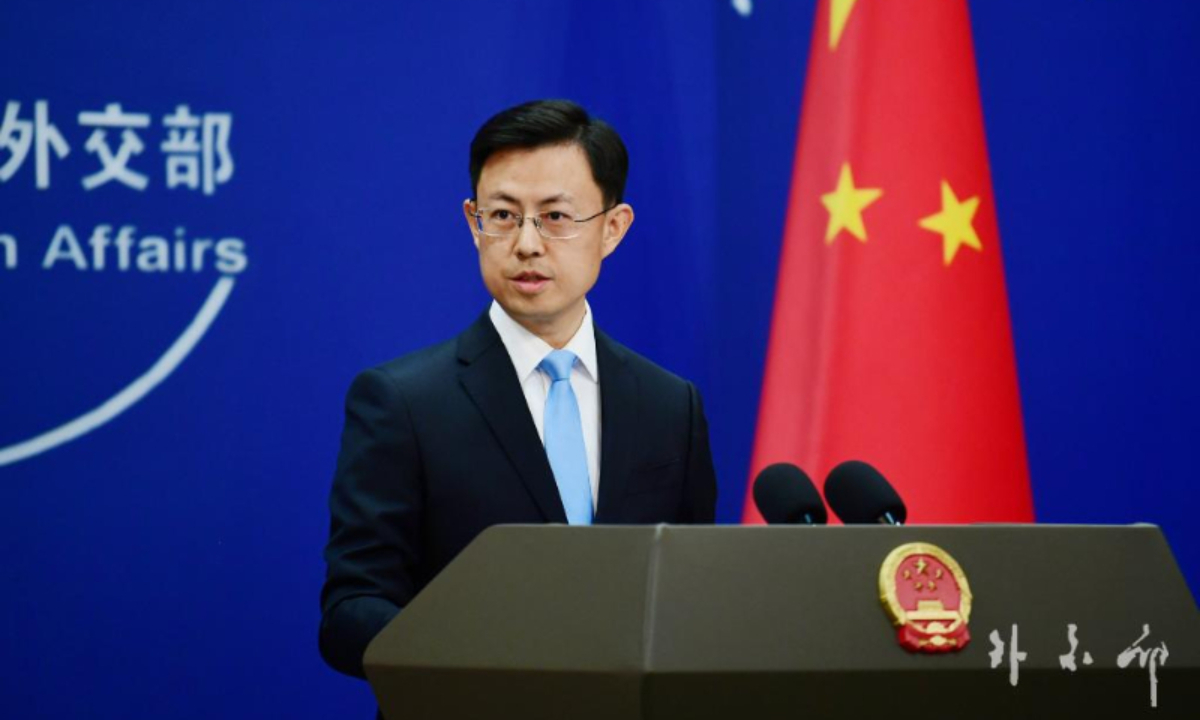
Guo Jiakun
Japan's accelerated military buildup and attempts at remilitarization will only reignite doubts about Japan's future direction and lead to a new reckoning by the international community over Japan's historical crimes, Chinese Foreign Ministry spokesperson Guo Jiakun said on Wednesday when asked to comment on reports by media outlets such as The Economist from the UK and The Eurasia Review from the US which said that Japan is shifting from a pacifist nation to a military power and Japan's attempt to revive militarism will only threaten regional and global peace and stability, and merits vigilance.
Guo said that China has noted the views of certain foreign media outlets. In recent years, Japan has significantly adjusted its security policy, accelerated the amendment of its pacifist constitution, continuously breached the principle of exclusive defense, lifted the ban on the right of collective self-defense, eased restrictions on weapons exports, and attempted to revise its "three non-nuclear principles." Japan has also pursued what it calls "counterattack capabilities against enemy bases." Senior Japanese officials have even publicly stated that they do not rule out the possibility of acquiring nuclear-powered submarines. This series of actions has raised high vigilance among neighboring countries and the international community, said Guo.
We note that Japan's defense spending has increased for 13 consecutive years, making it the second largest among Western countries. According to statistics from a European think tank, the revenues of Japan's five major defense companies surged by 40 percent in 2024 compared to the previous year, said Guo.
For a country that waves the banner of a pacifist constitution, chants slogans of "reflecting on war," and claims to adhere to the path of "exclusively defense-oriented policy," how can it justify its actions of strengthening its military and expanding its armaments? Guo asked.
In fact, since the end of World War II, the Japanese government has never thoroughly reflected on the war of aggression. Many war criminals returned and remained active in Japanese politics and the Self-Defense Forces. Multiple former Prime Ministers and other officials of Japan have insisted on visiting the Yasukuni Shrine, which enshrines Class-A war criminals, and have sought to downplay and glorify the history of aggression through measures such as revising textbooks, according to Guo.
Right-wing forces in Japan have indeed engaged in so-called "reflection" on the war, but their focus is not on the responsibility for the war; rather, it is on why Japan was defeated. Japanese militarism has never been completely eradicated and has been eagerly awaiting opportunities to make a comeback, Guo said.
The international community has a responsibility to remind Japan that Articles 6, 7, 9, and 11 of the 1945 Potsdam Proclamation call for the relentless eradication of the soil of Japanese militarism. A new order of peace, security, and justice can only be established by imposing political and legal restrictions on Japan's right to wage wars and eliminating the ideological roots of Japan's militarism. Japan should be completely disarmed and must not maintain industries capable of facilitating its rearmament, said the spokesperson.
Japan's Instrument of Surrender pledged the faithful fulfillment of the obligations stipulated in the Potsdam Proclamation. These documents, acknowledged by Japan and endowed with the force of international law, clearly define Japan's international obligations as a defeated nation. They constitute a crucial cornerstone of the post-war international order and serve as the political and legal prerequisites for Japan's reintegration into the international community, said Guo.
Japan's accelerated military buildup and attempts at remilitarization will only reignite doubts about the nation's future direction and lead to being held accountable again for its historical crimes by the international community. China calls upon all peace-loving nations to remain vigilant against and prevent any dangerous moves that seek to revive Japanese militarism, jointly safeguarding the hard-won outcomes of victory in World War II, said Guo.
Global Times
RELATED ARTICLES