GT Voice: Argentina’s export tax reduction offers different perspective on boosting trade
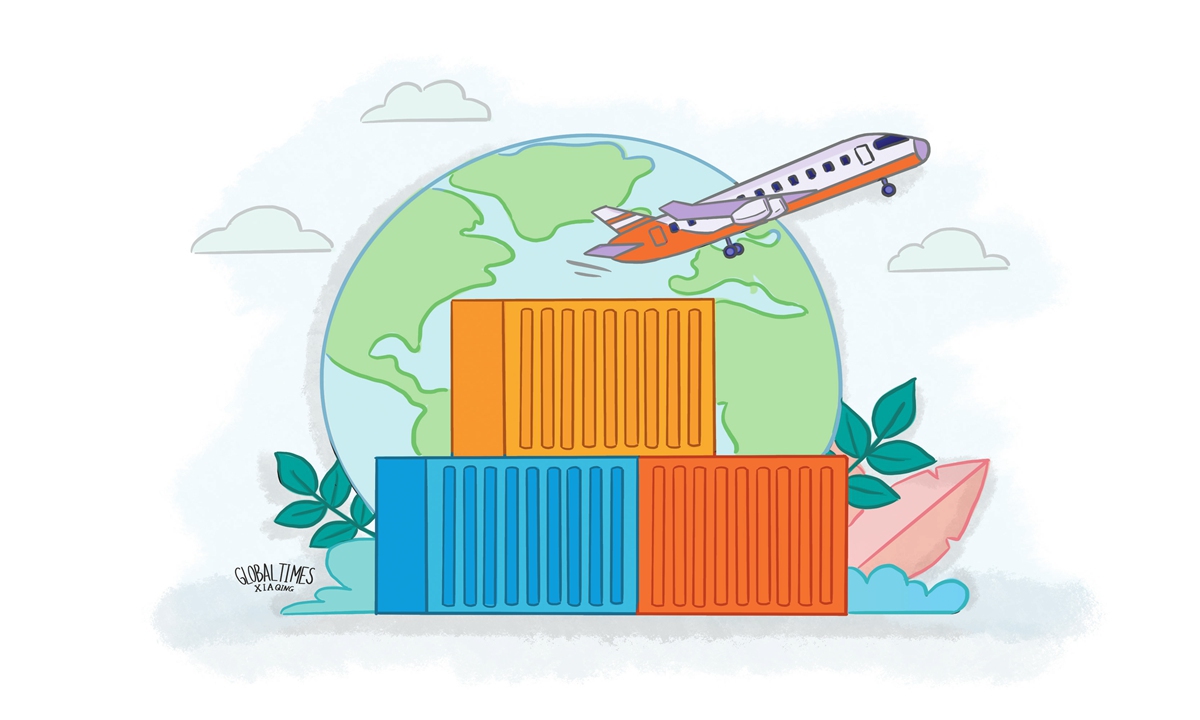
Illustration: Xia Qing/GT
The Argentine government reduced tariffs on exports of soybeans, corn and wheat, Bloomberg reported on Tuesday. Argentine Economy Minister Luis Caputo said in a post on X that the lower tariffs are permanent, a sign that the government is trying to boost the agriculture industry.The policy's objective is clear and pragmatic: by easing the tax burden on exporters, Argentina aims to enhance the price competitiveness of its agricultural products on the global market, thereby stimulating export growth. This adjustment is expected to create more favorable conditions for agricultural exports, increasing earnings from them while also providing importers with more diverse and cost-effective goods, achieving mutually beneficial outcomes for both sides.
At a time when the global economic recovery remains fragile, boosting exports has become a vital lever for many countries seeking to revive growth. Yet, when trade slows and frictions rise, some tend to shift blame outward. In recent years, certain Western narratives on global trade imbalances have often blamed China, the world's second-largest import market, for so-called "insufficient imports."
However, Argentina's proactive approach in reducing export tariffs offers a different perspective. Rather than attributing trade imbalances to external factors, it reveals the importance of self-driven efforts to strengthen competitiveness and better align with global demand.
Notably, global trade remains dynamic. According to UN Trade and Development's final Global Trade Update of the year, global trade is on course to exceed $35 trillion in 2025 for the first time. In particular, East Asia recorded the strongest export growth over the past year, supported by a 10 percent surge in intra-regional trade. Africa also performed strongly, with imports up 10 percent and exports up 6 percent. South-South trade expanded about 8 percent, reflecting deepening economic and trade ties among developing economies.
Against this backdrop, compared with developing countries' efforts to promote trade, Western noise targeting China's import demand appears nothing but one-sided and biased. China has consistently maintained an open stance to expand imports. The China International Import Expo has been held for eight consecutive years, providing a convenient platform for global commodities to enter the Chinese market.
China's overall tariff level has been continuously reduced, far below the average level of developing countries. In sectors ranging from agricultural products and energy to consumer goods, China's import demand has steadily grown, contributing to global economic momentum.
Claims that China "does not import enough" deliberately overlook these efforts and, more importantly, divert attention from the critics' own shortcomings in trade facilitation. Some Western countries frequently impose export controls, politicize trade issues, and erect artificial barriers in the high-tech and strategic sectors. Excessive security reviews and unilateral sanctions further disrupt the normal order of trade cooperation. These are among the real bottlenecks constraining their export potential.
Indeed, if a country restricts exports in areas where it holds advantages, such as certain high-tech fields, while expecting trading partners to sharply increase imports, it contradicts the basic logic of trade. Western policymakers are well aware of this conflict. If the goal is to genuinely expand exports, efforts would be better directed at reviewing and dismantling such self-imposed barriers rather than criticizing others.
Fundamentally speaking, a healthy international trade system relies on shared responsibility between importers and exporters. While it is important for importing countries to continuously open their markets and improve the business environment, it is equally essential for exporting countries to actively enhance the competitiveness of their products and services and enhance trade facilitation.
The world economy still requires strong drivers for growth, and trade undoubtedly remains a key engine. All countries need to focus more on "what we can do to improve trade conditions" rather than demanding concessions from others. This proactive and pragmatic approach is far more effective than exchanging accusations when it comes to enhancing mutual trust and creating sustainable trade growth.
RELATED ARTICLES