‘Warmth economy’ heats up winter consumption
Seasonal phenomenon generates sustained growth in lower spending period: expert
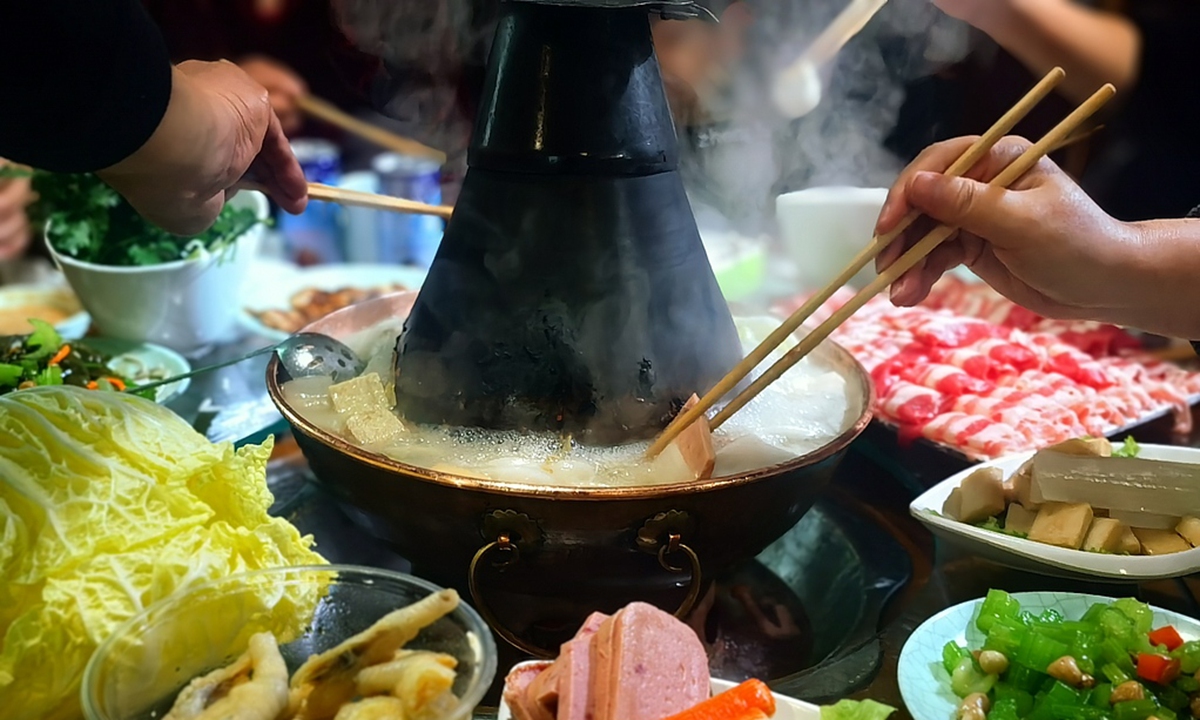
Hot pot Photo: VCG
Cold wave has swept across China recently, triggering temperature dips and snow. Despite the chill, consumer enthusiasm remained strong. Over the past weekend, the Global Times learned that hot pot restaurants and beverage shops in Beijing recorded notable peaks in customer traffic.
Experts noted that since the start of winter, rising consumption of hot pot and hot drinks has become a distinctive seasonal phenomenon in the catering sector, providing sustained growth momentum during a traditionally slower consumption period of the year.
Beijing received its first significant snowfall of this winter on Friday. A Beijing-based white-collar worker surnamed Zhao, told the Global Times on Sunday that as she is from North China, snowfall naturally sparks a craving for hot pot. After work on Friday, she braved the snow to visit a hot pot restaurant near her workplace.
"Because I arrived early, I only waited about five minutes for a table. When I finished my meal and came out, many customers were already lining up outside," she said.
Data from Chinese online life service provider Meituan showed that since the beginning of winter, demand for "warmth consumption" such as hot pot and barbecue has continued to rise. Among all catering categories, online transaction volumes for dine-in hot pot restaurants ranked first, maintaining their position as a major consumption hotspot.
The manager of a Beijing-style hot pot restaurant located on Wangfujing Pedestrian Street told the Global Times on Sunday that customer traffic rose significantly on the Saturday after the snowfall, increasing by about 15 percent compared with normal days. "Many customers came from southern regions of China specifically to enjoy the snow and dine out, making Saturday the most concentrated consumption day of the week."
The manager of another hot pot restaurant in Beijing's Haidian district said that the number of diners increased over the weekend, with the average waiting time during peak dining hours reaching about half an hour.
As the cold deepens, consumption scenarios centered on "warmth" have become increasingly visible. In addition to hot pot, hot drinks have also become a preferred winter choice for consumers.
A staff member at a beverage shop located inside a shopping mall told the Global Times on Sunday that sales of hot drinks have risen noticeably in recent days. Although some customers still opt for cold beverages in the mall environment, hot drinks now account for about 60 percent of total sales, said the staffer.
Zhang Yi, CEO of the iiMedia Research Institute, told the Global Times on Sunday that tapping into consumption demand generated by weather changes such as cold waves and falling temperatures reflects ongoing breakthroughs and innovation under current policies aimed at promoting consumption.
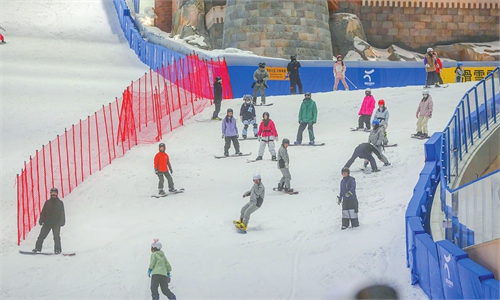
Beyond urban dining consumption, Zhang also pointed out that falling temperatures have reshaped the structure of cultural and tourism consumption, with ice-and-snow economy-related activities such as skiing and hot springs gaining popularity.
Across North China, the country's snow belt, cities are racing to broaden their winter offerings. In Harbin, capital of the northernmost province of Heilongjiang, preparations are underway for the opening of the Harbin Ice-Snow World, a 1.2 million square meter ice-and-snow wonderland featuring new attractions and upgraded services. During the last ice-and-snow season, the world's largest ice-and-snow theme park drew more than 3.56 million visitors, the Xinhua News Agency reported.
In recent years, especially after the 2022 Beijing Winter Olympics ignited nationwide enthusiasm for ice-and-snow sports, China has positioned the ice-and-snow economy as a new engine for high-quality development. The government has set a target for the sector to reach a scale of 1.5 trillion yuan ($212.2 billion) by 2030, said the report.
RELATED ARTICLES