ARTS / CULTURE & LEISURE
New TV series confronts Unit 731 atrocities
By Published: Dec 14, 2025 09:10 PM


Illustration: Liu Xiangya/GT
On Saturday, as the nation mourned the victims of the Nanjing Massacre, a new television series, Man's Inhumanity to Man, made its solemn debut on Jiangsu TV and Chinese streaming site Youku. Nanjing is the capital of East China's Jiangsu Province. Its premiere coincided with the release of newly declassified Soviet archives on Japan's notorious Unit 731 - a grim synchronicity that underscores a persistent and urgent question: In an age of voluminous historical evidence, what is the unique burden and potential of art in confronting the depths of human evil?The series does not merely document; it attempts a perilous traversal, striving to balance the unvarnished truth of state-sanctioned barbarism with the narrative imperatives of art, all while evading the traps of gratuitous spectacle or hollow polemic.
Among the film and television works commemorating the 80th anniversary of the Victory in the Chinese People's War of Resistance against Japanese Aggression (1931-45) and the World Anti-Fascist War, Man's Inhumanity to Man stands out as one of the few that directly confront the gruesome details of Unit 731's war crimes.
Employing a dual-timeline narrative, the series exposes Unit 731's cruel human experiments and inhuman atrocities through the perspectives of several individuals who were involved, thereby condemning the anti-human essence of Japanese militarism.
According to reports, the characters and storylines in this production are all based on documented sources. The production team adhered to the creative principle of "props as evidence," meticulously selecting and crafting props - from experimental instruments to archival documents - in strict accordance with their historical authenticity.
Approaching history with reverence, restoring truth with meticulous craftsmanship, and warning the present with a profound message - at this particular moment in time, the airing of Man's Inhumanity to Man will rekindle memories that must not, should not, and will not be forgotten, and sound the alarm against the atrocities globally.
As an important medium for cultural dissemination, film and television works play an irreplaceable role in shaping historical memory and conveying the idea of peace. Through its narrative centered on cross-border evidence collection, Man's Inhumanity to Man highlights the international nature of the crimes of germ warfare - with victims including prisoners of war from China, the Soviet Union, the UK and other countries. This globally oriented narrative strategy allows the series to transcend national boundaries, serving as a historical testament for audiences worldwide.
The Exhibition Hall of Evidences of Crime Committed by Unit 731 of the Japanese Imperial Army, located in the Pingfang district of Harbin (in Northeast China's Heilongjiang Province), is a rectangular black-gray building resembling an aircraft's "black box." In the view of the museum's curator Jin Chengmin, visiting the museum is like opening a historical "black box," confronting the shocking truth head-on.
To some extent, Man's Inhumanity to Man stands on Jin's shoulders. He has made over 40 trips abroad, primarily to Japan and the US, gathering evidence across borders, interviewing veterans of the Japanese Army Unit 731, preserving more than 400 hours of audiovisual archives, collecting over 20,000 important historical artifacts as evidence, compiling more than 300,000 pages of historical documents, and establishing more than 3,000 volumes of specialized archives.
To approach history with reverence and adhere to historical facts is the foremost principle in creating works on Unit 731.
The creative team strives to find a balance between historical authenticity and artistic expression, grounding the work in solid historical research while employing skillful storytelling to achieve an organic unity of ideological depth, artistic merit, and audience appeal.
One timeline follows Xiao Jin, a staff member at the Exhibition Hall of Evidences of Crime Committed by Unit 731 of the Japanese Imperial Army in the 1990s, who discovers gaps in the historical records while archiving materials. This prompts him to embark on a prolonged and arduous journey to collect transnational evidence.
The other timeline focuses on Harbin during the period of the Japan's brutal invasion of China. It portrays three individuals who are unwillingly drawn into the orbit of Unit 731, offering three distinct perspectives that bear witness to the monstrous atrocities committed by Japanese militarism.
This structure interweaves the "perspective of direct witness" with the "perspective of historical inquiry." By employing the micro-narratives of ordinary individuals, the TV series allows audiences to more immersively engage with the historical scenes, while also showcasing the unyielding efforts made by the Chinese people over the years to uncover the truth and restore history.
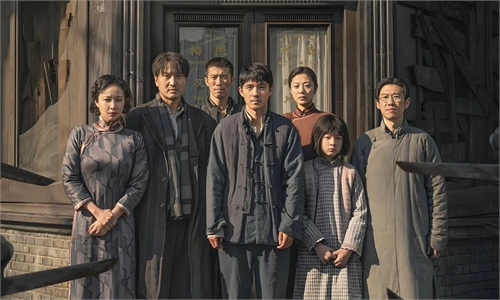
In the series, Tong Changfu, played by actor Jiang Qilin, is a vendor who delivers apples to Unit 731. As an ordinary but honest Chinese farmer, he loves his family, his compatriots, and the land that nurtured him. Faced with the brutal aggression hidden beneath a veneer of civilization, he fights back with his frail body. Chen Ruping (Japanese name Arakawa Ryohei), played by Zhang Yu, is from the island of Taiwan. He moved to Japan as a child when his mother remarried and later became a cartographer for Unit 731, during which time he witnesses Japan's inhumane atrocities. Kojima Yukio, portrayed by Yin Zheng, is a Japanese director who enters Unit 731 to film material. He is ultimately manipulated by Japanese militarism, becoming a tool to aid and abet its crimes.
Through the eyes of these ordinary individuals, the series aims to allow audiences to touch, more profoundly, the fabric of this period of history that should never be forgotten.
Through its multi-layered storytelling, it seeks to deepen and expand the understanding of history, allowing the audiences to gain a three-dimensional insights into the evil nature of Japanese militarism.
According to historical records, from 1937 to 1945, under the direct involvement and orchestration of Unit 731, Japanese militarism established a widespread biological warfare organizational network across many regions in China and Southeast Asia. This system included Unit 1855 in Beijing, Unit 1644 in Nanjing, Unit 8604 in Guangzhou, and Unit 9420 in Singapore. The victims of these horrific experiments, referred to by the dehumanizing term "Maruta" (the Japanese Army's term for subjects of human experimentation), encompassed not only Chinese people but also prisoners of war from the Soviet Union, the UK and other countries.
These units operated across most parts of China, as well as countries in East Asia and Southeast Asia such as Korea, Malaysia, Singapore, and Thailand, weaving a vast web of atrocities throughout Asia that cast countless civilians under the shadow of biological warfare.
The impact of this biological warfare was global in scope. Therefore, Man's Inhumanity to Man is a TV series made for audiences worldwide, who will discover the real face of the war crimes that Japan committed during the World War II.
The author is a reporter with the Global Times. life@globaltimes.com.cn
RELATED ARTICLES