Photo: VCG
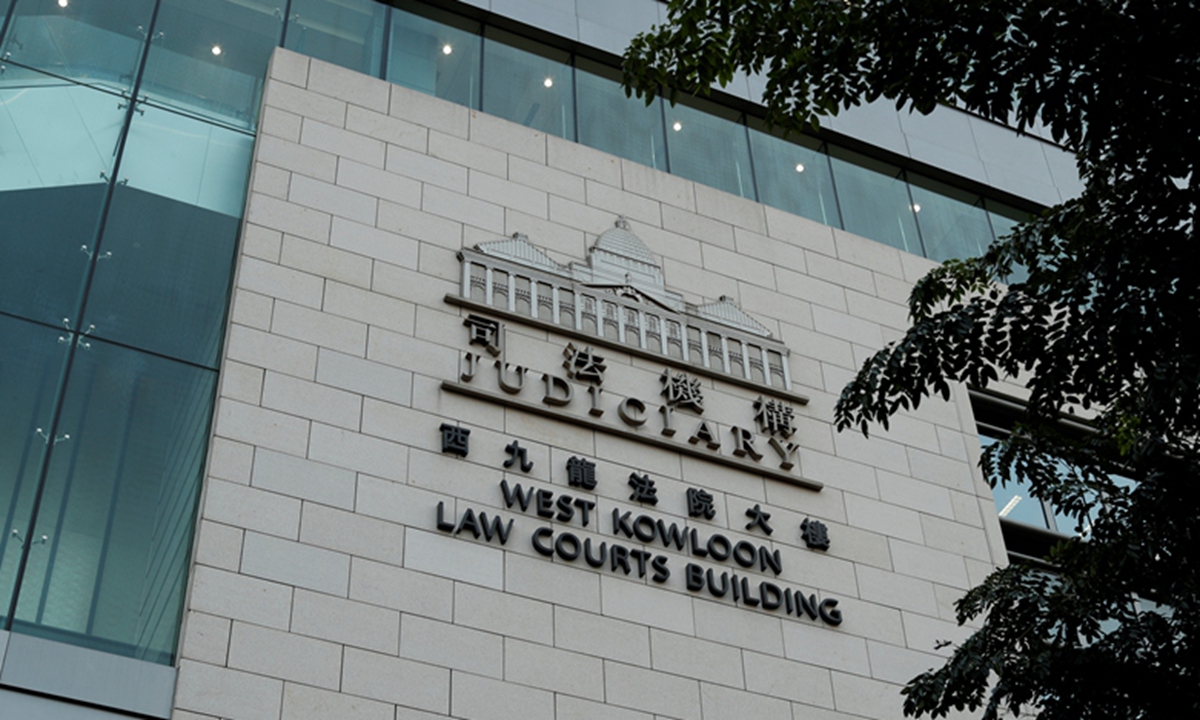
Jimmy Lai, an instigator of anti-China riots in Hong Kong, was found guilty on Monday on two charges of conspiring to collude with external forces and a charge of conspiracy to publish seditious materials.
This proceeding was far more than a routine judicial act; it stands as a landmark in Hong Kong's legal history. Beyond delivering a fair judgment on Lai's individual unlawful acts, it is a declaration to the world: The legal red lines safeguarding national security must not be crossed in Hong Kong, where the society is governed by the rule of law. Any external forces attempting to interfere with China's judicial sovereignty through political pressure or defamatory rhetoric will be met with resolute and forceful countermeasures. This verdict itself constitutes a most powerful counterattack against all external interventions.
For a long time, certain politicians and media outlets in the US and the West, driven by geopolitical self-interest, have deliberately portrayed Lai as a "democracy activist" and "defender of free speech," distorting the lawful judicial proceedings against him as "political persecution." Yet, beneath these elaborate political narratives lies a shocking chain of criminal activity. Lai's unlawful conduct extended to the long-term planning and financing of destabilizing activities, the incitement of social hatred through media outlets, and collusion with external forces to solicit sanctions against the nation. Such acts transcended any legitimate scope of free speech and fell squarely within the realm of Criminal Law. Facts speak louder than words, and all are equal before the law. Any attempt to cloak the essence of his role as a chief instigator of the Hong Kong riots behind the identity of a "media tycoon" appears utterly feeble in the face of overwhelming and ironclad evidence.
This trial, conducted strictly in accordance with the law, stands as a powerful rebuttal to Western double standards. Any nation governed by the rule of law cannot tolerate individuals engaging in activities that endanger its national security under the banner of "freedom." The cases of Edward Snowden and Julian Assange have demonstrated that Western countries employ measures and laws far more stringent than others when their own national security is at stake. Yet, when a similar situation arises in Hong Kong, many Western politicians adopt a completely different stance, invoking "human rights" and "press freedom." The ruling in Lai's case, grounded in detailed evidence and rigorous legal reasoning, utterly strips away the "political persecution" narrative imposed on it by Western forces. Monday's ruling effectively declares the complete failure of external forces' "long-arm jurisdiction."
The significance of Lai's verdict also lies in its profound illustration of the legislative intent and core essence of the Hong Kong National Security Law, which was introduced in 2020. As a leading figure among anti-China destabilizing forces in Hong Kong, Lai's verdict carries a strong warning. It clearly delineates a legal red line: Regardless of one's position or the external support behind them, anyone who endangers national security must face legal consequences.
This ruling not only punishes a principal offender but, more importantly, establishes the legal authority for safeguarding national security. It sends a clear message to society: Hong Kong is a society governed by the rule of law; endangering national security is a dead end. It will have a profound impact on deterring potential forces who are opposed to China and attempt to destabilize Hong Kong, restoring social order and fostering social consensus. In this sense, this verdict is a crucial milestone in Hong Kong's transition from chaos to order and from stability to prosperity.
Looking back at this trial process, it is a fierce contest between the rule of law and politics, justice and intervention. Ultimately, the rule of law triumphed over political manipulation, and justice repelled external intervention. Western forces should recognize the reality: The era when they could freely meddle in Hong Kong's affairs and stir up trouble is over. The Chinese government has unwavering resolve in safeguarding its national sovereignty, security and development interests, in implementing the principle of "One Country, Two Systems" and in opposing any external interference in Hong Kong's affairs.
The conclusion of the Jimmy Lai case is not an end but a new beginning. It marks the further consolidation of Hong Kong's law-based governance and a deeper societal understanding of national security.
Any schemes attempting to hinder China's development or undermine Hong Kong's prosperity through judicial interference will ultimately be doomed to fail. The dignity of the law must not be desecrated, and the judgment of justice will ultimately prevail. The verdict in the Jimmy Lai case is the most resounding testament in this historical process.
The author is deputy director of the Institute of China's Borderland Studies at Zhejiang Normal University. opinion@globaltimes.com.cn
RELATED ARTICLES