Chinese, international scientists unravel secret of barley seed dormancy
Research provides new route to address food-security challenges posed by climate change
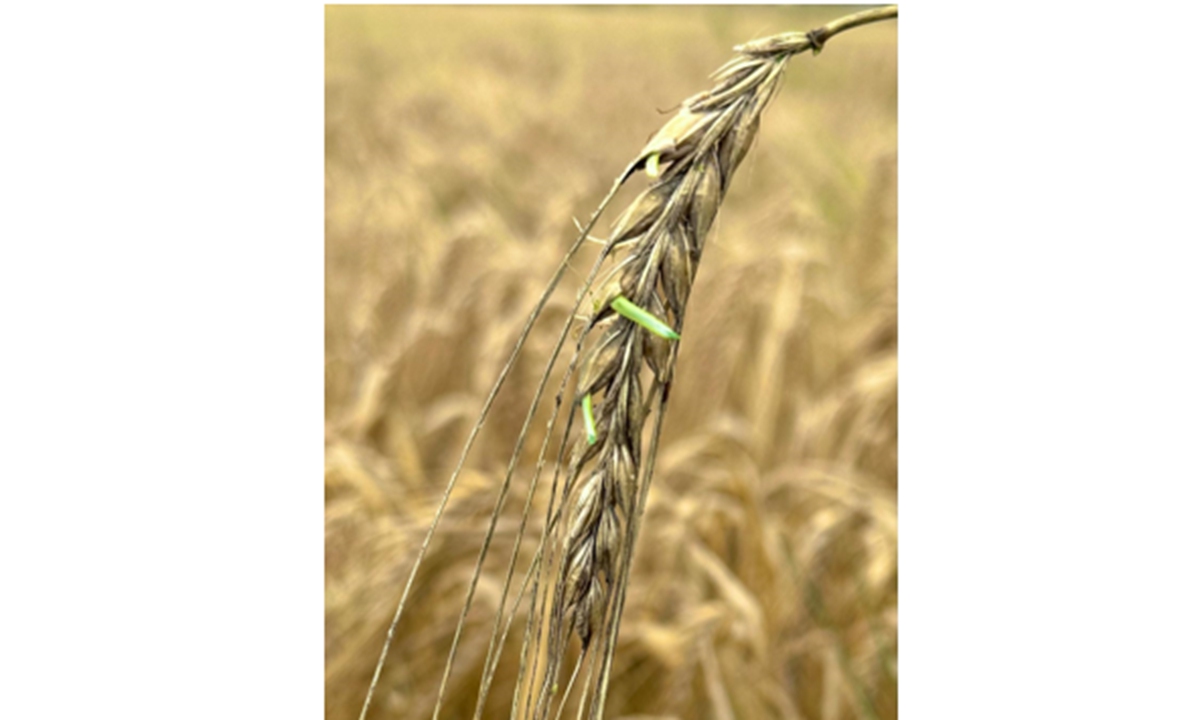
Photo: Courtesy of Carlsberg Research Laboratory in Denmark
Scientists from China, Denmark, France and the UK unraveled the secret of barley seed dormancy. They believe the findings will not only help build sustainable, and high-performance agricultural systems for genome-guided breeding, but offer a new route to address future food-security challenges posed by potential extreme climate change and rapid population growth, the Global Times learned from the Institute of Tibetan Plateau Research (ITP) of the Chinese Academy of Sciences on Monday.The findings have been published in the journal Science, according to the ITP.
Seed dormancy refers to seeds remaining inactive and not germinating even under otherwise favorable conditions, only beginning to germinate when the environment is truly safe. It is one of the key traits profoundly altered during crop domestication, according to a statement sent by the ITP to the Global Times.
Anthropogenic selection of grain traits such as dormancy has shaped crop developmental trajectories. In cereals, shortening dormancy enables rapid and even post-harvest germination, but increases the risk of weather-induced pre-harvest sprouting (PHS), with annual harvest losses exceeding $1 billion. This trend is worsening as extreme weather becomes more frequent, according to the statement.
Our understanding of how, why, when and where cereal dormancy diversification arose remains fragmentary. Here, we show that in the founder crop barley (Hordeum vulgare) that dormancy is primarily regulated through a mosaic of locus haplotypes comprising copy-number variation and inherent kinase activity of Mitogen-activated protein kinase kinase 3 (MKK3). We provide evidence supporting the historical selection of specific MKK3 haplotypes that shape dormancy levels according to changing climatic pressures and outline a genetic framework for breeders to balance grain dormancy and PHS-avoidance, read the paper.
Christoph Dockter, the corresponding author of the study and a senior scientist at the Carlsberg Research Laboratory in Denmark, explained that the MKK3 gene controlling seed dormancy in the barley germplasm genome exerts a dual regulation over barley seed dormancy duration. It occurs as 1-15 variable tandem repeat copies and also carries key amino acid variants such as T260 and Q165. The greater the gene copy number, the higher the expression and the weaker the seed dormancy; likewise, the stronger the kinase activity determined by the amino acid variants, the weaker the seed dormancy. The two mechanisms act synergistically to enable fine control of overall MKK3 activity, thereby determining the dormancy characteristics of crop seeds.
Building on these findings, the research team systematically analyzed the spatiotemporal evolutionary patterns of MKK3 in more than 1,000 barley samples worldwide and found that climate and agricultural needs have been key drivers in human selection of MKK3 types. They found that on the Qinghai-Tibet Plateau, naked barley (qingke) adopted the world's "highest-activity" mode: after long-term selection qingke now exhibits among the highest MKK3 activity levels globally, showing the weakest dormancy and the strongest seed germination vigor.
In response to the plateau's extreme climate, particularly the frequent cold stress during the barley harvest season (September-October) at high elevations, a unique adaptive farming practice has developed locally: harvesting grain before it is fully mature. The grain is then post harvest processed — air dried and roasted, ground — to make it suitable for winter storage and consumption. This pronounced selection for seed dormancy traits ensures that seeds harvested early can rapidly become active after sowing to cope with the plateau's harsh environment, ensuring that most grains germinate, according to the paper.
"This integrates genetic variation, climate change, and human dietary culture into a single narrative," said Wang Yucheng, a researcher at the ITP and co-first author of the paper. "More importantly, the findings provide an actionable molecular module for breeding stress resilient crops: the dual regulatory mechanism of MKK3 can be used directly in molecular breeding — by increasing or decreasing copy number, or through single base editing to fine tune seed dormancy, thereby controlling dormancy and germination and supporting sustainable agriculture under current global climate change," Wang told the Global Times.
Liu Xiaoqian from the ITP contributes to this article
RELATED ARTICLES