Cross-Strait CEO Summit kicks off in Nanjing
Participants call for enhanced economic cooperation
By in Nanjing Published: Dec 16, 2025 10:43 PM

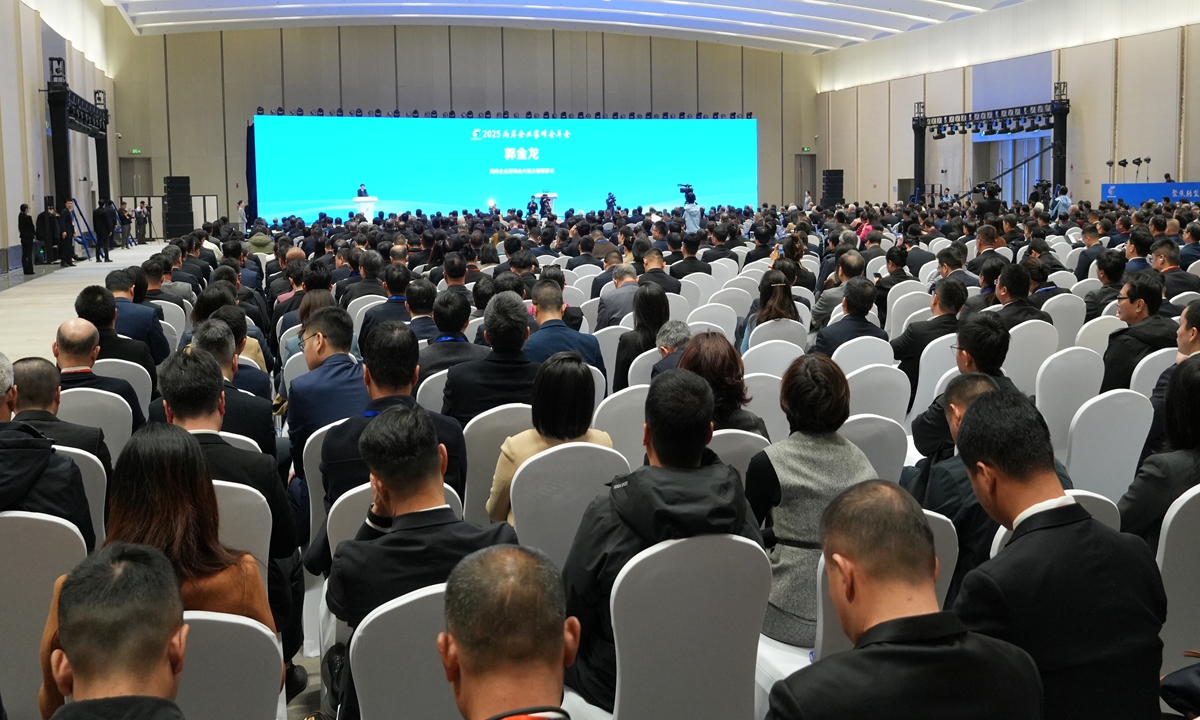
About 800 people from the Chinese mainland and Taiwan gathered in Nanjing, East China's Jiangsu Province, to discuss cross-Straits industrial transformation, innovation and cooperation on December 16, 2025. Photo: Chu Daye/GT
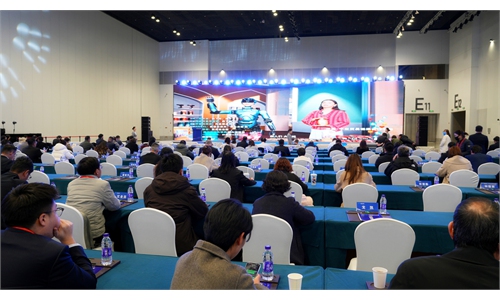
About 800 people from the Chinese mainland and Taiwan gathered on Tuesday in Nanjing, East China's Jiangsu Province, to discuss cross-Strait industrial transformation, innovation and cooperation, according to the Xinhua News Agency.
Wang Huning, a member of the Standing Committee of the Political Bureau of the Communist Party of China (CPC) Central Committee and chairman of the National Committee of the Chinese People's Political Consultative Conference, addressed the opening ceremony of the 2025 annual conference of the Cross-Strait CEO Summit, Xinhua reported.
Wang emphasized the importance of following the trend of national reunification and rejuvenation, maintaining the correct direction for cross-Straits relations, and deepening exchanges and cooperation to promote common development, per Xinhua.
Participants in the annual conference called for enhancing supply chain cooperation amid the rising challenges of unilateralism and global supply chain fragmentation.
In the past three to four years, the international economic landscape and geopolitics have undergone drastic changes, and international trade and investment have been severely disrupted, and global supply chains have been forced to restructure, which also created challenges for Taiwan businesses on the mainland, Liu Chao-shiuan, co-president of the summit from Taiwan, said in a speech at the opening ceremony.
However, the fundamental patterns of investment, trade, and the industrial division of labor between businesses on both sides of the Taiwan Straits remain unchanged, and Taiwan businesses still regard the mainland as a crucial production base and market, Liu said.
Liu pointed out that there remain ample opportunities between companies from across the Straits in a wide range of sectors, as the country continues to push for high-quality growth in the next phase of development, indicated by the Recommendations of the Central Committee of the CPC for Formulating the 15th Five-Year Plan (2026-30) for National Economic and Social Development.
Themed "Focusing on transformation and innovation, deepening multi-chain cooperation," the conference this year centers on discussions of topics such as seizing the strategic opportunities in the upcoming 15th Five-Year Plan period (2026-30), helping Taiwan entrepreneurs and enterprises integrate into the new development paradigm, and deepening cross-Straits integration and cooperation across industrial, supply, innovation, and value chains.
Participants in the summit emphasized the need to join hands and strengthen cross-Straits commercial links and further deepen cooperation, and they opposed the political headwinds and disruptions imposed by the Democratic Progressive Party (DPP) authorities, which are affecting trade and economic ties.
Despite attempts by the DPP authorities to undermine cross-Straits cooperation, Lei Hong Yi, director-general of the Council for Industrial and Commercial Development from Taiwan island, told the Global Times that he remained confident in the resilience of economic and personnel exchanges.
"Economics and livelihoods ultimately transcend political noise," Lei said. "People need to work, to provide for their families. That fundamental drive ensures the connection endures."
Lee Cheng-hung, president of the Association of Taiwan Investment Enterprises on the Mainland, told the Global Times on Tuesday that in response to external interference and influence, people across the Straits should unite more closely, leverage their respective strengths, and collaborate powerfully to break through the so-called geopolitical disturbances.
"This is precisely what entrepreneurs across the Straits should explore. Most importantly, we must strengthen cooperation to eliminate these interfering factors. The deep integration of entrepreneurs from both sides of the Taiwan Straits will undoubtedly secure them a place on the global stage," Lee said.
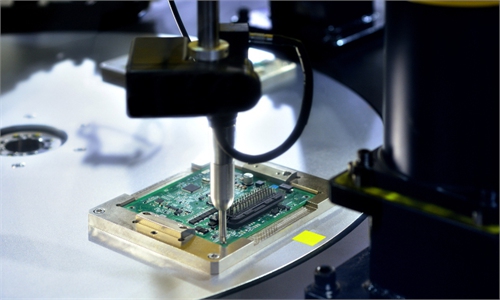
At a seminar discussing the scope of cooperation between mainland and Taiwan companies in the field of artificial intelligence (AI) and the industrial Internet of Things, held on Tuesday afternoon, participants and industry players emphasized the huge potential for companies from both sides of the Straits to bring their best and operate in synergy to achieve the most.
"New-energy vehicles and robotics are the two obvious areas in which mainland and Taiwan companies can explore a deeper level of cooperation," a participant in the seminar told the Global Times on Tuesday.
Trade between the Chinese mainland and Taiwan increased by 11.4 percent year-on-year in the first half of 2025, highlighting steady progress in economic exchanges and cooperation between the two sides, the China News Service reported in July, citing data from the General Administration of Customs.
RELATED ARTICLES