Macao forum spotlights cross-civilizational exchange, heritage conservation
By Published: Dec 17, 2025 12:08 AM
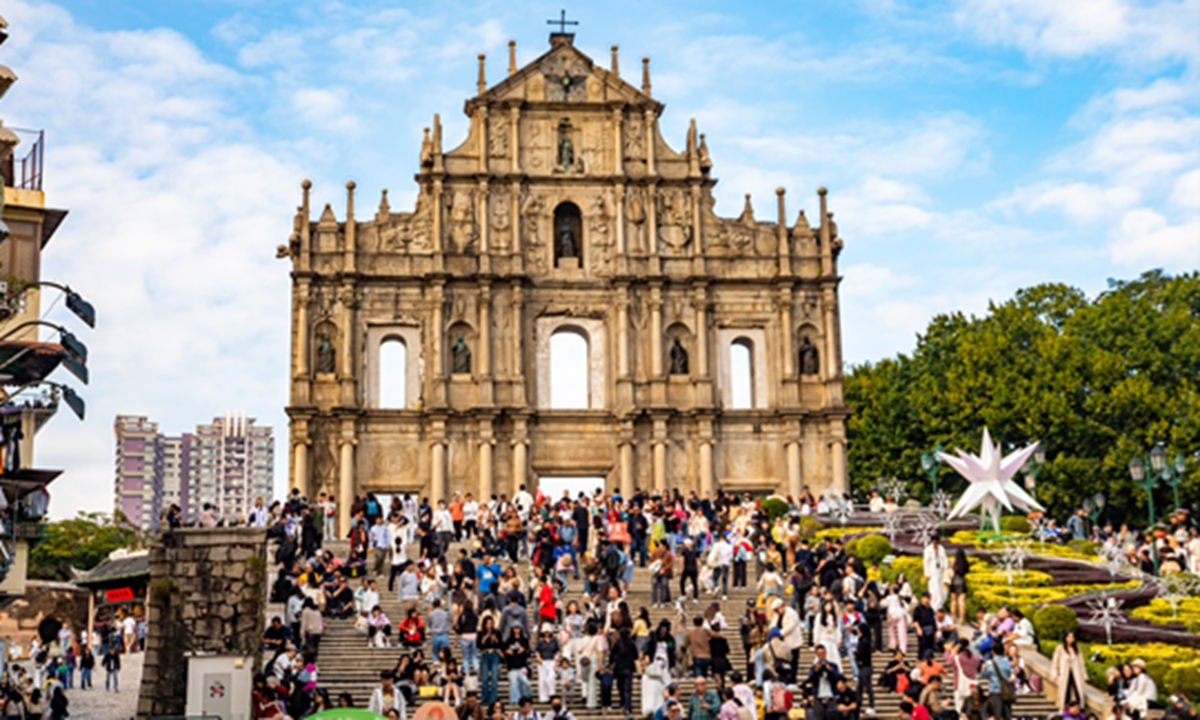
Ruins of St. Paul in Macao Photo: VCG
Themed "Mutual Learning among Civilizations, Inheritance and Development," the 2025 International Forum on Mutual Learning among Civilizations kicked off on Monday in the Macao Special Administrative Region, gathering more than 50 experts scholars, and institutional representatives from nearly 10 countries.In his keynote speech, Li Guoqiang, a deputy director of the Chinese Academy of History, used the story of how China's ancient imperial examination system spread overseas and influenced civil service systems in countries such as Germany and the US to illustrate the importance of mutual learning among civilizations.
The forum featured two parallel sub-forums entitled "Mutual Learning among Civilizations and Diverse Coexistence" and "Conservation and Sustainable Development of Cultural Heritage," as well as a series of academic salons. Experts conducted in-depth discussions on topics such as civilizational inclusiveness, cultural innovation and the development of cooperation during the two-day event featuring nearly 20 keynote speeches, according to a press release sent to the Global Times.
"Chinese civilization is an inclusive and all-embracing part of human civilization. Seeking common ground while reserving differences, and harmonious coexistence, is not only the attitude of the Chinese nation toward the world, but also a striking practice through which the Chinese nation continuously advances the cause of human civilization," Li said in his speech.
Macao's culture, formed through the blending of Chinese and Western cultures, is profound, diverse and inclusive, Li noted. The coexistence and mutual prosperity of multiple cultures, coupled with interactive, harmonious cultural landscape and paradigm constitute the vital source driving Macao's vibrant and sustainable growth.
Qian Chengdan, a professor of history from Peking University, pointed out that by the end of the 20th century, the collective rise of non-Western countries had become unstoppable, ancient civilizations gained new vitality, ancient nations regained confidence, and the unequal relationships between civilizations — once distorted by Western hegemony — had been reversed. This is referred to as the "return of civilizations." "Return" means that the diversity of civilizations is once again being manifested and relationships between civilizations have returned to equality.
The city of Macao also becomes one of the focal points of discussion among forum guests. Wu Zhiliang, president of the board of directors of the Macao Foundation, said that Macao is a living "laboratory of civilizations" honed by the passage of time. Now, Macao should be upgraded into a "civilization converter," for example, by refining and elevating locally tested experiences of "coexistence" — such as community governance, heritage conservation, educational integration and cross-cultural mediation — into replicable and promotable paradigms for dialogue and cooperation.
The year marks the 20th anniversary of the Historic Center of Macao's inscription on the UNESCO World Heritage List. The forum also hosted a dedicated themed "cultural heritage conservation," during which participants discussed trends in heritage development, emerging challenges and innovative models for sustainable preservation.
Du Xiaofan, a professor from the Fudan University who attended the forum, told the Global Times that civilizational mutual learning has become a frequently used term in the international discourse on heritage protection. Against the backdrop of transnational joint protection of heritage, a model featuring joint research, localized implementation and capacity building is well positioned for promotion. For instance, in the post-earthquake restoration of cultural relics in Nepal, local traditional craftsmanship was integrated with Chinese conservation techniques, while local artisans received targeted training to form a sustainable system of conservation and a localized mechanism for collaborative technology sharing.
When addressing the conservation of urban world cultural heritage and Macao's relevant practices, Zhao Yun, director of the World Cultural Heritage Center of China at the Chinese Academy of Cultural Heritage, noted that urban world cultural heritage sites boast richer cultural diversity, embody multiple values, and require more sophisticated protection frameworks.
Taking the monitoring and early warning system for the Historic Centre of Macao as an example, the application of advanced technology can provide tools for both government and the public to manage changes in the landscape, thus ensuring the sustainable development of the city's historical landscape, according to a press release sent to the Global Times.
Leong Wai Man, director of the Cultural Affairs Bureau of the Macao SAR government, stated on Tuesday that by hosting the forum, global experts and scholars can have the opportunity to witness firsthand the city's centuries-long East-West cultural convergence and integration, and help spread these unique characteristics, the China News Service reported.
RELATED ARTICLES