Crunching the China-US economic and trade math for ‘Zootopia 2’: Global Times editorial
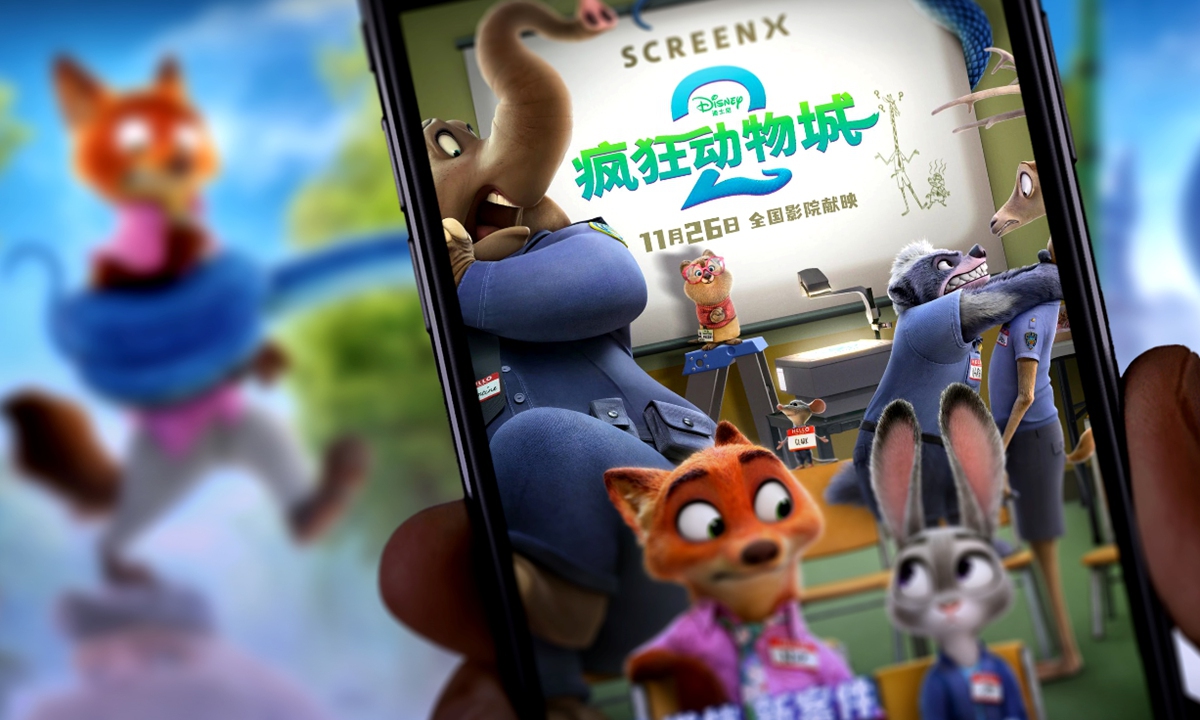
Zootopia 2 Photo: VCG
The "astonishing success" of the American animated film Zootopia 2 in China has drawn widespread attention from US media. Disney reported that Zootopia 2 set a new record for the highest animated opening of all time for a non-local title in China and broke the overall box office record for non-local animated films of all time within just five days of its release. Many US media outlets have noted that of the film's $1 billion in global box office revenue to date, nearly half has come from the Chinese market. Some film distributors remarked with amazement: "China is not only a boost to the box office, it can even determine whether a blockbuster is profitable or loss-making."
The spillover effects of a film that achieves both critical acclaim and box office success across the entire industry chain are undeniable. This presents a timely opportunity to take stock of the broader "big picture" of China-US economic and trade ties. Walt Disney, the production company behind Zootopia 2, is the world's largest media and entertainment conglomerate. Its theme parks contribute more than $60 billion annually to the US economy and support over 400,000 jobs.
This time, box office receipts in the Chinese mainland far exceeded those in the North American market, "reversing the old pattern in which Hollywood blockbusters have treated North America as the absolute core," and underscoring that tapping into the vast potential of the Chinese market is crucial to their future global strategies. Nowadays, more than 70 co-branded partnerships are tied to Zootopia 2 in the Chinese mainland, online and offline interactive experiences together have built a complete film IP industry chain. The success of Zootopia 2 is bound to generate significant spillover effects and benefits for the cultural markets and related industries of both China and the US.
The cross-border circulation of films is, in essence, a form of trade in services centered on creativity and quality. With a population of more than 1.4 billion, China's vast market has a sustained capacity to absorb high-quality content. The momentum for upgrading service consumption is accelerating, and public demand for more diverse and higher-quality cultural offerings is genuine and stable.
With over 90,000 screens nationwide, China's film market offers enormous box office potential. Audiences are willing to support products that demonstrate strong quality, compelling storytelling, high production standards, and respect for local national cultures, providing a solid demand base for high-caliber international content to enter China. Building "small yard, high fences," resorting to tariff coercion, and pursuing protectionist practices will only sap one's own innovative drive and erode the competitiveness needed for long-term development.
The success of Zootopia 2 in China is one piece of the true picture of China-US economic and trade relations. US public discourse often trains the spotlight on China's surplus in trade in goods with the US, while rarely mentioning the basic fact that the US is the largest source of China's deficit in service trade, and that the overall gains from bilateral economic and trade exchanges are broadly balanced. China-US economic and trade cooperation is mutually beneficial; there is no logic by which one side's gain must mean the other's "loss." Zootopia 2 offers a vivid illustration of this reality. Through the laughter and shared emotional resonance brought by a single film, both sides can accumulate understanding and trust - and catch a glimpse of a more long-term future.
Across more sectors, China has genuine demand for high-quality supplies from the US. In the case of Zootopia 2, in normal economic and trade environment, as long as the US can offer products and services that stand up to market tests, the film can achieve "astonishing success" in the Chinese market. This underscores that China-US economic and trade relations are not a one-way "surplus narrative," but rather a two-way flow underpinned by complementarity and driven by demand.
Looking further ahead, the US has long enjoyed clear competitive advantages in areas such as high-end manufactured goods, trade in services, and digital content. Yet Washington's external restrictions, regulatory barriers, and politicized maneuvers have, in effect, narrowed its export space to China and constrained the channels through which the US could rebalance its trade structure via service exports.
Opening the Chinese market cannot be achieved through pressure or restrictions; it requires mutually beneficial cooperation. The most effective way to address structural imbalances is not to treat markets as battlegrounds, but to expand institutional openness and enhance the capacity to supply products and services. This would allow more high-quality US products and services to enter China's ultra-large market, which features strong demand and diverse consumer needs.
For the US, this path not only aligns better with economic principles, but also serves the interests of ordinary people. Safeguarding and expanding this goodwill among the public and the power of the market does more to reduce misunderstanding than any war of words, and creates more growth than any narrative of "decoupling."
Behind the breakout success of a film lies a real reflection of economic globalization in action. The trend toward global openness and cooperation has not been interrupted. Only by continuing to broaden this path can growth become more sustainable. Economic globalization is evolving from a model centered mainly on goods to one increasingly linked by services, digital flows, content, and standards.
Promoting the future economic globalization, China still offers a vast domestic market and immense development potential. In this process, the greatest certainty continues to come from openness and cooperation, from following comparative advantage, respecting market choices, and upholding fair competition. A Chinese market willing to pay for quality content is not a threat to anyone, but a shared opportunity for development for all countries.
RELATED ARTICLES