Guangzhou Customs uncovers major smuggling case involving pregnant women’s blood samples
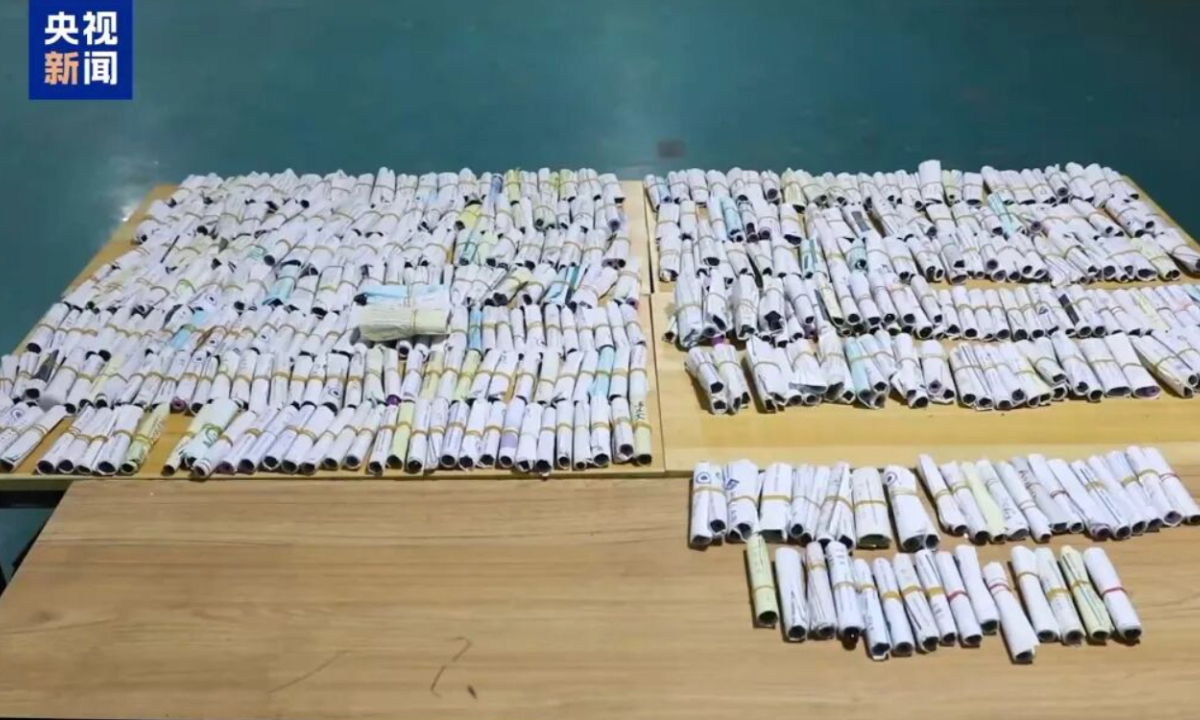
The smuggled pregnant women's blood samples seized. Photo: CCTV News
Recently, the Guangzhou Customs Anti-smuggling Bureau successfully cracked a major smuggling case involving pregnant women's blood samples, dismantling a cross-border black industrial chain spanning 23 provinces across the country, CCTV News reported on Wednesday. Pregnant women's blood samples contain key information about human genetic material and are strictly regulated for import and export by the state.
The bureau mobilized 265 officers to conduct a coordinated takedown operation simultaneously in South China's Guangzhou, Foshan, and Shenzhen, successfully dismantling two criminal gangs specializing in smuggling pregnant women's blood samples out of the country. Preliminary investigations revealed that the gangs involved had smuggled more than 100,000 pregnant women's blood samples out of the country, illegally profiting over 30 million yuan ($4.26 million). The case spans 23 provinces nationwide, making it the largest and most extensive case of its kind uncovered by the bureau in recent years.
Through online investigation, it was discovered that some criminal gangs collect pregnant women's blood samples under the guise of fetal gender identification via online platforms and smuggle them overseas for testing, said Zheng Zhong, deputy director of the investigation division at the bureau.
After more than a year of investigation, a tightly organized and highly specialized cross-border smuggling gang gradually came to light. On the day of the operation, all 26 targeted suspects were apprehended. The investigation team found that the smuggling gang's methods of recruiting clients and transporting samples were highly covert, forming a complete black industrial chain from online recruitment, express delivery sample collection, transit storage to cross-border smuggling, according to CCTV.
The smuggling gangs post advertisements such as non-invasive fetal gender identification and genetic disease screening on social media platforms, using phrases like "accurate genetic testing" and "safe and risk-free" to attract target customers. The fees charged by the suspects generally range between 2,000 and 3,000 yuan. After an agreement is reached, an overseas laboratory provides the client with a commission form, and the client is instructed to either seek out "acquaintances" or use certain online medical platforms to collect the blood samples as required.
To evade supervision, smugglers often tape test tubes containing pregnant women's blood samples to their abdomen or inner thighs or hide them in specially designed compartments of luggage.
Among the pregnant women's blood sample smuggling cases cracked by the Guangzhou Customs, the criminal gang led by suspect surnamed Li was particularly rampant. To cover up their illegal activities, Li rented a space in a creative park, purchased office equipment, and disguised the operation as a legitimate media company, while, it was exclusively engaged in smuggling pregnant women's blood samples.
Li had been previously targeted by law enforcement in various regions for smuggling blood samples, but driven by profit, he continued to engage in related criminal activities. Additionally, the main suspects in this case, Huang and his spouse, received packages containing pregnant women's blood samples at express delivery points. Anti-smuggling officers on-site discovered a total of 33 pregnant women's blood samples hidden in tea boxes and toys within the packages.
Currently, out of the 26 suspects in this case, nine have been arrested with the approval of the procuratorate, and the case is under further investigation. "In the cases we have investigated, multiple instances of blood sample leakage and test tube breakage have been discovered. In cases involving blood sample smuggling, some samples have been found to contain infectious diseases, posing a high risk of spreading diseases," Zheng said. "This is to protect the right to life of fetuses and to maintain a healthy population ratio."
Global Times
RELATED ARTICLES