ARTS / CULTURE & LEISURE
New finds at ‘Hetao Man’ site reveal life 50,000 years ago
Paleolithic spot featuring over 400 animal fossils discovered
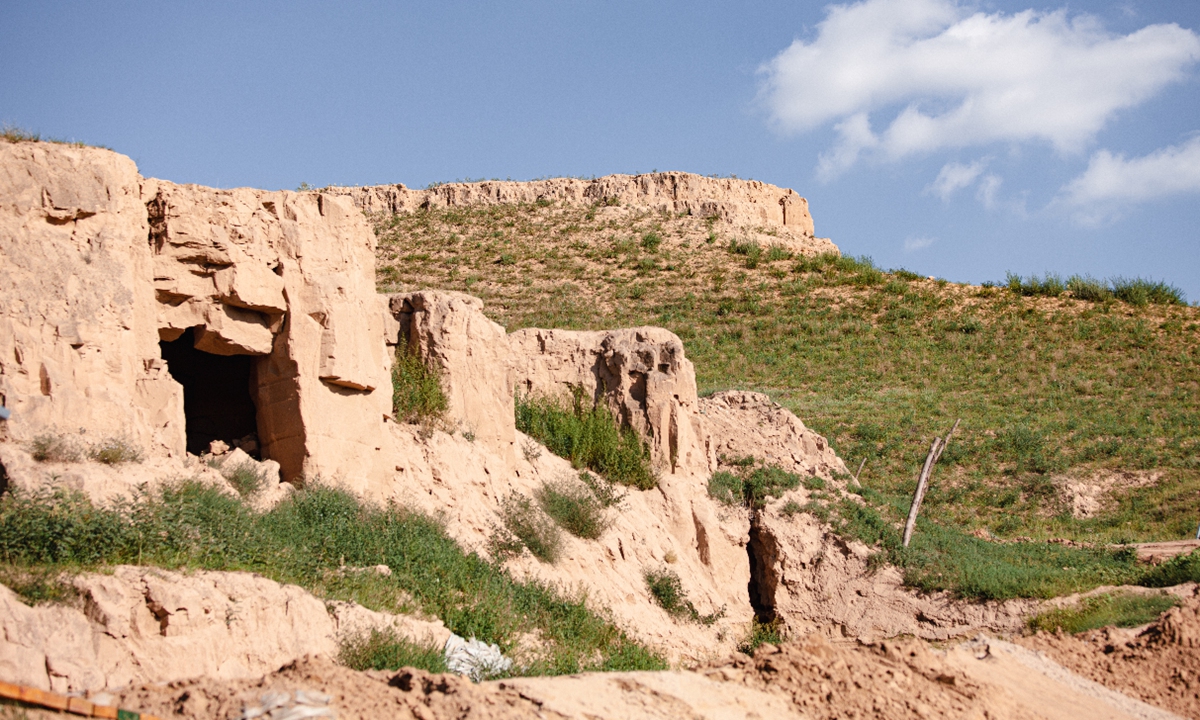
The Salawusu site in Ordos, the Inner Mongolia Autonomous Region Photo: IC
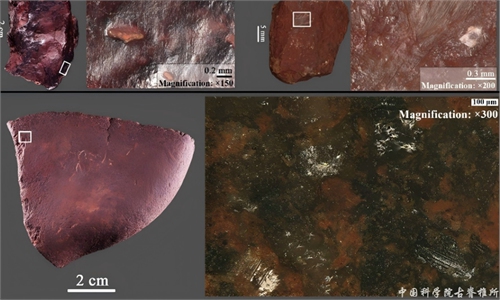
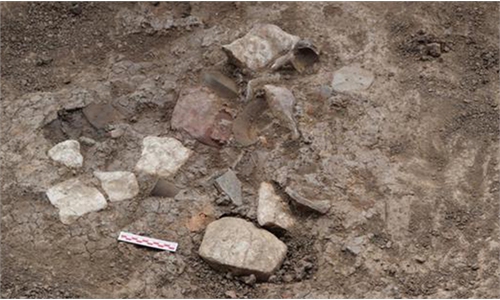
Featuring more than 400 animal fossils, a new archaeological spot has recently been discovered within the Salawusu site in the city of Ordos, North China's Inner Mongolia Autonomous Region. The Salawusu site is one of the earliest paleolithic sites discovered in China, with a history dating back at least 50,000 years.The newly found spot is called Xijia paleolithic site. A total of 600 items have been discovered from it. The majority of them are fragmented animal fossils, including large herbivores such as antelope, horses and the extinct woolly rhinoceros, also known as Coelodonta antiquitatis. Additionally, around 80 stone artifacts have been uncovered.
These items unveiled the "unique ecological and climatic environment" of the Salawusu site. Taking the woolly rhinoceros as an example, this animal "was a typical species in the cold and dry climate of the north," Huang Wanbo, a veteran Chinese paleontologist who has investigated the Salawusu site multiple times, told the Global Times.
"From them, we can analyze the distribution patterns of animal groups in the northern region during the Paleolithic period, as well as the interactions between these animal groups and the ancient human populations at the time," Huang noted.
What sets this batch of discoveries apart is that some of the animal bones show burn marks. These traces reveal that ancient humans had already developed survival strategies such as using fire and roasting animal meat. Chen Fuyou, a key figure to the project, told the Global Times that the Salawusu site's new discoveries provide "tangible evidence to study the behavior and activities of ancient humans in northern China."
Nestled in a U-shaped valley along the Salawusu River, the Salawusu site is one of the major spots along the river seen as the cradle of the "Hetao Man" culture. "Hetao Man" refers to a type of late Homo sapiens from the late Paleolithic period. Fossilized samples of these ancient humans were first found from 1922 to 1923.
At that time, a heavily fossilized left upper lateral incisor from a Hetao Man child around 7 to 8 years old was unearthed. This specimen was named "the Ordos tooth" and at the time represented the earliest-known Pleistocene human fossil discovered in China. "Later, my mentor Pei Wenzhong gave the new discovery in Ordos a new name of the 'Hetao Culture,'" Huang told the Global Times.
The discovery of Hetao Man caused a sensation, cementing the Salawusu site as a key archaeological research destination where rounds of excavations have been conducted over the years. The most recent excavation cycle began in 2021 and concluded in 2025.
The five-year excavation yielded numerous new discoveries, including animal fossils, stone artifacts, charcoal remains and more. The precise location of the fossilized skull of Bubalus wansjocki has also been accurately confirmed at the site. Bubalus wansjocki is an extinct species of water buffalo that lived during the Late Pleistocene.
"Traditionally, this species was not as adapted to dry and cold climates as the woolly rhinoceros, but rather preferred humid and temperate environments," Huang told the Global Times, while adding that the discovery Bubalus wansjocki further confirms the site's unique geographical environment, opening up people's imagination about the migration of both fauna and ancient humans at the site.
In addition to animal remains, a cultural layer containing knapped stone tools was also identified during the five-year archaeological project. Compared to other paleolithic sites, the stone tools unearthed at Salawusu are notably smaller in size and exhibit finer craftsmanship. Most of the unearthed stone artifacts were produced using the hammer percussion technique. They reveal ancient humans in China were consistently following a "stone core to stone flake" processing system.
"Not only in Inner Mongolia, but this stone tool processing technology has also been consistently found in sites across northern China. Some scholars believed that the Salawusu site exhibited elements of Western paleolithic culture, but this commonality proves this is not the case," said Chen.
Until now, a total of 27 spots within the Salawusu site have been identified. There is one human fossil discovery location, four Paleolithic cultural sites, and 22 fauna fossil spots.
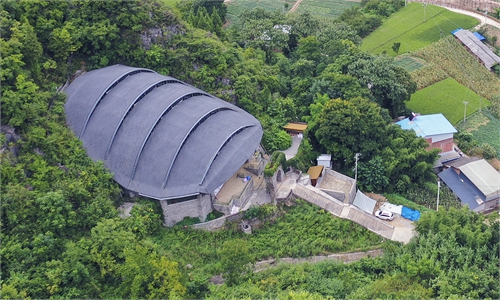
Including the archaeological site itself and a research center focused on Hetao Man culture, an archaeological park dedicated to the Salawusu heritage site has been established. In 2025, it was officially added to China's National Archaeological Site Park list.
RELATED ARTICLES