ARTS / CULTURE & LEISURE
Beijing’s new Great Wall regulations: local participation, scientific restoration take center stage
Beyond preservation
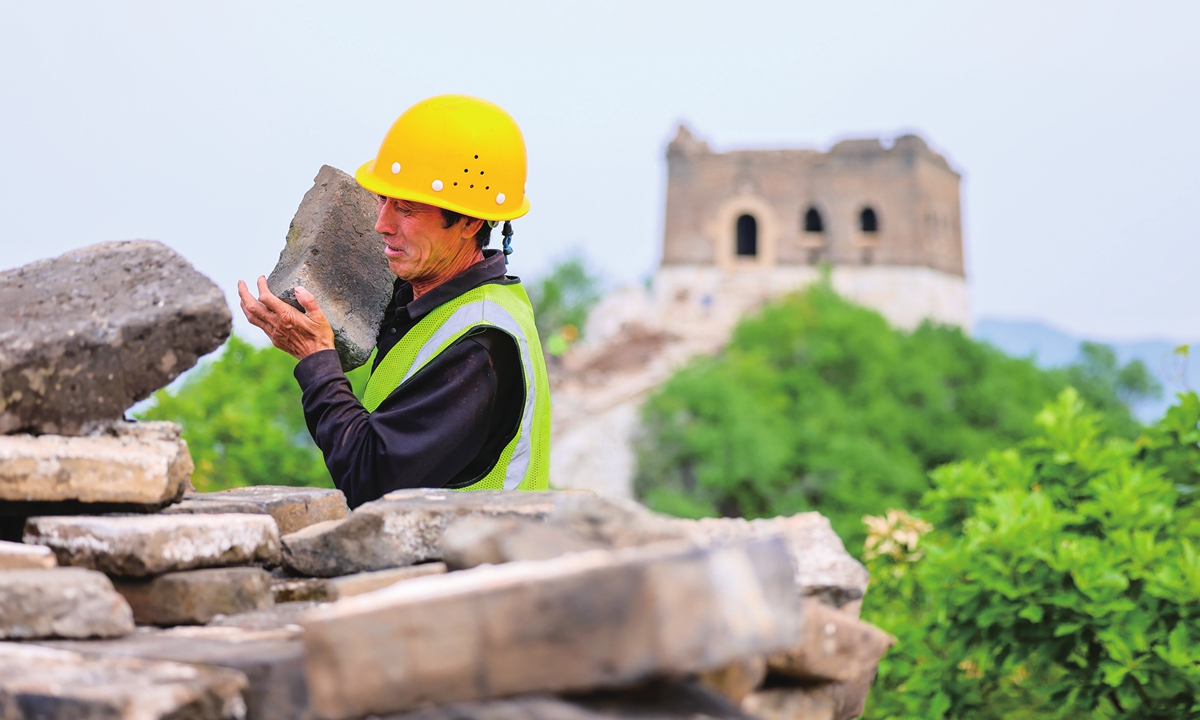
Yu Xilin, a worker carries bricks at the Zhengbeilou section of the Great Wall in Beijing. Photos: VCG
The Jiangjunguan section of the Great Wall, a historically strategic pass in Beijing's Pinggu district, is set to open to the public as early as the end of 2026, according to a recent Great Wall cultural salon held in the district. The move is part of the Chinese capital's efforts to revitalize the Great Wall's heritage as stipulated by the newly passed regulations on Great Wall protection.Beijing authorities recently passed regulations on Great Wall protection, providing legal safeguards to build a full-chain protection system that places equal emphasis on emergency reinforcement, preventive conservation, and research-based restoration of the Great Wall section in Beijing.
The regulations, set to take effect on March 1, 2026, is the first dedicated to the protection of the Great Wall in China.
Zhang Man, a deputy director of the Academy of Architectural Heritage at the Beijing University of Civil Engineering and Architecture, told the Global Times that the new regulations are a landmark move in tackling the current bottlenecks in Great Wall protection.
The regulations stipulate that Beijing will establish a coordinated protection mechanism with neighboring Tianjin Municipality and North China's Hebei Province, strengthening consultation and cooperation on major matters such as preservation and restoration, joint law enforcement, and public access, to promote the Great Wall's holistic and systematic protection.
Cross-regional coordination among multiple departments has long been a challenge in Great Wall protection, as conservation efforts vary greatly from one area to another, said Zhang.
The regulations also point out the need to revitalize Great Wall culture by launching themed routes and study tours, cultivating the "Great Wall Homestay" brand, supporting cultural and creative product development, according to the regulations.
The implementation of the regulations signifies that the protection of the Great Wall in Beijing has entered a new stage of legal governance and refined management. Supporting policies will be enhanced later to ensure that this world heritage site is not only preserved, but also brought to life. This initiative aims to provide a replicable and scalable Beijing model for the preservation and utilization of dynamic cultural heritages across the country, said Liu Hongchang, an official with the Beijing Municipal Cultural Heritage Bureau (BMCHB), cnr.cn reported.
Resident involvement
The Great Wall in Beijing spans six districts, namely, Pinggu, Miyun, Huairou, Changping, Yanqing, and Mentougou, at a total length of 520.77 kilometers. Consisting of 461 sections, it dates back to the period from the Northern Qi Dynasty (550-557) to the Ming Dynasty (1368-1644). In 1987, the Badaling section of the Great Wall in Yanqing was inscribed on the UNESCO World Heritage List, according to the Xinhua News Agency.
Regarding the revitalization and utilization of Great Wall cultural relics, Zhang advocates involving residents in a joint protection mechanism. Strengthening residents' sense of identity and participation and developing industries closely tied to their daily lives based on local conditions are essential to achieving the sustainable protection of the Great Wall.
Shixia village near the Badaling section of the Great Wall in Beijing's Yanqing district is a successful example, she noted.
Leveraging the Great Wall's resources, Shixia village has developed branded homestays and recreational agriculture, carving out a niche for rural cultural and tourism development.
He Yuling, founder of the Shiguang Great Wall Homestay in Shixia, shared her experiences at the salon in Pinggu on Sunday. He told the Global Times on Tuesday that exploring the cultural elements of the Great Wall in Pinggu and applying them to homestays and tourism is crucial to creating a distinctive cultural identity.
Pinggu's reputation for peach farming could serve as a calling card. Developing cultural and creative products, hands-on experiences, and the sale of local specialties could help boost locals' incomes while strengthening their sense of identity, He said.
Bi Jianyu, an official with the Beijing Municipal Cultural Heritage Bureau, told the Global Times on Tuesday that opening sections of the Great Wall to the public is an important way to pass on cultural heritage.
In recent years, some open sections of the Great Wall in Beijing have explored their historical and cultural significance and introduced initiatives such as night tours and study tours to promote the integration of culture and tourism, turning the Great Wall's unique resources into development advantages, Bi noted.
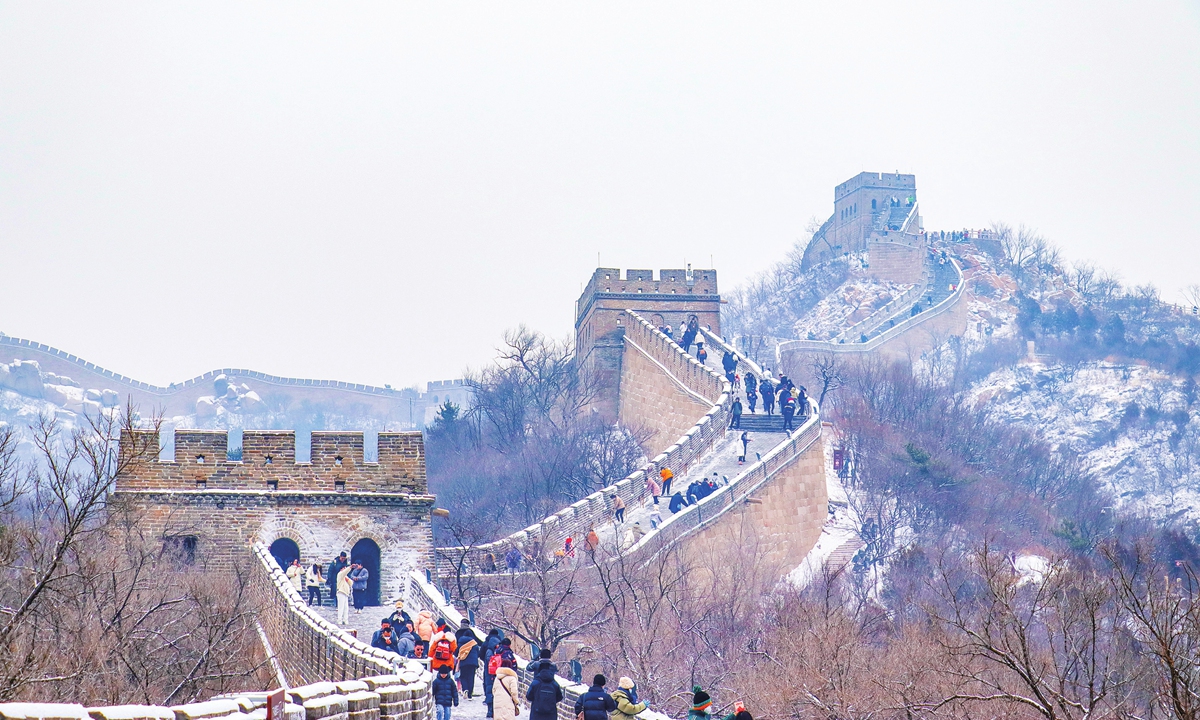
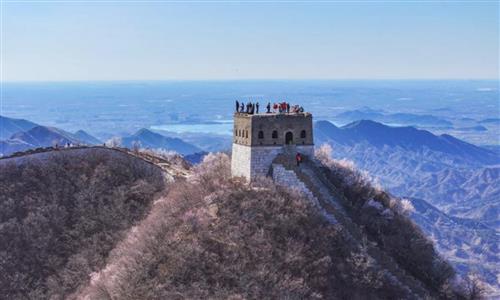
The Badaling section of the Great Wall in Beijing after snow
Model for the countryThe new legislative norm, opening sections of the Great Wall, and conducting archaeological work while restoring the wall are some of the capital's exemplary practices in Great Wall protection that serve as a model for the entire country, according to the BMCHB.
During the 14th Five-Year Plan period (2021-25), Beijing has carried out more than 60 emergency reinforcement projects on the Great Wall, restoring over 20 kilometers of wall sections, Huo Zhijing, deputy director of the publicity department of the Beijing Municipal Committee of the Communist Party of China, said at a press conference in October.
Beijing pioneered an approach of archaeological work running through the entire process of restoration of the Great Wall, embedding research into every phase of repairs, Chu Jianhao, deputy director of the Beijing Municipal Cultural Heritage Bureau said at the press conference. Adjustments to protection zones and improved monitoring mechanisms had enabled better management of both the Great Wall and its surroundings.
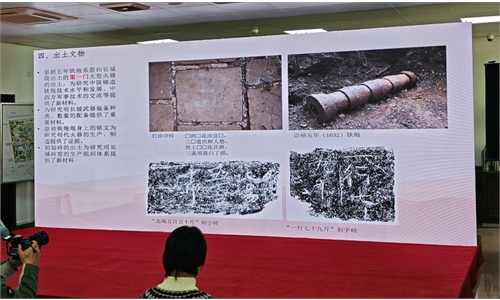
A large cannon from the Ming Dynasty was unearthed at the Jiankou section of the Great Wall in Beijing's Huairou district, Shang Heng, an associate research fellow at the Beijing Institute of Archaeology, said at a press conference on December 1.
Shang said at the salon in Pinggu that archaeological work at the Jiangjunguan section has provided a new case for Beijing's research into the Great Wall's fundamental construction techniques. The discoveries serve as the "raw materials" for interpreting and presenting the Great Wall culture.
RELATED ARTICLES