Hainan launches island-wide special customs operations, aiming to ramp up trade, tourism and more

Consumers choose goods in a duty-free store in Haikou, South China's Hainan Province, on November 2, 2025. Photo: VCG
With just 24 hours to go before Hainan Free Trade Port's (FTP) island-wide special customs operation takes effect on Thursday, the island province is preparing to enter a new phase of trade liberalization and border management reform. Officials and experts said the package of facility upgrades, digital systems and regulatory adjustments will help accelerate Hainan's integration into global supply chains and support its ambitions as China's leading free trade port.
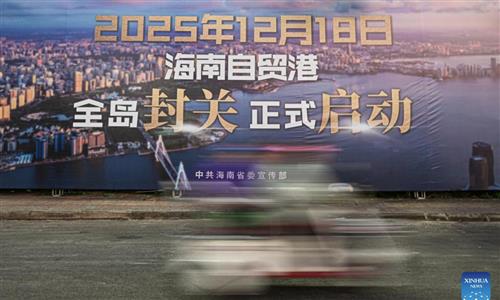
Streets, business centers, and transport hubs carry countdown signs and banners proclaiming a policy slogan: "Freer access on the first line, regulated access on the second line, and free flows within the island," the Global Times observed.
According to the Office of the Hainan Free Trade Port Working Committee, the "first line" refers to Hainan's connection with overseas markets. "Freer access on the first line" allows overseas goods to enter the island more conveniently, most benefiting from zero tariffs and expedited clearance. The "second line" refers to the customs boundary between Hainan and the Chinese mainland, where goods will undergo standard customs oversight to ensure fairness and prevent smuggling.
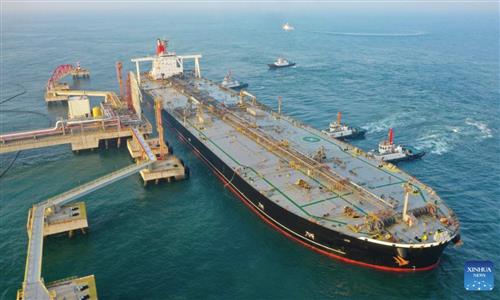
At Yangpu International Container Port, improvements in hardware and procedures are visible. New 50-meter quay cranes and upgraded machine-inspection systems enable instant imaging of container interiors while truck drivers remain in their vehicles. Customs officials said pre-arrival electronic filing and 24-hour machine inspection automatically reconcile declared manifests with inspection records and low-risk shipments without manual handling. The change can save an average of one to two days per consignment compared to prior procedures, customs official Li Tingting told the Global Times.
"Before machine inspection, goods had to be unloaded into the yard and wait in line for manual inspection. It was common for an inspection to take one or two days," Li said.
Behind the improved efficiency lies the dual support of hardware upgrades and institutional innovation.
Port operators in Hainan have increased their investment in infrastructure, upgrading core hardware such as quay cranes and advanced machine inspection equipment, and optimizing the customs declaration system to achieve data sharing among customs, maritime affairs, and border inspection departments.
"The 'freer access on the first line' is not about relaxing supervision, but about precise prevention and control," Li said, adding that relevant departments have increased their professional staff, and high-risk goods will still undergo personal inspection.
This "seamless customs clearance" is a vivid example of Hainan's ""freer access on the first line" policy.
With the implementation of the special customs operations, this does not mean Hainan will be closing up. Instead, it designates the entire island as a special customs supervision area — a "domestic outside-the-customs" regime — designed to speed flows of people, goods, capital and data, according to local officials.
Officials said starting Thursday, the share of zero-tariff products in the Hainan FTP will surge from 21 percent to 74 percent, with the number of tariff-free items expanding from about 1,900 to 6,637, covering nearly all production equipment and raw materials. The circulation of "zero-tariff" goods between beneficiaries within the Hainan island does not require the payment of import taxes, fully activating the vitality of trade liberalization.
Meanwhile, the Haikou Meilan International airport embodies the "regulated access at the second line" concept, which keeps a controlled line between Hainan and the mainland while maintaining fast international access. Airport logistics areas now use handheld PDAs for real time, paperless scanning and tracking; new CT and millimeter-wave inspection equipment and a fully electronic document processing system have cut average clearance times by roughly 30 percent.
Wang Haiyan, an assistant manager of the Logistics Development Department of Haikou Meilan International Airport said that, after the launch of the special customs operations, international trade will become more active, and Hainan's participation in the global supply chain will deepen. Meilan airport will see a new wave of growth in air cargo," she told the Global Times.
The implementation of special customs operations is not only reshaping the trade landscape, but also profoundly changing people's travel and lives. Consumers are already seeing the effects: expanded duty-free assortments and longer sales hours attract shoppers across Sanya and Haikou.
China in October announced measures to expand Hainan's duty-free shopping policy for departing travelers, adding new categories of goods and increasing the annual purchase allowance, according to the Ministry of Finance. The plan includes expanding product selections for travelers and easing approval requirements for duty-free store operations.
Effective on November 1, the new policy increased the list of eligible goods from 45 to 47 categories, with new additions including pet supplies, portable musical instruments, micro-drones, small home appliances, and more. Foreign passport holders and island residents can purchase and collect items immediately under the "buy-and-take" model, reducing airport wait times to a few minutes, a store manager at CDF Sanya International Duty Free City Sun Huiyan told the Global Times.
According to Haikou Customs, total duty-free sales in 2024 amounted to 30.94 billion yuan ($4.39 billion), with 5.683 million shopper visits. Offshore duty-free sales in Hainan totaled 195.8 billion yuan over the past five years. During the period, the number of duty-free shoppers neared 28.59 million. Sales and the number of shoppers saw 315.3 percent and 123.3 percent growth from the five years prior to the major shopping quota increase, said the Xinhua report.
The duty-free policy in Hainan FTP has directly driven up the number of tourists visiting Hainan and generated a substantial increase in tourism income, and indirectly led to the rapid development of tourism-related industries such as accommodation and catering, and transportation.
Island-wide special customs operations mark a new starting point for the development of the Hainan FTP, rather than the finish line. Hainan's policy advantages are expected to attract global capital into sectors such as tourism and education, help foster a trade model linking raw materials from Southeast Asia, processing in Hainan, and distribution in the mainland, positioning the island as a hub connecting domestic and international markets and helping optimize China's overall trade network, said analysts.
RELATED ARTICLES