China Port Watch: Hainan’s Yangpu Port trailblazes advancing high-level opening-up innovations
Hainan’s Yangpu Port trailblazing in advancing high-level opening-up innovations amid FTP development
By , Zhang Weilan and Tao Mingyang Published: Dec 19, 2025 10:57 PM

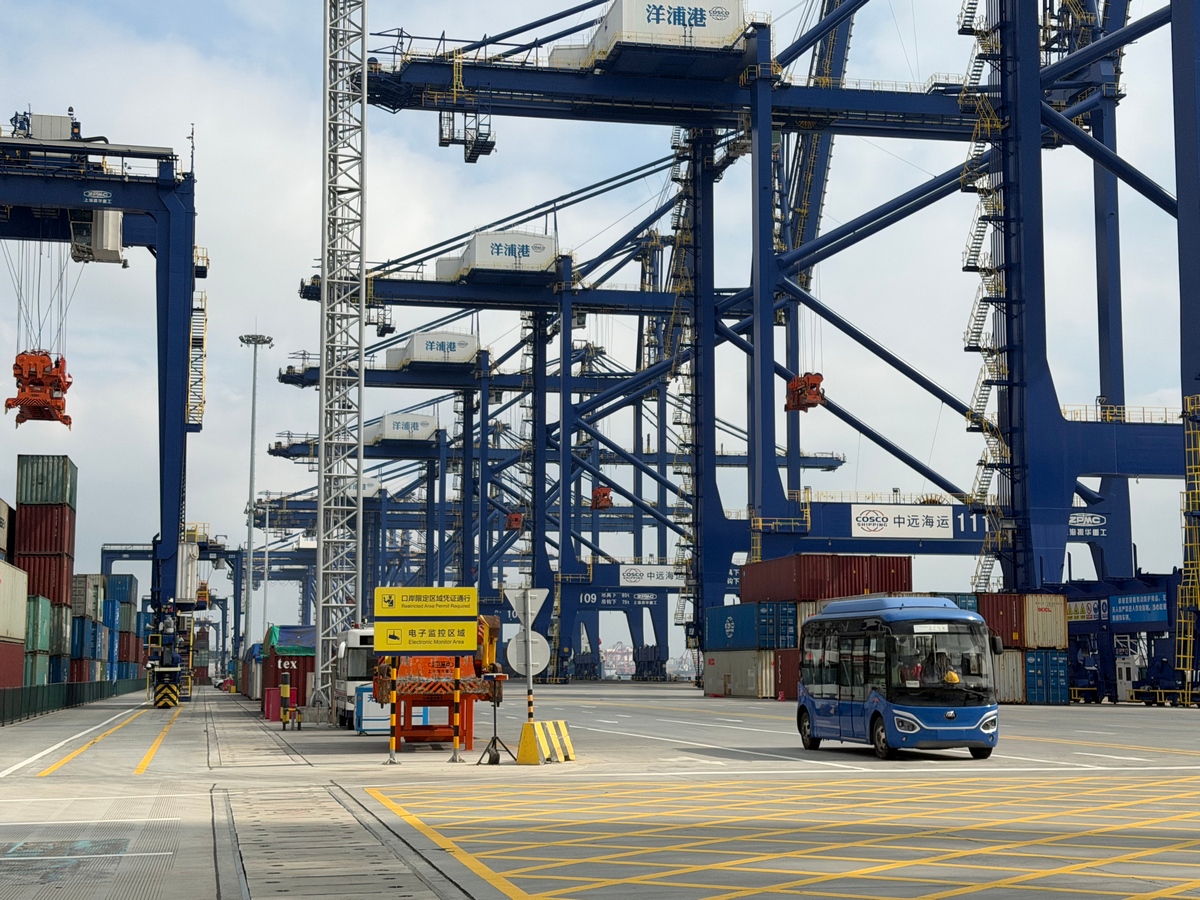
A view of Yangpu Port wharf at Yangpu Economic Development Zone in Danzhou, South China's Hainan Province, on December 3, 2025 Photo: Zhang Weilan/GT
Amid the deep, resonant blast of a ship's horn echoing across the harbor, a massive vessel loaded with 179,000 tons of petrochemical raw and auxiliary materials glided into the oil storage terminal at Yangpu Port in Danzhou, South China's Hainan Province, on Thursday morning.
The shipment marked the very first batch of "zero-tariff" petrochemical raw and auxiliary materials that clears customs smoothly at the Yangpu Port, after the official launch of island-wide special customs operations in the Hainan Free Trade Port (FTP) the same day. Under the new FTP policy, the coverage of zero-tariff goods has significantly expanded, which helped relevant companies save nearly 10 million yuan ($1.42 million)in costs.
Not far from the oil storage terminal lies another bustling container terminal, where towering gantry cranes swing their massive arms with graceful precision to hoist vibrant stacks of colorful containers. Container trucks weave efficiently through the expansive yard, while forklifts dart nimbly between rows of neatly aligned cargo. These scenes capture the pulsating heartbeat of a world-class port thriving at the forefront of global trade.
Chinese President Xi Jinping, also general secretary of the Communist Party of China Central Committee and chairman of the Central Military Commission, visited a container terminal of the Yangpu economic development zone in Danzhou, South China's Hainan Province, on April 12, 2022, the Xinhua News Agency reported. During the trip, Xi urged efforts to better serve the construction of the new land-sea transit routes for western China and the Belt and Road Initiative (BRI).
Several years on, the Yangpu Port has undergone a profound transformation. Once a small, remote harbor long focused mainly on domestic trade with limited container throughput capacity, it has developed into "the Pearl of the South China Sea" in the global shipping network, with overarching sailing routes that connect not only Southeast Asia but also extend across the hemisphere to Middle East and other BRI partner countries. The port has also positioned itself as a trailblazer in advancing high-level opening-up reforms and various "first-of-their-kind" innovations coming into fruition that inject new impetus to the Hainan FTP's development.
Now, upon the historical launch of Hainan FTP on Thursday, the Yangpu Port is poised to embark on another golden chapter of development. Local officials and port authorities told the Global Times that leveraging the FTP policy tailwinds, the port is set to seize this historical opportunity, further expanding both capacity and customs efficiency to elevate its role as a higher-level "gateway of opening-up" for China and the world.
'All prepared'
Following the island-wide launch, Hainan on Thursday implemented a system characterized by a clearly defined framework of "freer access at the first line, regulated access at the second line, and free flows within the island."
Under this arrangement, the island's eight existing ports, which are open to the outside world, serve as "first-line" ports, where eligible imported goods are released directly, while 10 "second-line" ports handle goods entering the mainland, with a range of streamlined clearance measures in place.
The Global Times noticed that on the very first day as Hainan FTP begins island-wide special customs operations, port authorities, government officials and enterprise representatives on site look fully prepared. Some are very emotional, as they told the Global Times that they "have been preparing and rehearsing for this moment" for about one year.
Under the Hainan FTP policy, the coverage of zero-tariff goods has significantly expanded upon Thursday, with the proportion of products eligible for zero tariffs jumping from 21 percent to 74 percent.
"We expected that goods arrived under the 'zero-tariff' coverage to gradually double upon Thursday. And anticipating the trend, Yangpu Port has made corresponding arrangements in infrastructure and shipping route networks," Du Chengcai, deputy general manager of production operations center at Hainan Harbor and Shipping International Port Co, told the Global Times.
Du cited as an example the commissioning of the world's largest 200,000-ton deep-water berths in May this year, which Du said "can also accommodate the world's largest container ships."
According to data the port authorities sent to the Global Times on Friday, fueled largely by the explosive demand on the first day of Hainan FTP's launch, the port's container throughput has exceeded 3 million twenty-foot equivalent units (TEUs) as of Thursday this year, breaching the 3-million TEUs for the first time. The value almost doubled from the 1.8 million TEUs recorded in 2024.
By 2035, it is expected that Yangpu Port's throughput will reach 225 million tons, with container volume hitting 12 million TEUs, according to a government plan guiding the port's development from 2024 to 2035. The Yangpu Port will be developed into an international hub port that connects globally, offers free and convenient trade, embraces openness and inclusiveness, features comprehensive functions, ensures safety and efficiency, adopts intelligent and green practices, possesses strong global resource allocation capabilities, and exhibits distinct characteristics of a free trade port, according to the plan.
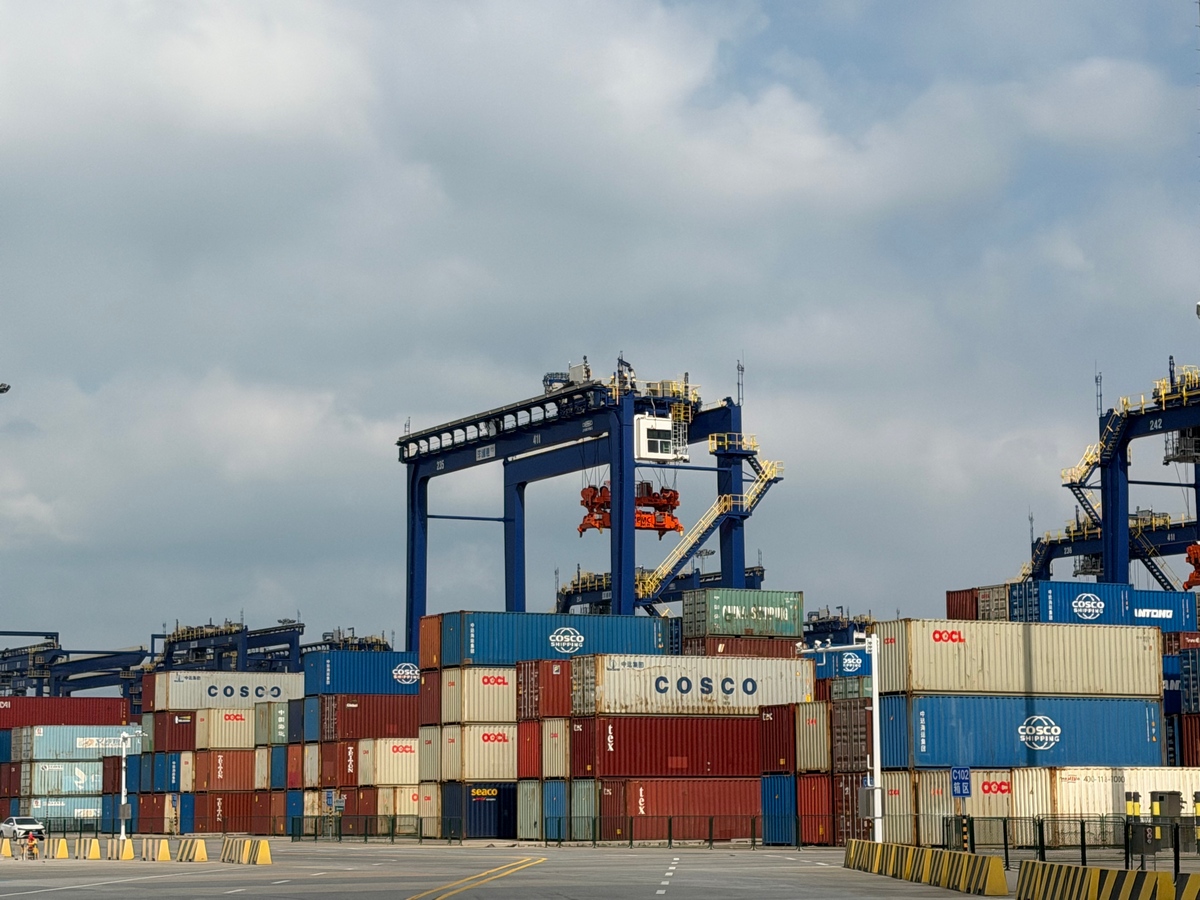
A view of the COSCO SHIPPING Yangpu International Container Terminal in Danzhou, South China's Hainan Province, on December 3, 2025 Photo: Zhang Weilan/GT
A focus on SE Asian market
With the rollout of Hainan FTP, this vision is now a vibrant reality: fresh durians, coconuts, and other Southeast Asian tropical fruits arrive at Yangpu Port and, within hours, grace dinner tables across China. Meanwhile, products such as soybean oil and paper are swiftly "going global" through the port's high-frequency shipping routes, seamlessly connecting Hainan to international markets.
The deep-sea Yangpu Port sits in the northwest of Hainan Province and is the closest harbor to the main international shipping routes in the Beibu Gulf. It also serves as the convergence point of the New Western Land-Sea Corridor and the 21st Century Maritime Silk Road, thus holding significant importance for China in deepening economic connectivity with the ASEAN and RCEP members.
Yangpu Port now handles more than 70 percent of the island's imported goods, thus it will serve as a main passage among "first-line" ports that are open directly to the outside world under Hainan FTP arrangement.
Liang Haiming, dean of the Hainan University Belt and Road Research Institute, told the Global Times on Friday that he expected Yangpu Port, leveraging Hainan FTP policy dividends and its unique geographic advantage, would be built into a strategic harbor bridging China's cooperation with ASEAN and other BRI partner countries. Meanwhile, it will integrate seamlessly into the new land-sea transit routes for western China and make itself an ocean extension of the corridor, facilitating more efficient logistics connection between China's Western regions and the global markets.
"The 'South China Sea pearl' will become a global transit hub that helps reshape regional industrial chain. Meanwhile, as manufacturing and high-end services companies amass in Hainan FTP, there will be a synergy effect between the development of the port and various industries such as grain and edible oil products, pulp and paper, new materials, and seafood," Liang said.
The Yangpu Port currently operates 59 domestic and international shipping routes, including 33 international routes covering regions such as Southeast Asia, the Middle East, and Africa. The number of seaborne routes also more than doubled from about 20 in 2022.
"We also plan to open more routes to reach more international destinations in the future, continue expanding our 'circle of friends,'" Du said.
Since 2024, new intercontinental routes have been launched, including services to Abu Dhabi and Peru's Chancay Port, according to the port operators. The shipping route connecting Hainan with Abu Dhabi now has been upgraded to a bi-weekly service, which could cut the transportation cost for local customers by 12 percent, with delivery times shortened from 20 days to 15 days, the Global Times learned.
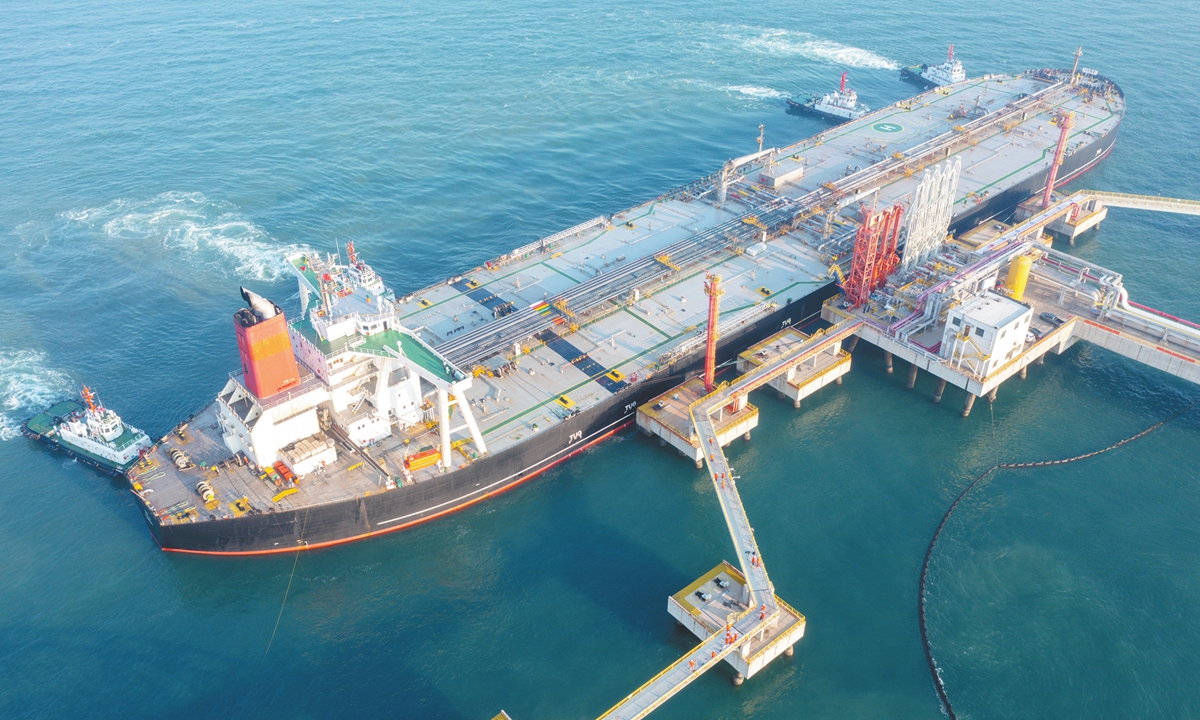
The first batch of zero-tariff petrochemical raw and auxiliary materials arrived at Yangpu Port in Hainan Province on December 18, 2025, after China on Thursday launched island-wide special customs operations in the Hainan Free Trade Port (FTP), the world's largest FTP by area. Photo: VCG
Bearing the innovation
On Thursday, three vessels obtained ownership certificates issued by the Hainan International Ship Registration Administration, becoming the first international ships registered at "China Yangpu Port" following the FTP launch. As of Thursday, the number of vessels registered under the "China Yangpu Port" flag had reached 80, ranking first among China's free trade zones and ports in terms of registration frequency and shipping capacity, according to China News Service.
Wu Minghua, a veteran shipping analyst, told the Global Times on Friday that the "China Yangpu Port" ship registry system is a bold innovation and pioneering trial at the Hainan FTP, offering a vivid example of how coordinated efforts among maritime affairs, customs, taxation, immigration inspection, and other departments could rapidly attract the agglomeration of shipping-related elements.
Wu suggested that the port further trial system innovations, so as to "translate its traditional advantage in port throughput into comprehensive competitiveness across the industrial chain, financial chain, and service chain."
In the next stage of China's high-quality development, Hainan, as a key testing ground for reform, shoulders the important mission of paving new paths and accumulating fresh experience for building a high-standard socialist market economy, and the Yangpu Port will play a vital role in the deepening of reform and opening-up, analysts noted.
RELATED ARTICLES