A shooting in the US this fall sent a shock through the country. On September 10, Charlie Kirk, a co-founder of the conservative nonprofit Turning Point USA (TPUSA), was fatally shot at a public event in Utah.
In several discussion groups I belong to - communities of researchers focused on elections and political communication - the news immediately prompted intense debate. One strand reflected broad concern about political violence and what it signals for public life. Another, driven by professional habit, focused on a narrower analytical question: whether the tragedy would produce short-term "sympathy mobilization," briefly lifting donations, volunteer sign-ups and organizational activity.
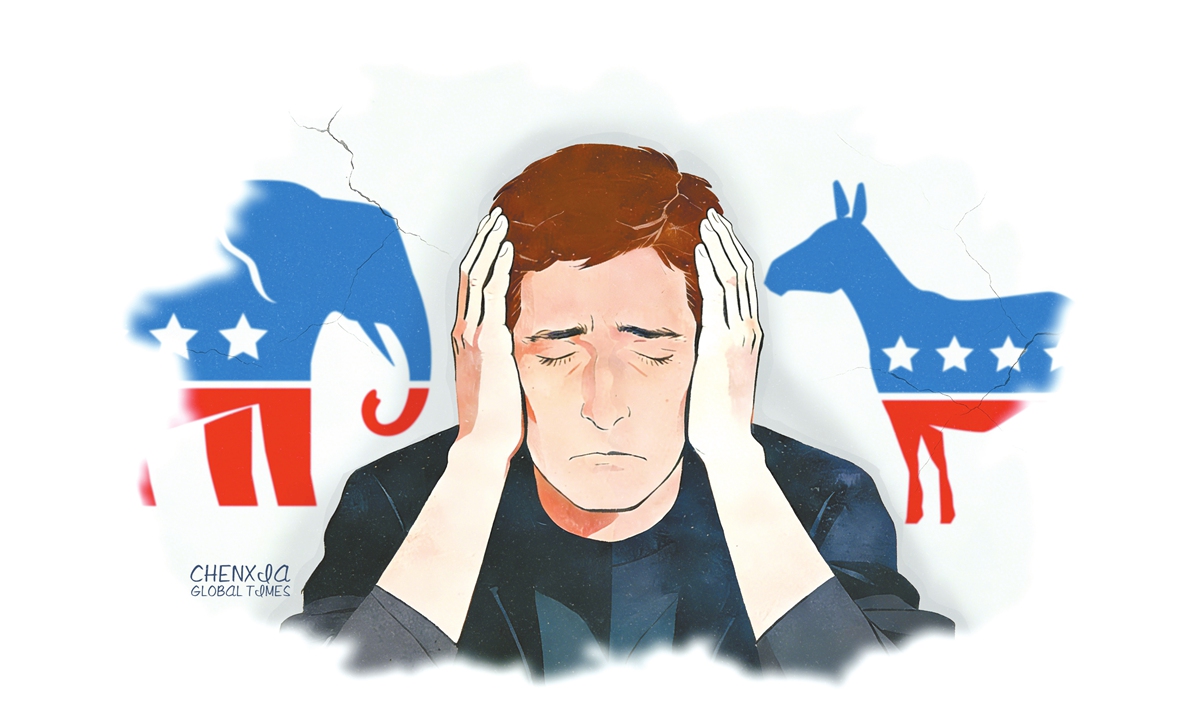
Illustration: Chen Xia/GT
In conservative-leaning academic conferences and policy forums, I have previously spoken with individuals familiar with TPUSA and its wider ecosystem. A recurring argument in those settings is that Kirk represented the strategic importance of youth voters and campus channels. In their view, such figures matter not only because they generate online attention, but because they can translate online emotion into offline participation - encouraging supporters to register, volunteer and vote.
After the case entered formal judicial proceedings, the suspect, Tyler Robinson, was charged with multiple offenses, including aggravated murder and unlawful discharge of a firearm, and prosecutors stated they would seek the death penalty. The political violence drew condemnation from both parties. Yet even amid that shared denunciation, American politics continued to pull between a desire for common language and the gravitational force of identity-based conflict. On Capitol Hill, that tension was visible in the House vote on a commemorative measure: it passed 310-58, while around 60 Democratic members either voted "present" or did not vote. The roll call underscored that, even when violence is widely condemned, disputes over symbolism and legitimacy remain strongly partisan.
In conservative circles, the assassination was quickly incorporated into a mobilizing "martyrdom" narrative. President Donald Trump, in memorial remarks, described Kirk as a "martyr" for American freedom, and TPUSA moved rapidly to complete a leadership transition while emphasizing continuity. In campaign research, however, a hard constraint remains: political outcomes are not decided by attention or fundraising alone, but by whether short-term emotion can be converted into net vote gains beyond a party's core coalition - especially among persuadable voters.
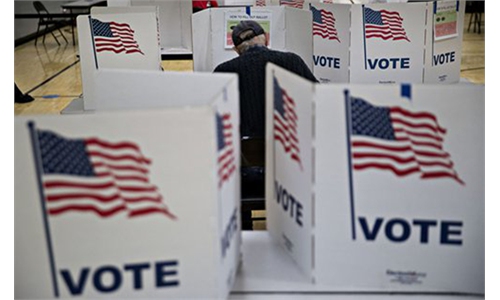
The best way to evaluate any "martyrdom effect" is therefore not to debate it in the commentariat, but to look at subsequent election returns. Two gubernatorial races on November 4 provided an early window. In Virginia, Democrat Abigail Spanberger defeated Republican Winsome Earle-Sears by roughly 15 percentage points. In New Jersey, Democrat Mikie Sherrill defeated Republican Jack Ciattarelli by 56.3 percent to 43.1 percent. Neither state is a monolithic, permanently "safe" Democratic stronghold. Taken together, these outcomes are consistent with the idea that the tragedy did not deliver meaningful incremental voters for conservatives. If anything, it appears to have reinforced voters' preference for stable governance and predictable policy.
In the weeks before those elections, I stayed in contact with specialists in campaign finance and election data. The high-turnout surge some observers expected did not materialize. What stood out instead was a decline in the marginal returns to pure mobilization. Practitioners often summarize this dynamic in a blunt line: turnout is not the problem; persuasion is. In other words, many Americans appear increasingly weary of political confrontation - a sentiment that can reasonably be described as political fatigue.
Why might this be happening? Polarization is part of the explanation, but shifts in political psychology matter as well. Over the past several years, my fieldwork has focused on US campaign strategy, campaign finance, and mobilization methods. The work has included observing trainings, interviewing practitioners, and analyzing publicly available campaign data. One persistent on-the-ground impression is that grassroots campaigning is rarely grand. Much of it is repetitive and operational: building voter lists, knocking doors, and repeatedly refining scripts - often around cost-of-living issues - to engage voters.
Kirk's assassination also changed the salience of political violence, moving it from an abstract risk to a visible reality. For many moderate voters, that shift can trigger defensive behavior: heightened sensitivity to volatility, and a stronger inclination to support candidates who project order, restraint and predictable governance. At the same time, bread-and-butter concerns - affordability, housing security, access to health care and public safety - continue to weigh heavily on voting decisions.
Seen in this light, American society may be entering a "post-Kirk" moment of political fatigue. The implication is not that mobilization no longer matters, but that the marginal payoff of extreme, high-intensity mobilization may be diminishing, while the value of persuasion - especially among middle-of-the-road voters - rises. This trend may shape the 2026 midterm elections. The intuition is straightforward: if either side pushes political competition toward a life-or-death frame, it may not defeat its opponent so much as lose the middle - voters who mainly want a normal, secure, and governable civic life.
The author is a US-based scholar of electoral politics and international relations. opinion@globaltimes.com.cn
RELATED ARTICLES