Political trust between China and South Asian countries reaches new heights: Chinese scholar

Hu Shisheng, Deputy Secretary-General of Academic Committee at the China Institutes of Contemporary International Relations, attends the Global Times Annual Conference 2026, themed "Trust in China: New Journey, New Opportunities," on December 20, 2025, in Beijing. Photo: Global Times
The Global Times Annual Conference 2026, themed "Trust in China: New Journey, New Opportunities," was held in Beijing on Saturday. During a panel discussion titled "Symbiotic States: A New Exploration of How Major Powers Relate to Their Neighbors," Hu Shisheng, Deputy Secretary-General of Academic Committee at the China Institutes of Contemporary International Relations, offered a summary of China's diplomacy toward South Asia over the past year - First, China adhered to the overarching principle of amity, sincerity, mutual benefit and inclusiveness; second, it pursued coordinated development and security through a "dual-engine drive"; third, it promoted three parallel goals to foster an amicable, prosperous and secure neighborhood and contribute to build a community with a shared future for humanity.
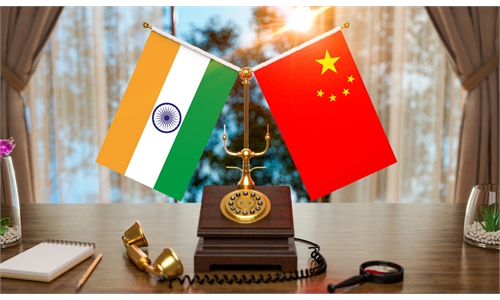
According to Hu, amicable relations primarily refer to political mutual trust. As 2025 draws to a close, political trust between China and South Asian countries has reached levels unseen in the past five years. China-India ties have emerged from a downturn, with close high-level exchanges, signaling a positive trend in bilateral relations.
Meanwhile, China-Pakistan relations have also reached new heights. In the past, China-Pakistan relations were described as "higher than mountains, deeper than oceans, stronger than steel and sweeter than honey." Today, the relationship is defined by the 'four always' principles: The two sides will always maintain a high level mutual trust and mutual support; the two sides will always focus on development and win-win cooperation; the two sides will always safeguard security and improve people's livelihoods; the two sides will always strengthen coordination and meet challenges together.
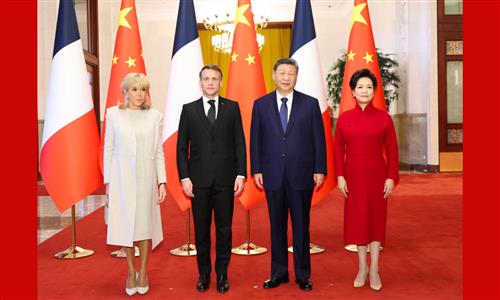
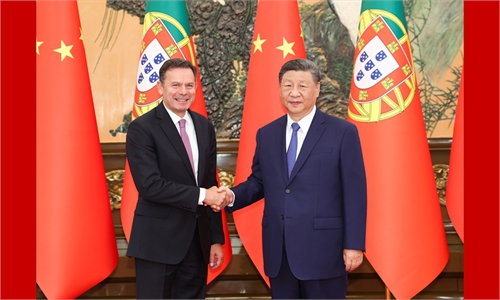
Hu also said that China's high-level interactions with other South Asian countries have reached unprecedented intensity, with leaders from multiple countries visiting China one after another.
From the perspective of fostering prosperous neighborhood, significant achievements have been made in economic cooperation and development. In terms of Belt and Road cooperation, the China-Pakistan Economic Corridor (CPEC) officially entered its second phase in 2025, upgrading to the construction of five corridors including a growth corridor, a livelihood-enhancing corridor, an innovation corridor, a green corridor and an open corridor. Trilateral consensus was reached among China, Afghanistan, and Pakistan to extend the CPEC westward to Afghanistan, while discussions were also held on extending the China-Myanmar Economic Corridor westward to Bangladesh. Cooperation between China and Nepal focused on advancing the practical implementation of the Belt and Road projects. Additionally, China held economic and trade joint committee meetings with Sri Lanka and Bangladesh respectively, reaching multiple memorandums of understanding on trade connectivity and industrial and supply chain cooperation.
From the perspective of fostering secure neighborhood, efforts have been primarily reflected in security cooperation. In 2025, despite regional instability in South Asia, China has been actively engaged in diplomatic efforts to promote dialogue and reconciliation in cross-border conflicts between India and Pakistan as well as between Pakistan and Afghanistan. China even facilitated mediation through mini-multilateral mechanisms, such as the China-Afghanistan-Pakistan Foreign Ministers' Dialogue, to foster regional peace and stability. During the conflict between India and Pakistan, China actively mediated through hotline calls and other means to enhance political dialogue between the two countries. Furthermore, China conducted the "Warrior-IX" joint anti-terrorism exercise with Pakistan and the Sagarmatha Friendship-2025 joint army training with Nepal to address non-traditional security threats.
Global Times
RELATED ARTICLES