China willing to explore co-op with S.Korea in digital tech, AI, among others: Vice MIIT minister
By Published: Dec 23, 2025 04:35 PM
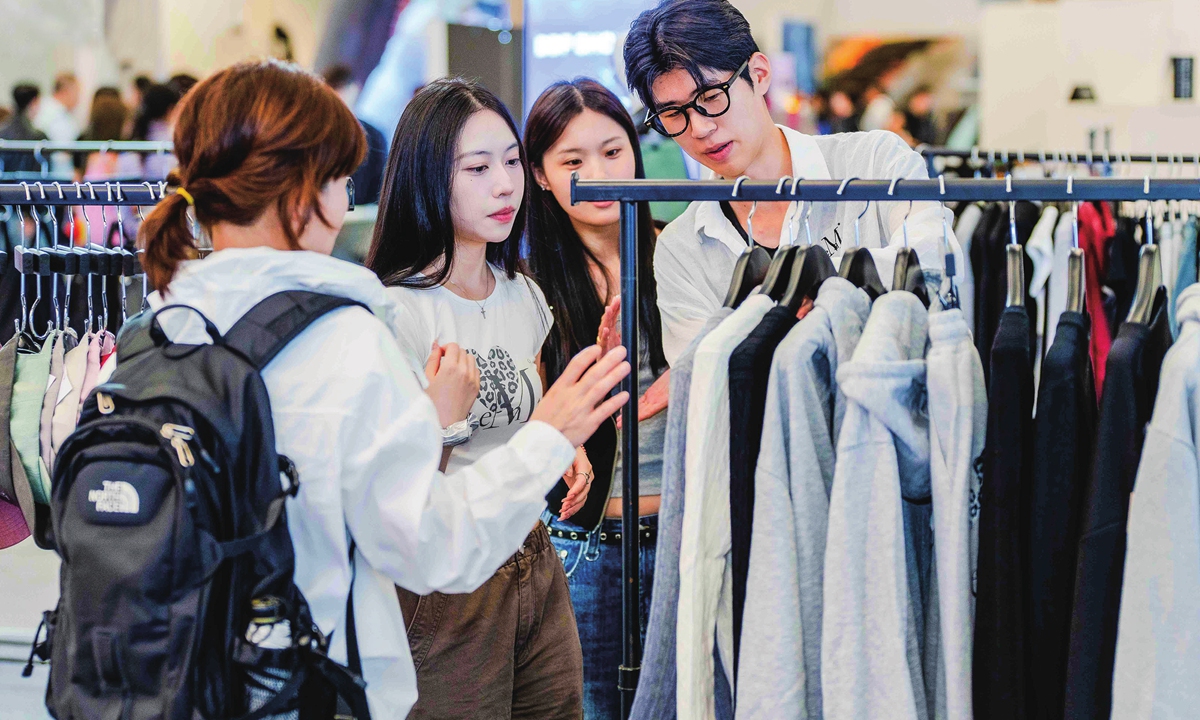
A Tmall Global merchant recruitment team attends an offline exhibition in Seoul, South Korea on September 8, 2025. Photo: Courtesy of Tmall Global
Vice Minister of Industry and Information Technology Xiong Jijun met with South Korean Ambassador to China Ro Jae-hun in Beijing on Monday to discuss strengthening cooperation in the industrial and information and communication sectors between China and South Korea, according to the Ministry of Industry and Information Technology (MIIT) website on Tuesday.
China is willing to work with South Korea to implement the important consensus reached by the leaders of the two countries, explore the potential for cooperation in digital technology, the artificial intelligence (AI) industry, and small and medium-sized enterprises, and strengthen cooperation within the framework of Asia-Pacific Economic Cooperation, Xiong said.
Xiong said that under the strategic guidance of the leaders of China and South Korea, industrial cooperation between the two countries has been continuously improving in quality and upgrading, with deep integration of industrial and supply chains, according to the statement.
For his part, Ro Jae-hun expressed readiness to enhance communication and exchanges with China, continuously improve dialogue and cooperation mechanisms, and further promote cooperation between the two sides in stabilizing industrial and supply chains, the digital transformation in manufacturing, and other fields to achieve more practical outcomes.
Recent ministerial-level engagements between China and South Korea have been frequent, with a repeated emphasis on strengthening economic, trade, and industrial cooperation, as well as supply chain collaboration. This trend holds significant practical importance in the current international economic and trade environment, a Chinese analyst said.
In a recent interview with the Global Times, Ro said that in the uncertain global economic environment, the two countries "must work harder to protect and expand our economic cooperation - especially in stabilizing supply chains and exploring new models of cooperation in emerging and high-tech industries."
For instance, in areas such as AI, biotechnology, the green economy, and the silver economy, there would be competition between China and South Korea, as well as significant potential for cooperation, Ro said.
Influenced by the unilateralism and protectionism of some countries, global supply chains are trending toward fragmentation, while transaction costs in global trade are rising, and uncertainties are intensifying, Li Tianguo, a deputy director in the Department of Emerging Economies at the National Institute of International Strategy, told the Global Times on Tuesday.
"The frequent high-level interactions between China and South Korea represent a proactive response to this environment. Through such frequent high-level engagements, the two countries aim to safeguard their shared interests in the economic, trade, and industrial supply chain sectors, further consolidate the stability and resilience of regional supply chains, and actively promote multilateralism and the free trade system," Li said.
This not only helps counter the global backlash of protectionism and geopolitical uncertainties but also injects strong vitality into the process of regional economic cooperation and integration in Asia, Li said. "Against the backdrop of a severe global economic landscape marked by downward pressure and slowing growth, deepened pragmatic cooperation between China and South Korea contributes significant positive momentum to regional prosperity and the global economic recovery."
The meeting between Xiong and Ro was one of the latest high-level meetings between the two sides.
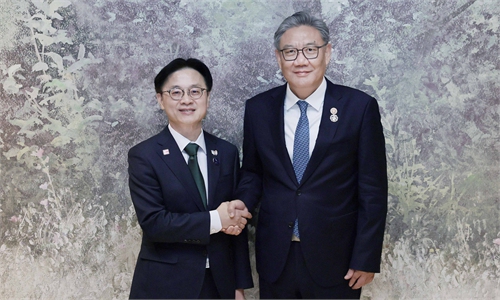
On December 12, Chinese Commerce Minister Wang Wentao met with South Korean Minister of Trade, Industry and Resources Kim Jung-kwan in Beijing and the two exchanged views on implementing the important consensus reached by the two countries' leaders, the Ministry of Commerce said in a statement posted on its website.
The two sides need to accelerate the second-phase negotiations of the China-ROK Free Trade Agreement and strive for an early conclusion. Also, there is a need to cultivate new growth areas and foster new driving forces, actively promote cooperation in emerging areas, encourage and support subnational economic and trade cooperation, and deepen industrial and supply chain cooperation and trade and investment cooperation, said Wang.
RELATED ARTICLES