
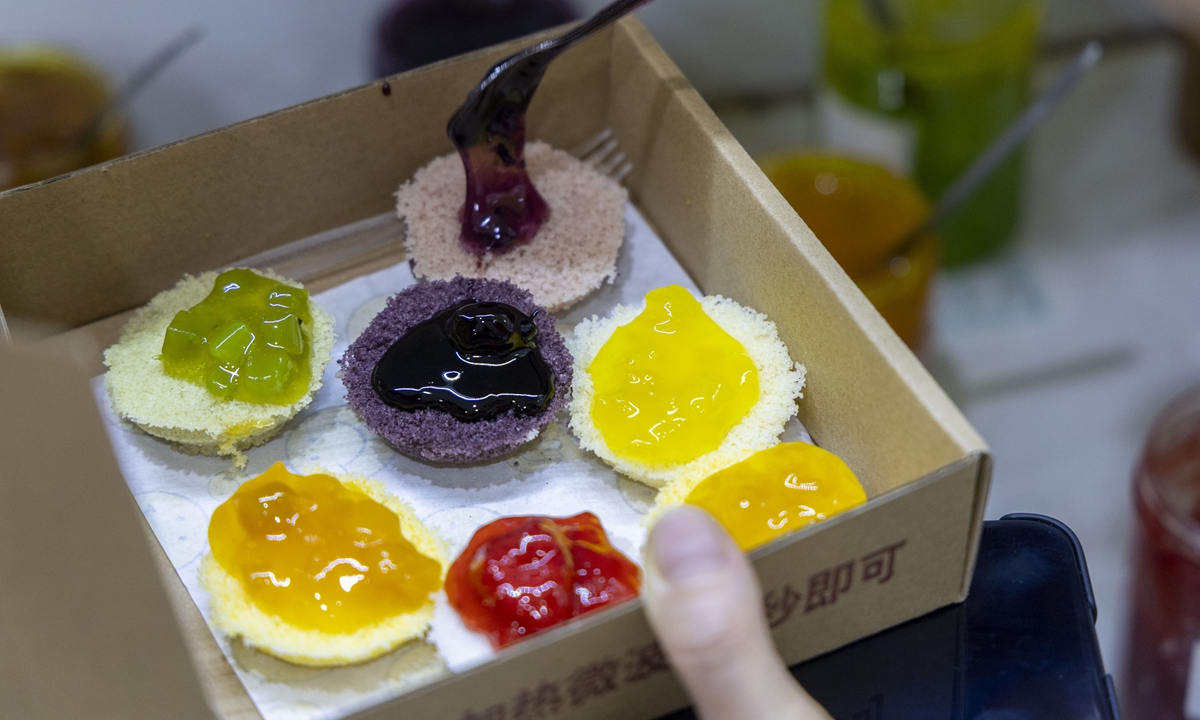
Tianjin snack shuligao (steamed pear cake) Photo: VCG
Editor's Note:
Among the many descriptions of China seen from the outside, the country has gained an increasingly prominent image for itself in 2025 as a "cool" place to visit and live, as reflected in multiple global surveys and in foreign vloggers' videos and comments.
As the year draws to a close, the Global Times is launching the "Cool China" series to approach the most iconic events and phenomena of the year through the five senses.
In this installment, we invite you to embark on a culinary exploration of China, following the anticipated influx of international visitors in 2025, to experience the diverse regional cuisines across the country. Beyond the rich flavors, numerous touching stories await discovery.
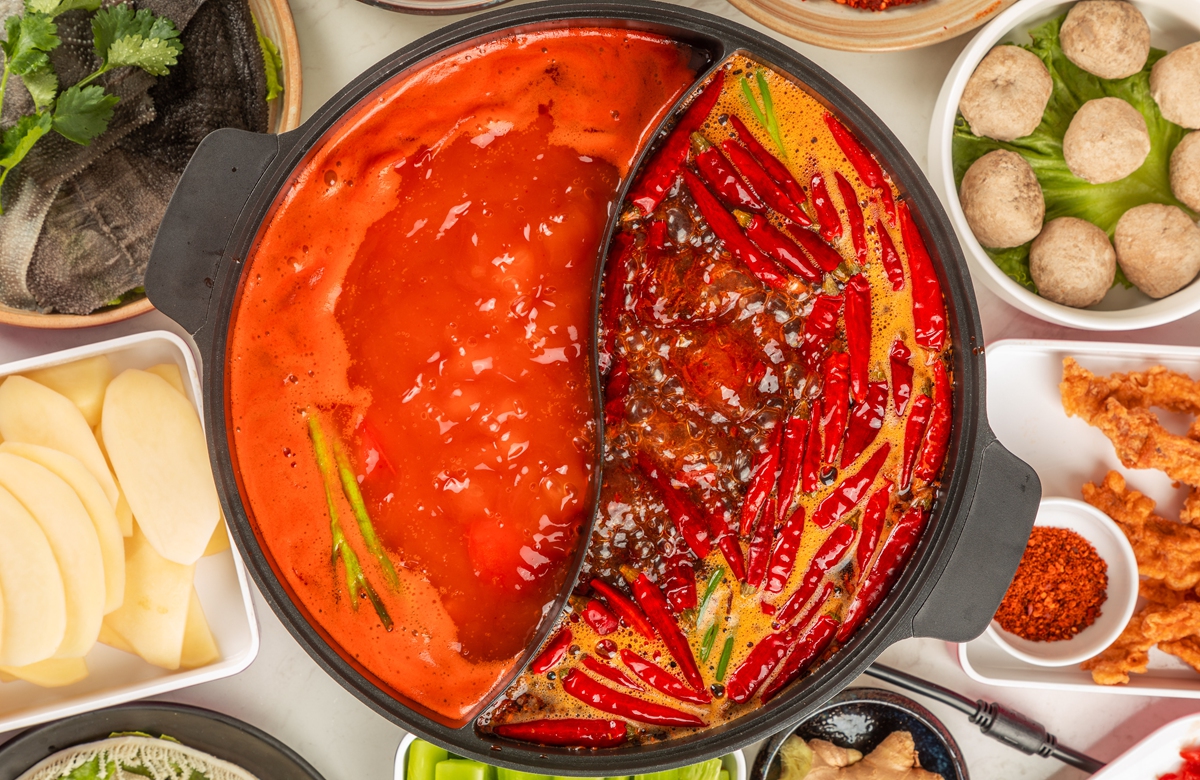
Hotpot Photo: VCG
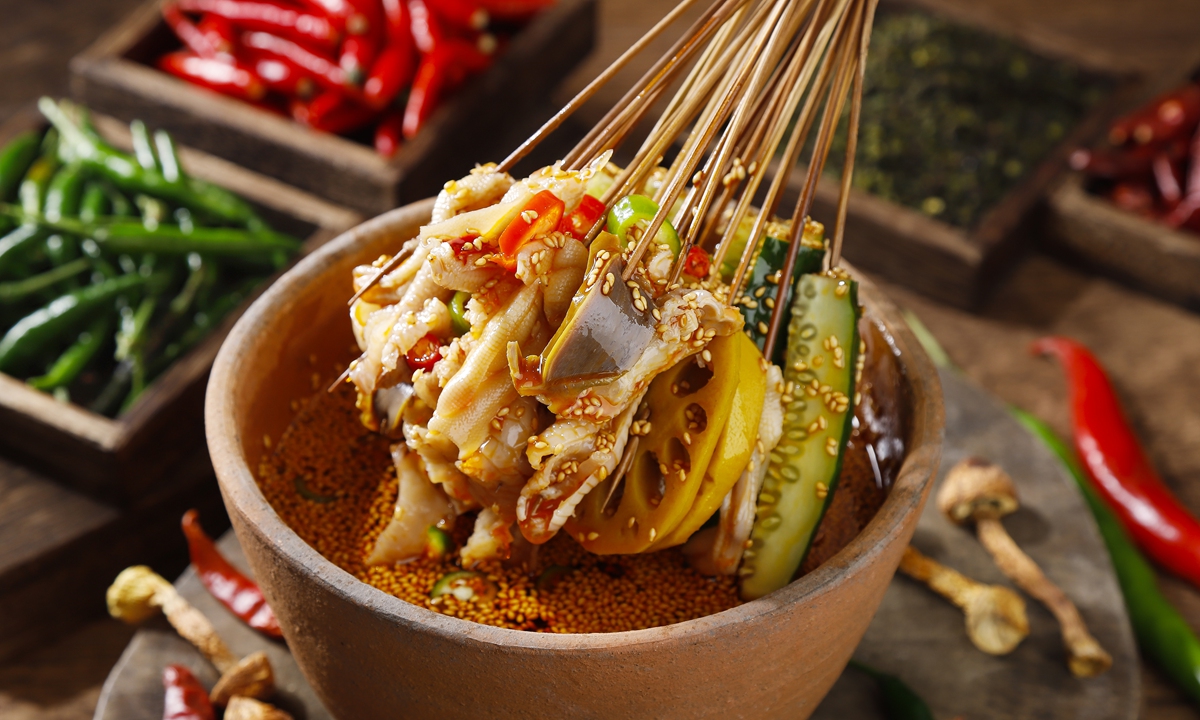
When US influencer IShowSpeed, who boasts over 46 million followers on YouTube, was seen hopping around from the spice of Sichuan-style hotpot during his livestream in China - clutching soy milk to cool his tongue but still going back for another bite - millions around the world tuned in to watch. Spring 2025 brought a new wave of global attention to the unique charms of Chinese culture, especially its diverse array of dishes. Boboji (Sichuan spicy skewered snacks) Photo: VCG A foreign tourist tries ribbon dragon dancing in front of the Bell Tower, a landmark on the Beijing Central Axis. Photo: VCG
During Speed's livestreamed tour across eight Chinese cities within more than two weeks, from fiery hotpot and sizzling pan-fried pork buns to sweet tanghuoshao (baked wheaten cake) and the pungent zhe'ergeng (fish mint), his expressive reactions and meme-worthy eating style turned Chinese food into a trending topic worldwide once again.
The mouthwatering dishes showcased in influencers' videos have drawn even more foreign tourists to China in 2025, but upon arrival, many discover that cuisine is just one facet of the country's rich cultural appeal. Through food, these visitors gain entry to China's cities and countryside, experiencing not only the convenience brought by modern infrastructure and favorable policies, but also the sincerity and hospitality of local people.
Some travelers have taken to platforms like Xiaohongshu, Douyin, and various international social media sites to share their experiences and impressions through words and videos, spreading them to an even wider audience. The booming popularity of traveling in China under expanding visa-free policies is evident in the numbers: Visa-free entries constituted over 7 million, or 72.2 percent, of all foreign arrivals in the third quarter this year, marking a 48.3 percent annual increase, according to the Xinhua News Agency.
Their first mission, if not the most important, is to taste authentic Chinese food.
Kevin Poisson, a 24-year-old university student from Canada, is one of these millions. From seeking out local delicacies to immersing himself in Chinese culture, Poisson's journey is a vivid example of how international visitors are experiencing the cool and authentic side of China.
Poisson's story with China started from the desire to taste Chinese cuisine, which finally deepened his understandings of culture and people on this land. Through the channel "The Food Ranger," a popular channel documenting street food across China, Poisson developed an appetite for dishes he had never tasted and places he had never imagined visiting. When the opportunity arose to travel, he decided to follow the host's footsteps, beginning in Northeast China.
"Before this trip, my understanding of China was mostly limited to Beijing, Shanghai, and the Hong Kong Special Administrative Region," Poisson said. "I knew almost nothing about the Northeast. Once I arrived, I realized both the food and the people suited me perfectly."
Among all the dishes, iron pot stew stood out. Eating on a heated brick bed, or kang, was a novelty in itself. When the lid of the iron pot was lifted after half an hour of slow braising, the aroma of simmering pork bones rushed out. What surprised him most was a type of flat green bean, streaked with purple. Hesitant at first, he soon found it soft, starchy, and deeply fragrant - unlike any bean he had tasted before.
Because of the wonderful experience for his taste buds, Poisson decided to extend his stay in China. Along the way, he discovered RedNote, known in Chinese as Xiaohongshu, a lifestyle and travel-sharing platform packed with colorful, user-generated guides.
"If you want to know where to go or what to eat, you just search," he said. "Everything is there." Using recommendations from both The Food Ranger and RedNote, he continued on to Baoji in Northwest China's Shaanxi Province, Chengdu in Southwest China's Sichuan Province, and Chongqing Municipality, sampling saozi noodles and hotpot. He learned quickly that China's famed Eight Great Cuisines were not an exaggeration.
"I want to try them all," he said. "But as someone with a sweet tooth, Chongqing hotpot was honestly too spicy for me."
That led to a memorable misunderstanding. When ordering, Poisson asked for mildly spicy in Chinese. The server interpreted this as a request to experience the true spiciness of the dish. What arrived was a pot of fiercely red broth.
In China, the best meal is always the next one, Zhang Wen, an 18-year-old Nigerian now living in Chengdu, told the Global Times.
Zhang and his friends now often make it a weekend ritual to explore nearby cities and hunt for local dishes. Some lesser-known destinations like Weizhou Island in South China's Guangxi Zhuang Autonomous Region have become their favorites and the seafood made by local special methods has been lingering in Zhang's dreams.
Zhang is also obsessed with the "human touch"in Chinese cuisine. He said that whenever he is invited to have dinner with a Chinese friend's family, he always sees a family sitting together, sharing the joy of a delicious meal. The taste of these home-cooked dishes are unforgettable for him.
For Poisson, food was also part of his story in China. However, what caught him off guard was the warmth of local residents.

Guided by delicious food, foreign guests like Poisson and Zhang began their exploration journey in China. They experienced the convenience brought by advanced infrastructure and favorable measures such as visa-free policies, appreciated the sincerity and hospitality of people as well as the diverse cultures in different places, and gradually came to understand what the true flavor of Chinese culture is.
Poisson arrived in Harbin, capital of Heilongjiang Province, in early 2025, hoping to experience the city's famed Ice and Snow World. One morning, he wandered into a downtown morning market. Instead of the reserved interactions he had been led to expect, he was met with generosity.
"I couldn't understand why people were giving me flatbread and buns for free," he recalled. "I thought it was some kind of promotion. Later I realized they just thought it was fun to have a foreign guest and wanted me to try the food."
The vendors spoke no English, and Poisson knew only a little Chinese. "But somehow, communication was not a problem at all," he said, noting how language barriers hardly mattered.
The local sense of openness, he said, was deeply touching. Coming from a country at a similar latitude, where winters feel just as harsh, Poisson found the contrast striking.
With China's expanding visa-free policies and measures that make travel easier for foreign visitors, more tourists have had the chance to experience the openness, friendliness and beauty that stunned Poisson.
In Beijing, over 6 million border crossings by foreign nationals had been recorded as of December 7, up 34.5 percent from the same period in 2024. About 1.86 million entries were facilitated by visa exemption policies, 1.9 times the number recorded in 2024 and accounting for 60 percent of total entries of foreign nationals, Xinhua reported. Nanjing, capital of East China's Jiangsu Province, received around 610,000 inbound overnight tourists as of November, representing a year-on-year growth of 18.4 percent, according to the local culture and tourism bureau.
From learning intangible cultural heritage textile weaving in Yunnan Province to trying their hands at pottery wheel throwing in the ancient porcelain capital of Jingdezhen in Jiangxi Province, or practicing Suzhou embroidery stitches, foreign tourists are increasingly seeking authentic connections when visiting China.
To cater to the rising demand, cities are leveraging transit visa-free policies to design boutique inbound travel routes. Beijing offers hutong (traditional alley) tours and Central Axis cycling tours, while Yunnan features eco-wellness and outdoor adventure itineraries. Guangxi has integrated tropical fruit picking into tours, and the "Panda Express" train loops through Sichuan, Guizhou and Chongqing.
Dou Junjie, a tour guide in Beijing, has developed several cycling routes along the Central Axis that are very popular among foreign tourists from countries like the Netherlands. He combines cycling with culture, turning "cycling" into "reading history and culture." He tells stories as he rides, for instance, when cycling through the hutongs along the Central Axis. Dou reminds foreign tourists to pay attention to the door piers with different decorations outside each courtyard house and then explains the characteristics of this type of traditional architecture.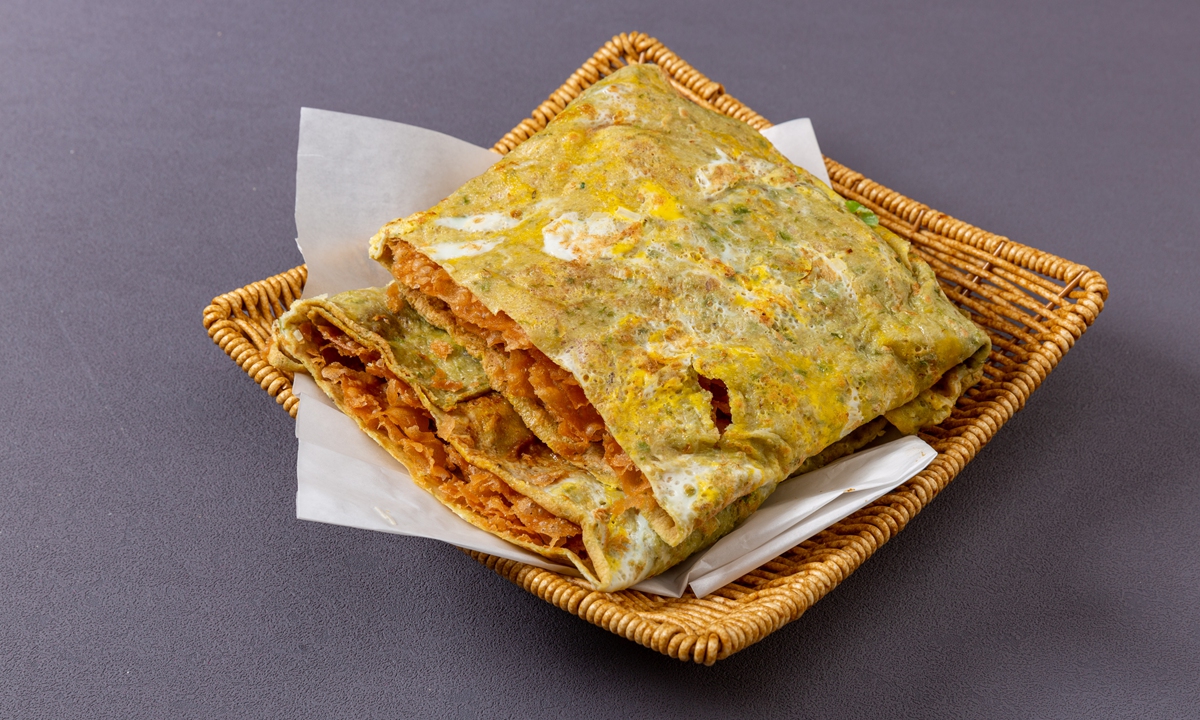
Jianbing guozi, a savory pancake roll filled with crispy fried dough sticks Photo: VCG
Along the cycling route designed by Dou, foreign tourists can also taste shaomai, a traditional Chinese steamed dumpling, and learn the making technique, which has been an intangible cultural heritage.
Back home, when Poisson shared photos from his trip with others, interest grew quickly among friends and online communities. Food, he noted, was a major draw - but so was affordability. "With rising taxes and living costs back home, it's hard to comprehend how inexpensive a meal can be here," he said. "And the e-payment system makes everything easy. At the airport, volunteers help you set it up, foreign cards work, and everything is integrated."
"China has too many places worth seeing. I can't wait to visit different places in China again and taste the unique flavors of both the food and culture there," the Canadian said.
For Poisson and those who have come to China, the country's appeal lies not only in the flavors of its dishes, but in the way food, people, and travel infrastructure come together, welcoming strangers one shared meal at a time.