A big wake-up moment for Western youth to appreciate a ‘Cool China’: US influencer
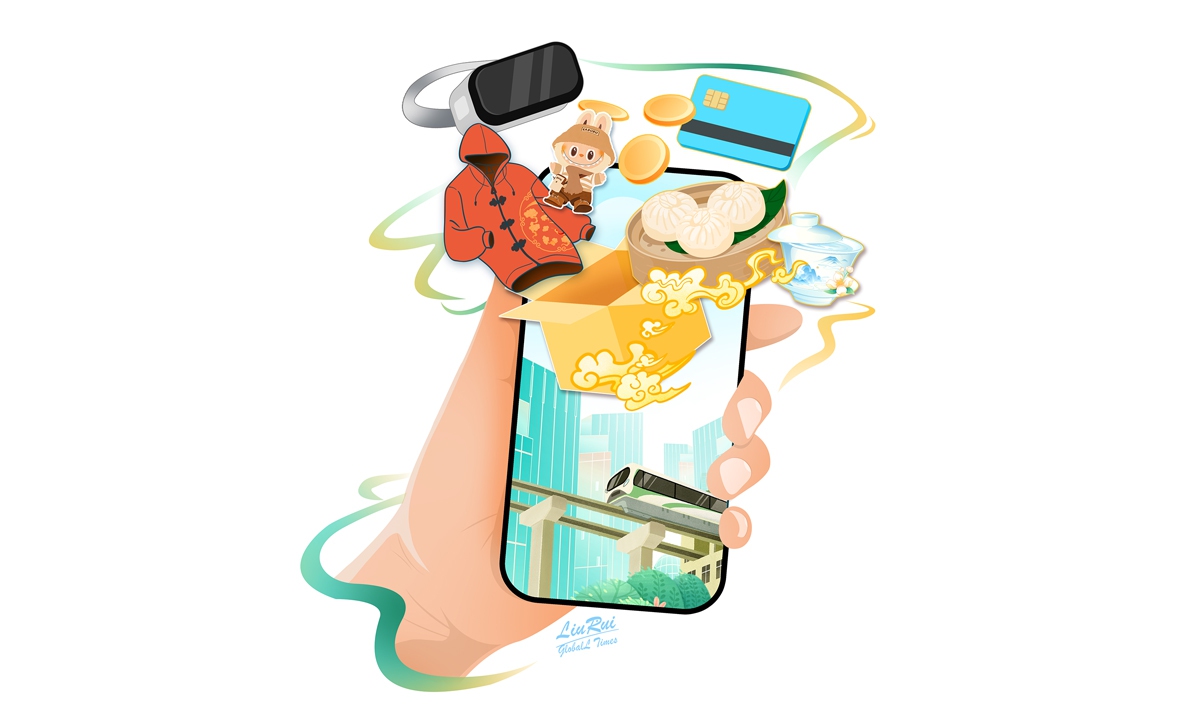
Illustration: Liu Rui/GT
Editor's Note:
The world is increasingly seeing China as "cool" - a description now frequently used not only by international media but also by a growing number of foreign visitors and observers who have personally experienced the dynamism of this country. A China full of innovative momentum, developmental vitality, and cultural inclusiveness is taking clearer shape day by day. As we approach the end of 2025, the Global Times (GT) launches this year-end special series "What makes China cool," to explore the key to China's growing appeal.
In the third installment of the series, GT reporter Liu Xuandi speaks with Hasan Piker (Piker), a US online streamer, influencer and prominent voice among global youth. In his eyes, China is increasingly emerging as an open, accessible, and dynamic ecosystem where young people around the world can experience and appreciate its growing "cool factor."
GT: In November, you and your team traveled across China, visiting Beijing, Shanghai, Chongqing, Chengdu and Hong Kong. What struck you as the "coolest" aspect of China?
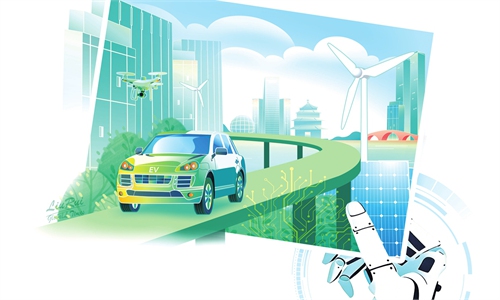
Piker: The coolest aspect, I would say, was how technologically advanced China is, especially in the mainland cities we visited. Beijing, Shanghai, Chongqing and Chengdu all felt incredibly modern - clean, safe, and seamlessly integrated with advanced technology in everyday life. Beyond the striking skylines and lights, what really stood out was how well these cities are designed and built, with infrastructure that actually works smoothly for people.
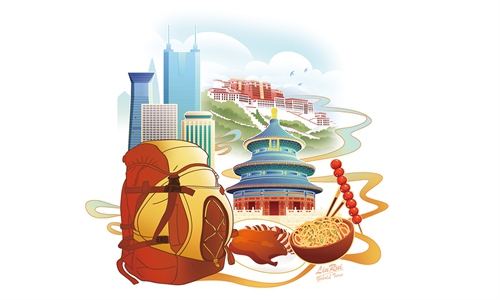
I'm someone who genuinely loves public transportation, so China was especially exciting for me. Chongqing, in particular, was unforgettable. Seeing a train pass directly through a residential and commercial building in the city, laid out vertically along mountains - where the station is integrated into the structure itself - was honestly one of the coolest urban design features I've ever seen.
Overall, the experience gave me the strong impression that China is living in the future. In many ways, it felt like stepping into decades ahead-almost like China is already in 2050.
GT: The term "cool" is increasingly used to describe contemporary China, especially among younger generations on global social media. From your interactions with young audiences during livestreams, have you sensed a change in how they perceive China? What parts of China's "cool factor" do you think appeal most to these young people?
Piker: Absolutely. 10 years ago, even mildly positive comments about China often triggered heavy criticism in the West. It would have been unthinkable for Western audiences to ask "How cool is Chongqing?" Today, that curiosity is widespread. When I returned from my trip, such questions came up repeatedly.
China's "cool factor" largely comes from the contrast between expectations and reality. Younger generations now have direct access to what modern Chinese existence actually looks like through social media platforms including TikTok and Xiaohongshu, as well as short videos and firsthand accounts from travelers and creators. That visibility cuts through long-standing Western media anti-China propaganda. They are exposed to China's remarkable technological progress - smart cities, mobile payments, high-speed rail, and clean urban environments that feel both futuristic and highly livable. For first-time visitors, even everyday practices that locals take for granted often appear strikingly novel, cool, and impressive.
That is a big wake-up moment for young people in the West, where they realize that everything they've been taught about China is very different from what it actually is, and that day-to-day life there is often far closer to - and sometimes even better than - what they imagined.
GT: Recently, trends like "China travel" and "China shopping" have gained traction among foreign visitors. From your perspective, what do you think is driving their popularity?
Piker: Social media plays a key role while this trend is also fueled by growing skepticism toward mainstream narratives in the West and a noticeable decline in material conditions there. More and more people are seeing China not just as a great travel destination, but also as an unexpectedly ideal place for shopping.
Shopping in China is highly digital and practical, with less emphasis on status branding and more focus on aesthetics, quality, and personal taste. That contrast is fascinating for Western visitors. At the same time, Chinese brands and fashion are offering a fresh cultural aesthetic. During my trip, we actively sought out Chinese brands and found some that really stood out, like Army Logic, which blends modern streetwear with Chinese design sensibilities. I also bought a handcrafted Zhongshan suit, rich in history and symbolism, and later wore it on a red carpet in the US. China's fashion, craftsmanship, and cultural depth resonate strongly with visitors from abroad.
GT: You previously said that China is closer to what you consider as a relatively successful socialist system and that there are elements other countries could learn from. Do you think more people are beginning to recognize the appeal of China's governance model?
Piker: Showing people how cool China is is much easier than challenging deeply ingrained beliefs in the West. For many Western audiences, the most powerful form of propaganda is the idea that capitalism is either a perfect system or, at the very least, that any alternative is far more frightening. Ironically, many of the people most fearful of alternatives are those who benefit the least from the current system.
While more people are starting to look for alternatives, their curiosity about China often stops at the surface. They ask, "Why can't we have high-speed rail?" or "Why can't we have this level of development?" There is often a sense of envy toward China's infrastructure and industrial strength, but little understanding of the decades of political planning, organization, and long-term investment that made it possible. People tend to admire the outcome without grasping the process behind it. China's development did not happen overnight. Strategic foresight, long-term industrial planning and sustained investment have laid the groundwork for achievements we see today.
GT: Since China expanded its unilateral visa-free policy, there has been a noticeable rise in international vloggers and creators traveling there. From your experience, is China an accessible, open and inclusive ecosystem for foreign content creators? How would you evaluate China's commitment to openness and continuous engagement with the world?
Piker: From my experience, China today is far more open, accessible, and inclusive than many people in the West expect. What stood out most to me was China's openness in everyday life.
On the one hand, a wide range of Western brands operate openly alongside Chinese ones, reflecting a high degree of market openness and cultural coexistence. On the other hand, China's continued expansion of visa-free policies has made travel significantly easier - often more convenient than visiting countries like the US - encouraging and enabling more international vloggers and creators to experience China firsthand. Once in the country, mobility is extremely convenient. High-speed rail makes travel between cities fast, affordable, and efficient, which is ideal for content creators working on tight schedules. With reasonable planning, filming and livestreaming are very feasible, and I was able to create content and discuss a wide range of topics without feeling restricted.
Beyond that, people were genuinely friendly, welcoming toward foreigners. This inclusive social environment, combined with open policies and modern infrastructure, shows China's real commitment to openness. The more mutual respect and exchange between cultures, the more open-minded and understanding people on all sides become.
GT: Looking ahead, do you think the image of "Cool China" can help challenge long-standing stereotypes shaped by some Western media outlets and resonate more with international audiences? Where do you see the future potential of a "Cooler China" lie?
Piker: I think the idea of "Cool China" has real power to challenge old stereotypes, because nothing works better than firsthand, unfiltered experience. Social media, travel, and direct interaction allow people to see China as it actually is - not as it's been framed for decades. I grew up in Turkey while being deeply influenced by American culture, which gave me a natural curiosity about how people live elsewhere. My trip to China was about seeing it for myself and sharing that experience with my audience, using genuine understanding to counter exclusionary narratives.
I also see huge potential in China's cultural storytelling. Many Western audiences don't realize how deeply Chinese culture has already influenced what they enjoy. For example, Dragon Ball Z, though Japanese, is clearly inspired by Journey to the West and Sun Wukong. More recently, games like Black Myth: Wukong, one of my favorite games of the past two years, have introduced Chinese mythology in a modern, exciting way that resonates globally. That's just the tip of the iceberg.
A "cooler China" lies in sharing those stories more confidently-through games, films, fashion, and everyday human experiences-helping global audiences connect with China on a deeper, more authentic level. Beyond a few breakout examples like Labubu, there's still a vast, untapped reservoir of Chinese culture that the world barely knows.
RELATED ARTICLES