ARTS / CULTURE & LEISURE
Cool China’s new ambassadors: The rise of cultural IPs with emotional connections
Hugging ‘ugly-cute’
By and Li Hang Published: Dec 24, 2025 11:37 PM

Editor's Note:
Among the many descriptions of China seen from the outside, the country has gained an increasingly prominent image for itself in 2025 as a "cool" place to visit and live, as reflected in multiple global surveys and in foreign vloggers' videos and comments.
As the year draws to a close, the Global Times is launching the "Cool China" series to approach the most iconic events and phenomena of the year through the five senses.
In this fourth installment, we will turn our attention to some of the cute furry elf creatures or toys, which have gone viral around the globe.
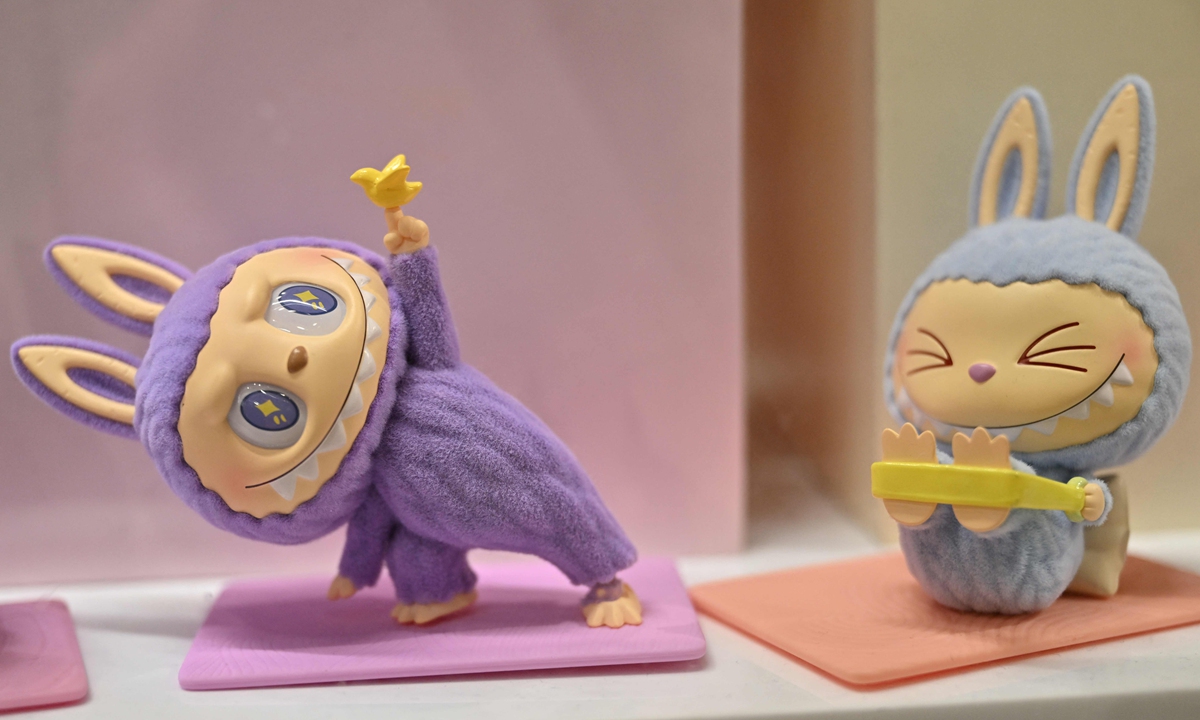
The Wall Street Journal has released a story about 20 objects that defined culture this year and the first was these monster-like dolls that have sparked a craze among teens and celebrities alike.
Whether you reckon they are cute, ugly or just plain weird, chances are you have heard of the furry dolls that have become a global sensation - Labubu.
People are obsessed with them and are willing to queue in long lines to snap up the dolls in stores from Beijing to London.
Standing in front of a Pop Mart in Bangkok, Thailand, in July, the Global Times reporter queued with other people from Russia, South Korea, Singapore, Japan and more, hoping to get one of the pop dolls, either Labubu, Molly or Dimoo.
"When facing so many choices of dolls, no one can resist them. You get a strong sense of achievement when you are able to get one or more amid such fierce competition," a Singaporean girl surnamed Chan told the Global Times.
Whether viewed as adorable, bizarre, or somewhere in between, Labubu's signature design is hard to ignore: vinyl faces attached to plush, furry bodies, complete with pointy ears, oversized eyes, and a mischievous grin revealing exactly nine sharp teeth. This distinctive "ugly-cute" aesthetic has divided opinions online but has not deterred the masses.
However, it doesn't bother so many to own these dolls because it is cool to hang them on your bags.
It has become important which characters you own, be they the Labubu tribe's leader Zimomo, her boyfriend Tycoco or her friend Mokoko.
Entering the store, the Global Times reporter noticed it was common to see someone vigorously shaking blind boxes before deciding which one to buy.
For 25-year-old Li Xiang, who lives and works in Shanghai, collecting "chaser" characters, special editions from China's various toy series that include Labubu, is what she enjoys the most when visiting these doll shops.
"It is very satisfying to get a chaser by shaking a box and learning how to feel the difference," she told the Global Times. "Taking the special ones and showcasing them makes me feel happy and lucky."
For Generation Z, toys are no longer just playthings; they have become emotional companions. For many owners, seeing these dolls "feels like looking at their own reflection," which makes people want to comfort them, as if they were healing a part of themselves.
Experts say that this shift has had a profound impact on young buyers' decision-making. In an era in which material goods are no longer scarce, young people value the emotional value provided by products more than their material utility.
"For young people, dolls have become carriers of emotional companionship and self-projection, representing a typical phenomenon under the impact of the "loneliness economy" and emotional consumption," Bu Xiting, an associate researcher at the School of Cultural Industries Management at the Communication University of China, told the Global Times on Tuesday.
Cute trendy toys, including Labubu, Ne Zha 2 merchandise, Nobody-themed dolls, the mascots for the 15th National Games and other universes of popular Ips, are transcending from a singular function as toys to become a "spiritual tribe" for young people combating urban atomized living and seeking emotional solace.
Their designs often incorporate anti-traditional aesthetics like "ugly-cute," which caters to Generation Z's contradictory mindset of desiring both individual expression and emotional comfort. Through activities like collecting, customizing, and even carrying these dolls daily, consumers externalize their feelings and construct identity markers.
"This is not merely consumer behavior but a lifestyle of self-narration and emotional healing facilitated through material objects," noted Bu.
Also on the cool toy bandwagon, Lee Yuga, a 23-year-old South Korean student living in China, loves Luo Xiaohei, the cat character from the Chinese animated series The Legend of Luo Xiaohei.
"Hei is a little black cat. His tail can split into tiny dots of energy," Lee told the Global Times, adding that she thinks the animator behind the series is enthusiastic about life.
Cute trendy toys not only bring emotional comfort and joy to everyone but also showcase Chinese culture and design on the global stage.
Professor Liu Pingyun, dean of the School of Visual Art and Design at the Guangzhou Academy of Fine Arts, cited Nezha, Labubu and Beijing Winter Olympic mascot Bing Dwen Dwen as three exemplary IPs. He pointed out that they represent successful pathways from different sectors - animated films, capital investment and major events.
"We have entered an era where IPs are focused on emotional value. People now seek visual symbols that evoke emotional resonance to gain a sense of connection and enrich their lives," he added.
He emphasized that the emergence of Bing Dwen Dwen was a milestone. It opened a new chapter for China's cultural and creative industries toward high-level creation, demonstrating the country's capability to produce top-tier visual symbols and IPs with global influence. The subsequent success of IPs like Nezha and Labubu further indicates that China's cultural tourism and IP industries have entered a new stage of development.
For young consumers globally, trendy toys serve not only as social currency but also as a badge of identity within their circles.
Ryan Lewis, a 40-year-old based in Seattle, the US, mentioned that although he doesn't collect these items himself, he likes Zimomo toys the most and buys such gifts for friends because it's a really cool thing to do.
"Famous people were seen with them and they became viral. People did YouTube unboxing videos for them, which were also popular. People tried to collect them all, which is why this kind of fad happens from time to time," he told the Global Times.
Like many others, including Lewis, people perceive these dolls, with their designs emphasizing intergenerational aesthetics such as "cute" and "ugly," as symbols that help young people identify with their circles and as social currency. Owning rare editions or participating in doll customization culture has become a way to express individuality and creativity within the community.
How to make them even more cool has become a new question among young people. These dolls are now embarking on a new creative journey, one that bridges the cutting-edge world of pop collectibles with the timeless beauty of Chinese intangible cultural heritage.
On Chinese social media platforms like Xiaohongshu, also known as RedNote, and Douyin, Labubu dolls have been spotted sporting traditional ethnic clothing and delicate hairpins crafted using centuries-old techniques.
Zhang Shanshan, a young artist from Enshi, Central China's Hubei Province, and a devoted Labubu collector, enlisted the help of her aunt, Zhao Kuanmei, an inheritor of Enshi ethnic clothing-making techniques. Together, they designed and crafted a custom Tujia ethnic outfit for her Labubu. The result? A miniature ensemble that combines vibrant colors, geometric patterns, and symbolic embroidery - a celebration of Tujia ethnic culture that has garnered over 1 million views on social media.
"Labubu has been a global trend, and its fans love customizing and dressing it up," said Zhao. "As a result, we have seen a rise of Labubu-themed accessories like doll outfits and bags. Batik works well with Labubu because, as long as the outfit is designed to be stylish and appealing, it can resonate with a wide audience and introduce more people to this intangible cultural heritage."
Duan Yu, a 30-year-old who lives and works in Wuhan, Hubei Province, often designs new outfits for her doll before each trip. Before her visit to Thailand, she crafted a traditional Chut Thai for the doll using embroidery. She told the Global Times that her doll attracted a lot of attention and people came up to chat with her.
"As a social symbol and social currency, the core of trendy toys lies in their construction of a social ecosystem based on scarcity, the desire to share, and cultural identity," said Bu.
The surprise element created by the blind box mechanism and the scarcity of hidden models naturally stimulate collecting and exchanging these toys, serving as a core medium for communication among enthusiasts and fostering strong social resonance and the desire to gather together.
By sharing their collections, showcasing their customized dolls, and participating in topic discussions, young people establish their identity and a sense of belonging within both virtual and real-life communities.
Consequently, trendy toys transform from personal collectibles into symbolic capital or labels that connect individuals to communities.
China's "coolness" is not merely about cultural symbols; it can resonate, facilitate the flow of emotions and exchanges, and represents a deeper, globally cohesive narrative built on "emotional consensus."
Bu concluded that their true value lies in "carrying and facilitating the flow of emotions, aesthetics, and subculture," igniting global narratives that connect people across borders. In 2025, these little monsters have proven that Chinese creativity can resonate deeply and authentically on the world stage.
Among the many descriptions of China seen from the outside, the country has gained an increasingly prominent image for itself in 2025 as a "cool" place to visit and live, as reflected in multiple global surveys and in foreign vloggers' videos and comments.
As the year draws to a close, the Global Times is launching the "Cool China" series to approach the most iconic events and phenomena of the year through the five senses.
In this fourth installment, we will turn our attention to some of the cute furry elf creatures or toys, which have gone viral around the globe.
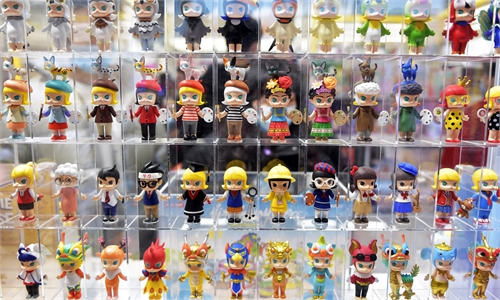
Figures from POP MART's "Monsters" collection Photo: VCG
The Wall Street Journal has released a story about 20 objects that defined culture this year and the first was these monster-like dolls that have sparked a craze among teens and celebrities alike.
Whether you reckon they are cute, ugly or just plain weird, chances are you have heard of the furry dolls that have become a global sensation - Labubu.
People are obsessed with them and are willing to queue in long lines to snap up the dolls in stores from Beijing to London.
Standing in front of a Pop Mart in Bangkok, Thailand, in July, the Global Times reporter queued with other people from Russia, South Korea, Singapore, Japan and more, hoping to get one of the pop dolls, either Labubu, Molly or Dimoo.
"When facing so many choices of dolls, no one can resist them. You get a strong sense of achievement when you are able to get one or more amid such fierce competition," a Singaporean girl surnamed Chan told the Global Times.
Whether viewed as adorable, bizarre, or somewhere in between, Labubu's signature design is hard to ignore: vinyl faces attached to plush, furry bodies, complete with pointy ears, oversized eyes, and a mischievous grin revealing exactly nine sharp teeth. This distinctive "ugly-cute" aesthetic has divided opinions online but has not deterred the masses.
However, it doesn't bother so many to own these dolls because it is cool to hang them on your bags.
It has become important which characters you own, be they the Labubu tribe's leader Zimomo, her boyfriend Tycoco or her friend Mokoko.
Entering the store, the Global Times reporter noticed it was common to see someone vigorously shaking blind boxes before deciding which one to buy.
For 25-year-old Li Xiang, who lives and works in Shanghai, collecting "chaser" characters, special editions from China's various toy series that include Labubu, is what she enjoys the most when visiting these doll shops.
"It is very satisfying to get a chaser by shaking a box and learning how to feel the difference," she told the Global Times. "Taking the special ones and showcasing them makes me feel happy and lucky."
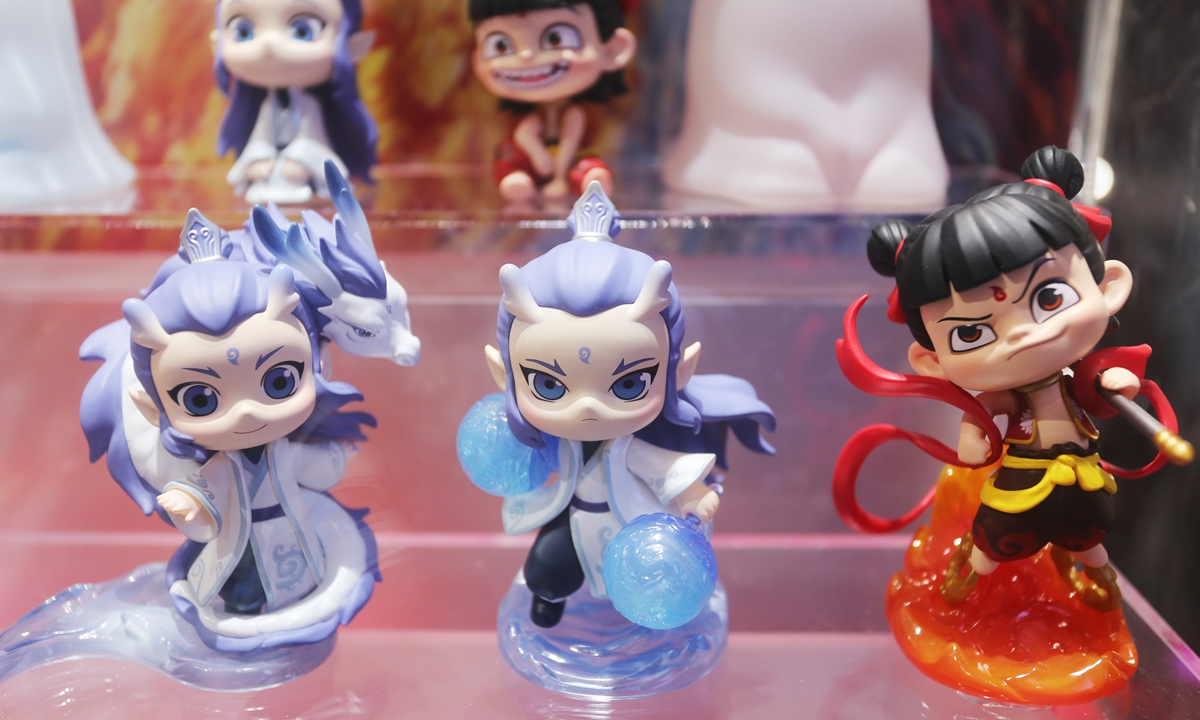
Toys based on the animated film Ne Zha 2 Photo: VCG
Collectors' obsessionFor Generation Z, toys are no longer just playthings; they have become emotional companions. For many owners, seeing these dolls "feels like looking at their own reflection," which makes people want to comfort them, as if they were healing a part of themselves.
Experts say that this shift has had a profound impact on young buyers' decision-making. In an era in which material goods are no longer scarce, young people value the emotional value provided by products more than their material utility.
"For young people, dolls have become carriers of emotional companionship and self-projection, representing a typical phenomenon under the impact of the "loneliness economy" and emotional consumption," Bu Xiting, an associate researcher at the School of Cultural Industries Management at the Communication University of China, told the Global Times on Tuesday.
Cute trendy toys, including Labubu, Ne Zha 2 merchandise, Nobody-themed dolls, the mascots for the 15th National Games and other universes of popular Ips, are transcending from a singular function as toys to become a "spiritual tribe" for young people combating urban atomized living and seeking emotional solace.
Their designs often incorporate anti-traditional aesthetics like "ugly-cute," which caters to Generation Z's contradictory mindset of desiring both individual expression and emotional comfort. Through activities like collecting, customizing, and even carrying these dolls daily, consumers externalize their feelings and construct identity markers.
"This is not merely consumer behavior but a lifestyle of self-narration and emotional healing facilitated through material objects," noted Bu.
Also on the cool toy bandwagon, Lee Yuga, a 23-year-old South Korean student living in China, loves Luo Xiaohei, the cat character from the Chinese animated series The Legend of Luo Xiaohei.
"Hei is a little black cat. His tail can split into tiny dots of energy," Lee told the Global Times, adding that she thinks the animator behind the series is enthusiastic about life.
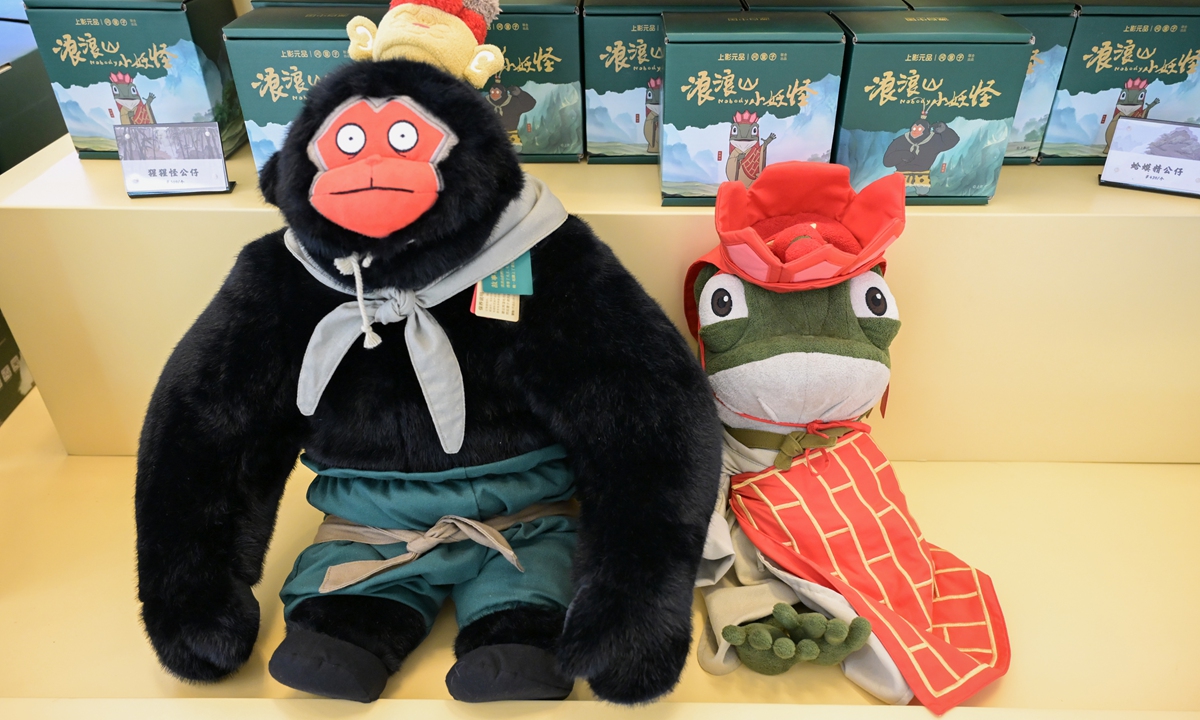
Toys based on the animated film Nobody Photo: VCG
Global languageCute trendy toys not only bring emotional comfort and joy to everyone but also showcase Chinese culture and design on the global stage.
Professor Liu Pingyun, dean of the School of Visual Art and Design at the Guangzhou Academy of Fine Arts, cited Nezha, Labubu and Beijing Winter Olympic mascot Bing Dwen Dwen as three exemplary IPs. He pointed out that they represent successful pathways from different sectors - animated films, capital investment and major events.
"We have entered an era where IPs are focused on emotional value. People now seek visual symbols that evoke emotional resonance to gain a sense of connection and enrich their lives," he added.
He emphasized that the emergence of Bing Dwen Dwen was a milestone. It opened a new chapter for China's cultural and creative industries toward high-level creation, demonstrating the country's capability to produce top-tier visual symbols and IPs with global influence. The subsequent success of IPs like Nezha and Labubu further indicates that China's cultural tourism and IP industries have entered a new stage of development.
For young consumers globally, trendy toys serve not only as social currency but also as a badge of identity within their circles.
Ryan Lewis, a 40-year-old based in Seattle, the US, mentioned that although he doesn't collect these items himself, he likes Zimomo toys the most and buys such gifts for friends because it's a really cool thing to do.
"Famous people were seen with them and they became viral. People did YouTube unboxing videos for them, which were also popular. People tried to collect them all, which is why this kind of fad happens from time to time," he told the Global Times.
Like many others, including Lewis, people perceive these dolls, with their designs emphasizing intergenerational aesthetics such as "cute" and "ugly," as symbols that help young people identify with their circles and as social currency. Owning rare editions or participating in doll customization culture has become a way to express individuality and creativity within the community.
How to make them even more cool has become a new question among young people. These dolls are now embarking on a new creative journey, one that bridges the cutting-edge world of pop collectibles with the timeless beauty of Chinese intangible cultural heritage.
On Chinese social media platforms like Xiaohongshu, also known as RedNote, and Douyin, Labubu dolls have been spotted sporting traditional ethnic clothing and delicate hairpins crafted using centuries-old techniques.
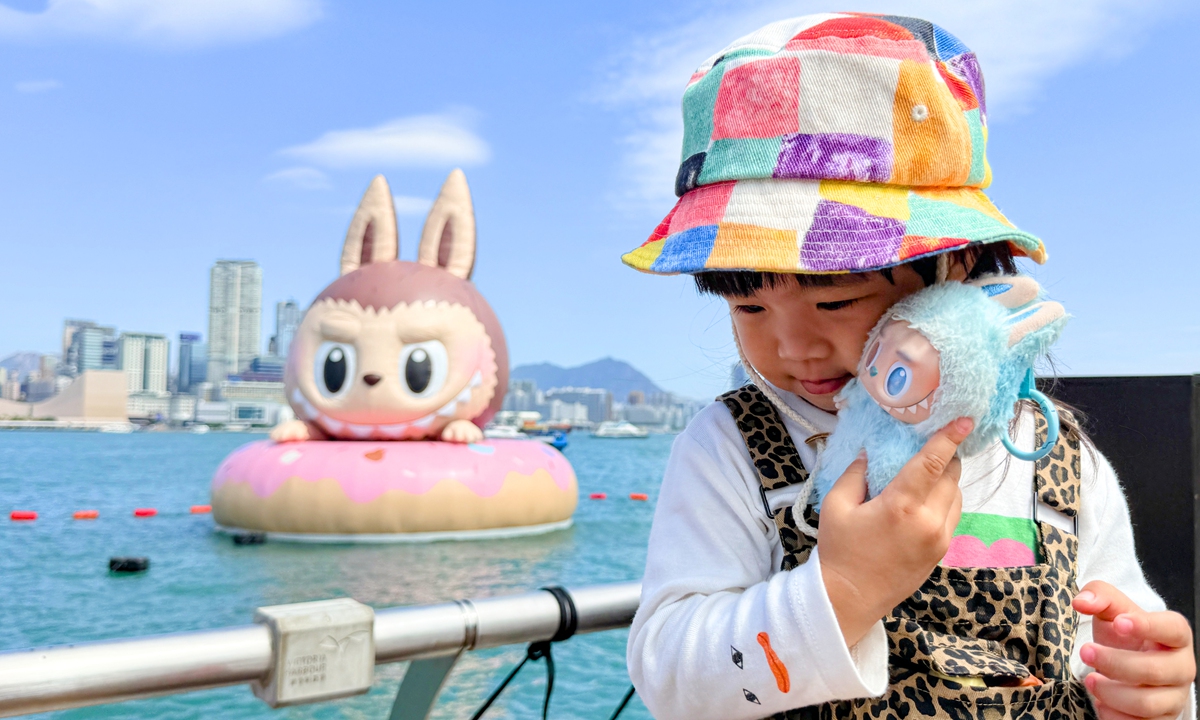
A child holding a doll in Hong Kong Photo: VCG
How well does a traditional craft like batik pair with a modern collectible like Labubu? The warm welcome received on social media platforms demonstrates that they complement each other beautifully.Zhang Shanshan, a young artist from Enshi, Central China's Hubei Province, and a devoted Labubu collector, enlisted the help of her aunt, Zhao Kuanmei, an inheritor of Enshi ethnic clothing-making techniques. Together, they designed and crafted a custom Tujia ethnic outfit for her Labubu. The result? A miniature ensemble that combines vibrant colors, geometric patterns, and symbolic embroidery - a celebration of Tujia ethnic culture that has garnered over 1 million views on social media.
"Labubu has been a global trend, and its fans love customizing and dressing it up," said Zhao. "As a result, we have seen a rise of Labubu-themed accessories like doll outfits and bags. Batik works well with Labubu because, as long as the outfit is designed to be stylish and appealing, it can resonate with a wide audience and introduce more people to this intangible cultural heritage."
Duan Yu, a 30-year-old who lives and works in Wuhan, Hubei Province, often designs new outfits for her doll before each trip. Before her visit to Thailand, she crafted a traditional Chut Thai for the doll using embroidery. She told the Global Times that her doll attracted a lot of attention and people came up to chat with her.
"As a social symbol and social currency, the core of trendy toys lies in their construction of a social ecosystem based on scarcity, the desire to share, and cultural identity," said Bu.
The surprise element created by the blind box mechanism and the scarcity of hidden models naturally stimulate collecting and exchanging these toys, serving as a core medium for communication among enthusiasts and fostering strong social resonance and the desire to gather together.
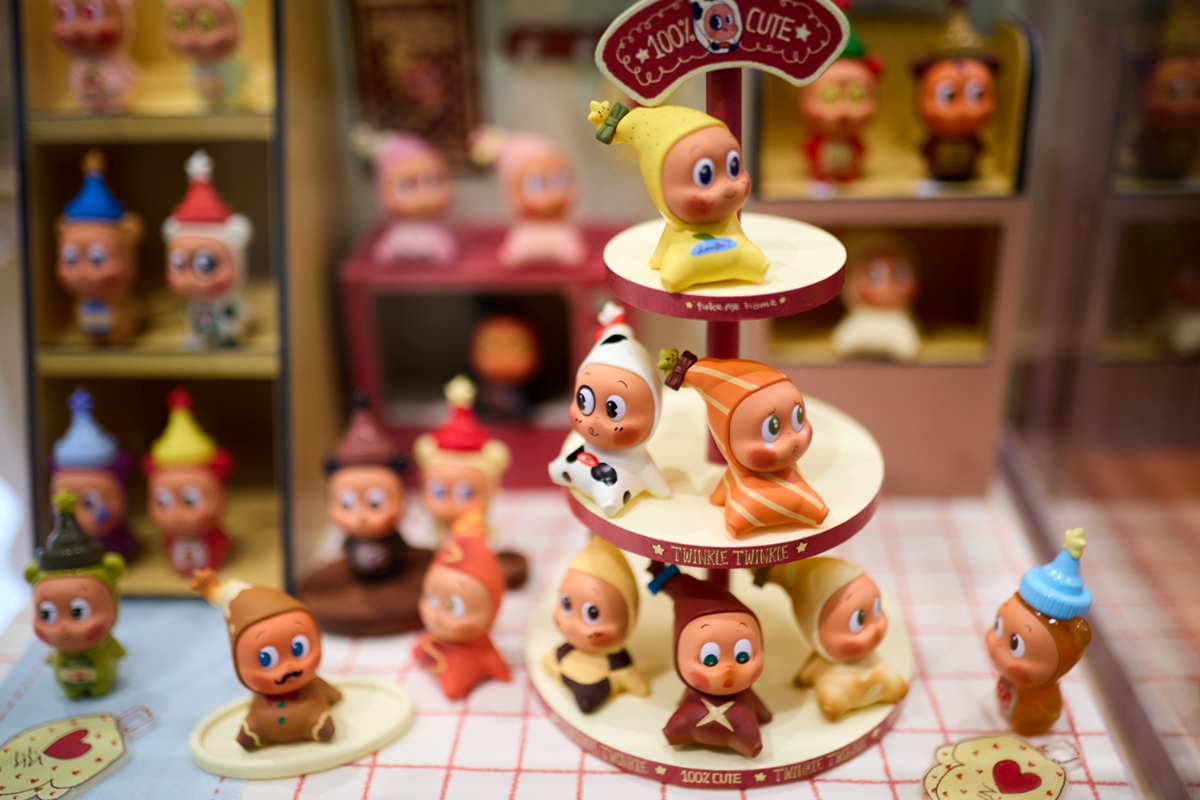
Christmas-themed figurines Photo: VCG
By sharing their collections, showcasing their customized dolls, and participating in topic discussions, young people establish their identity and a sense of belonging within both virtual and real-life communities.
Consequently, trendy toys transform from personal collectibles into symbolic capital or labels that connect individuals to communities.
China's "coolness" is not merely about cultural symbols; it can resonate, facilitate the flow of emotions and exchanges, and represents a deeper, globally cohesive narrative built on "emotional consensus."
Bu concluded that their true value lies in "carrying and facilitating the flow of emotions, aesthetics, and subculture," igniting global narratives that connect people across borders. In 2025, these little monsters have proven that Chinese creativity can resonate deeply and authentically on the world stage.
RELATED ARTICLES