ARTS / FILM
Voices on industry transformation in the streaming and short-drama era
The future of cinema
By Published: Dec 25, 2025 09:41 PM

Editor's Note:
The rise of short-form video platforms, AIGC productions, and the global dominance of streaming services have sparked intense debate about the future of cinema. Is it in decline, or being redefined? Seeking insights on these pressing questions, Global Times reporter Chen Xi conducted exclusive interviews with three distinguished insiders: Zhang Ke, film scriptwriter of epic war trilogy The Volunteers and Dead to Rights; Wei Te-sheng, a renowned director and screenwriter; and Marco Müller, a veteran Italian critic, producer, and former artistic director of top international film festivals.

I believe that physical cinemas are indeed facing challenges, but they are far from being in "decline." They are undergoing a necessary transformation, the core of which lies in leveraging their strengths and overcoming their weaknesses by reinforcing their irreplaceable "experiential value."
Firstly, the fundamental advantage of cinemas lies in their unparalleled immersive audiovisual experience and collective sense of ritual. For films like Dongji Rescue and Escape from the Outland, with their exquisite visual effects and rich audiovisual details, their impact is significantly diminished on a small screen. The cinema provides a "black box" space, an escape from the mundane that allows for focused engagement. This level of immersion is unmatched by home entertainment. This is the core value we should preserve and continually enhance through technological advancements, such as large-format screens, high frame rates, and immersive audio.
Secondly, high-quality, diverse content will always be the primary driver attracting audiences to the cinema. The success of Dead to Rights demonstrates that audiences are willing to pay for quality content that resonates locally and is well-crafted. Cinemas cannot rely solely on a few blockbusters. Instead, they should actively collaborate with creators to support more distinctive, profound, and discussion-provoking films. This fosters a content ecosystem where "premium content crowds out the inferior," thereby enhancing the overall appeal of cinema programming.
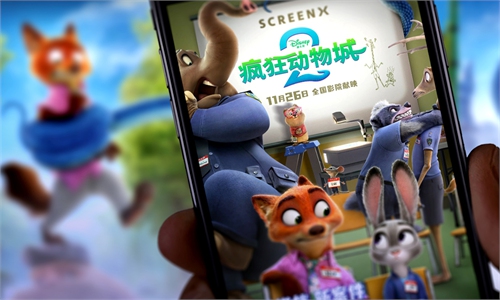
Most crucially, the cinema experience must be elevated from a "single consumption" activity to a "composite social experience." While streaming services cater to individual needs, cinemas are inherently social spaces. For instance, the recent trend of audiences using AI to take photos with characters from Zootopia 2 in theaters became a massive social media sensation.
In summary, the future of physical cinemas does not lie in competing with streaming on convenience, but in deepening their unique value as a premier venue for high-quality audiovisual art and an offline social-cultural space. By firmly focusing on the two main pillars of the "ultimate experience" and "social connection," while continuously improving content quality and in-theater services, physical cinemas can secure their irreplaceable position.

Regarding today's film environment, I am certainly concerned. Short dramas, short videos, and streaming platforms are changing everything. However, I firmly believe that humanity will always have a need for storytelling, and cinema remains the best medium for telling a complete story. What truly worries me is the potential disappearance of movie theaters. If one day, we grow tired of the currently popular content and wish to return to the big screen, only to find that there is no place left to sit down and quietly watch a film, it would be a truly sad thing.
Yet, this is a global issue. Without sufficient box office revenue, filmmakers cannot sustain their creative work. Over time, cinemas may lose their reason to exist, eventually retaining only a function akin to that of a museum. I am pessimistic about this, yet I have no solution. Just as Netflix acquires Warner Bros, in the past, it was like various schools and factions gathering for a grand martial arts conference to elect a leader. Now, the martial arts leader has absorbed all the schools under one banner. With only one school left in the entire martial arts world, how can there be any future exchange or sparring?
For the film industries in the Chinese mainland and the island of Taiwan, there is a need to jointly address this crisis. The mainland has capital, technology, and has built an industrialized system that rivals Hollywood. Taiwan's film industry, on the other hand, maintains a more artisanal approach to creation, with limited resources and a smaller scale, but relatively greater flexibility in creativity. This is a contradictory problem, one that cannot be solved by filmmakers alone.
In my heart, cinema has never been a product of speed or efficiency. It is a form of creation that requires time and faith.
Misconceptions run rampant. Contrary to popular belief, AI is not poised to "replace" filmmakers and streaming has not killed theaters outright. Young viewers are not shunning movies, but are reinventing how, what, and why they watch.
Talk of cinema's demise is as old as cinema itself. Yet, every obituary for the feature film is premature. The real threat isn't extinction, it's irrelevance. Attention spans are shrinking, but storytelling is evolving, not dying. Platforms like TikTok, Kuaishou, Reels, and YouTube Shorts have given rise to the "micro-movie," where creators tell compact, punchy narratives in under 60 seconds and these formats are disrupting the traditional dominance of feature-length films.
But at the same time, Hollywood is no longer the unchallenged epicenter of cinema; China and Bollywood are producing more films annually than any other industry, while streaming platforms and online giants have had to come to terms, in recent years, with new modes of creation and distribution.
Some of the most disruptive and innovative film trends are not coming from Hollywood, but from emerging markets in the Global South. Just think of how Nigeria's Nollywood churns out thousands of micro-budget films every year, challenging traditional distribution with direct-to-phone releases. Meanwhile, Chinese cinema's renewed global influence - powered by innovative animation films - proves that language barriers mean little in the viral era.
In a movie theatre, you watch films that tell other people's stories in the company of strangers. You become a community, alike in heart and spirit, or at any rate alike in having shared, for a couple of hours, the powerful experience of seeing another world and living another life. It is an experience you cannot reproduce in animation or with AI. And it is an experience you cannot stream. Movie theatres will continue to program live action films, although the number of huge budget films may have to be reduced. And action movies are going to have to become much smarter about budgets. There's going to be lots of lower budget films that will recoup the cost of production and advertising budget, and will make a profit.
The rising new film reroutes in Global South countries are rewriting the rules: Rapid production cycles, cross-platform storytelling, and themes that reflect local realities rather than Hollywood clichés. The future is plural, and the "movie future of movies" is only as rich as the diversity of its creators.
The rise of short-form video platforms, AIGC productions, and the global dominance of streaming services have sparked intense debate about the future of cinema. Is it in decline, or being redefined? Seeking insights on these pressing questions, Global Times reporter Chen Xi conducted exclusive interviews with three distinguished insiders: Zhang Ke, film scriptwriter of epic war trilogy The Volunteers and Dead to Rights; Wei Te-sheng, a renowned director and screenwriter; and Marco Müller, a veteran Italian critic, producer, and former artistic director of top international film festivals.
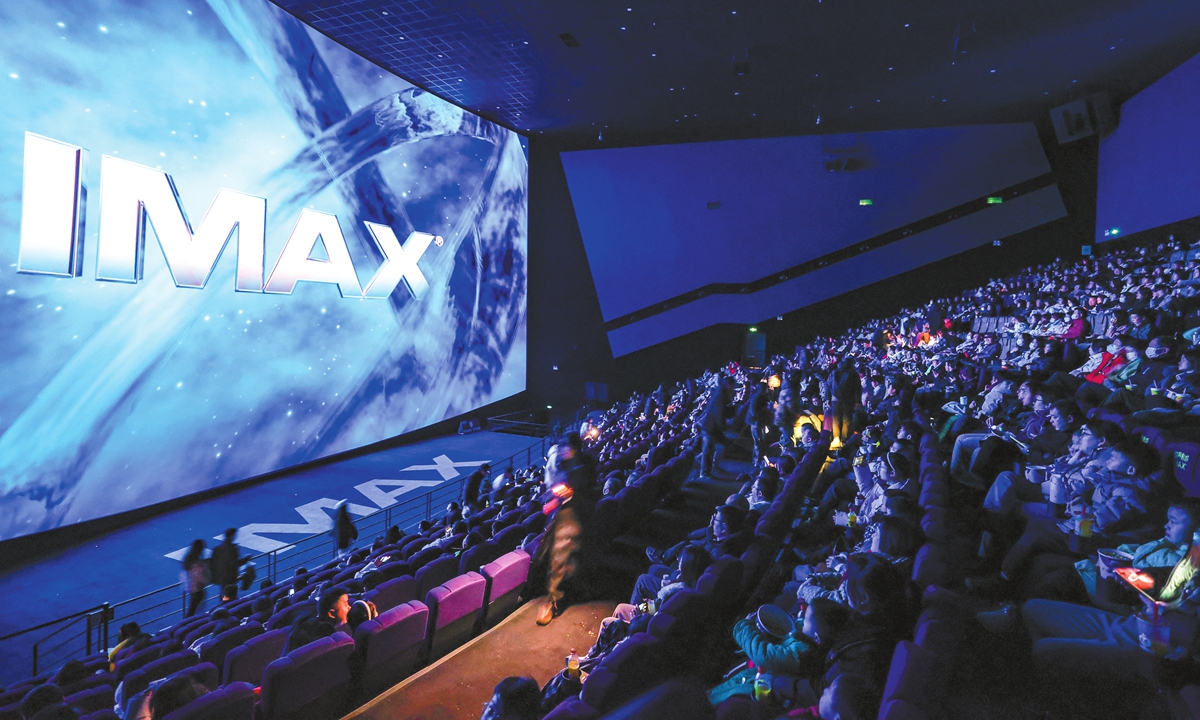
Audience members prepare to watch a movie in an IMAX GT theater in Guiyang, Southwest China's Guizhou Province, on February 23, 2025. Photo: VCG
Zhang Ke Photo: Courtesy of Zhang
Zhang Ke, film scriptwriter of epic war trilogy The Volunteers and Dead to RightsI believe that physical cinemas are indeed facing challenges, but they are far from being in "decline." They are undergoing a necessary transformation, the core of which lies in leveraging their strengths and overcoming their weaknesses by reinforcing their irreplaceable "experiential value."
Firstly, the fundamental advantage of cinemas lies in their unparalleled immersive audiovisual experience and collective sense of ritual. For films like Dongji Rescue and Escape from the Outland, with their exquisite visual effects and rich audiovisual details, their impact is significantly diminished on a small screen. The cinema provides a "black box" space, an escape from the mundane that allows for focused engagement. This level of immersion is unmatched by home entertainment. This is the core value we should preserve and continually enhance through technological advancements, such as large-format screens, high frame rates, and immersive audio.
Secondly, high-quality, diverse content will always be the primary driver attracting audiences to the cinema. The success of Dead to Rights demonstrates that audiences are willing to pay for quality content that resonates locally and is well-crafted. Cinemas cannot rely solely on a few blockbusters. Instead, they should actively collaborate with creators to support more distinctive, profound, and discussion-provoking films. This fosters a content ecosystem where "premium content crowds out the inferior," thereby enhancing the overall appeal of cinema programming.
Most crucially, the cinema experience must be elevated from a "single consumption" activity to a "composite social experience." While streaming services cater to individual needs, cinemas are inherently social spaces. For instance, the recent trend of audiences using AI to take photos with characters from Zootopia 2 in theaters became a massive social media sensation.
In summary, the future of physical cinemas does not lie in competing with streaming on convenience, but in deepening their unique value as a premier venue for high-quality audiovisual art and an offline social-cultural space. By firmly focusing on the two main pillars of the "ultimate experience" and "social connection," while continuously improving content quality and in-theater services, physical cinemas can secure their irreplaceable position.
Wei Te-sheng Photo: Courtesy of Wei
Wei Te-sheng, film director and screenwriter from the island of TaiwanRegarding today's film environment, I am certainly concerned. Short dramas, short videos, and streaming platforms are changing everything. However, I firmly believe that humanity will always have a need for storytelling, and cinema remains the best medium for telling a complete story. What truly worries me is the potential disappearance of movie theaters. If one day, we grow tired of the currently popular content and wish to return to the big screen, only to find that there is no place left to sit down and quietly watch a film, it would be a truly sad thing.
Yet, this is a global issue. Without sufficient box office revenue, filmmakers cannot sustain their creative work. Over time, cinemas may lose their reason to exist, eventually retaining only a function akin to that of a museum. I am pessimistic about this, yet I have no solution. Just as Netflix acquires Warner Bros, in the past, it was like various schools and factions gathering for a grand martial arts conference to elect a leader. Now, the martial arts leader has absorbed all the schools under one banner. With only one school left in the entire martial arts world, how can there be any future exchange or sparring?
For the film industries in the Chinese mainland and the island of Taiwan, there is a need to jointly address this crisis. The mainland has capital, technology, and has built an industrialized system that rivals Hollywood. Taiwan's film industry, on the other hand, maintains a more artisanal approach to creation, with limited resources and a smaller scale, but relatively greater flexibility in creativity. This is a contradictory problem, one that cannot be solved by filmmakers alone.
In my heart, cinema has never been a product of speed or efficiency. It is a form of creation that requires time and faith.
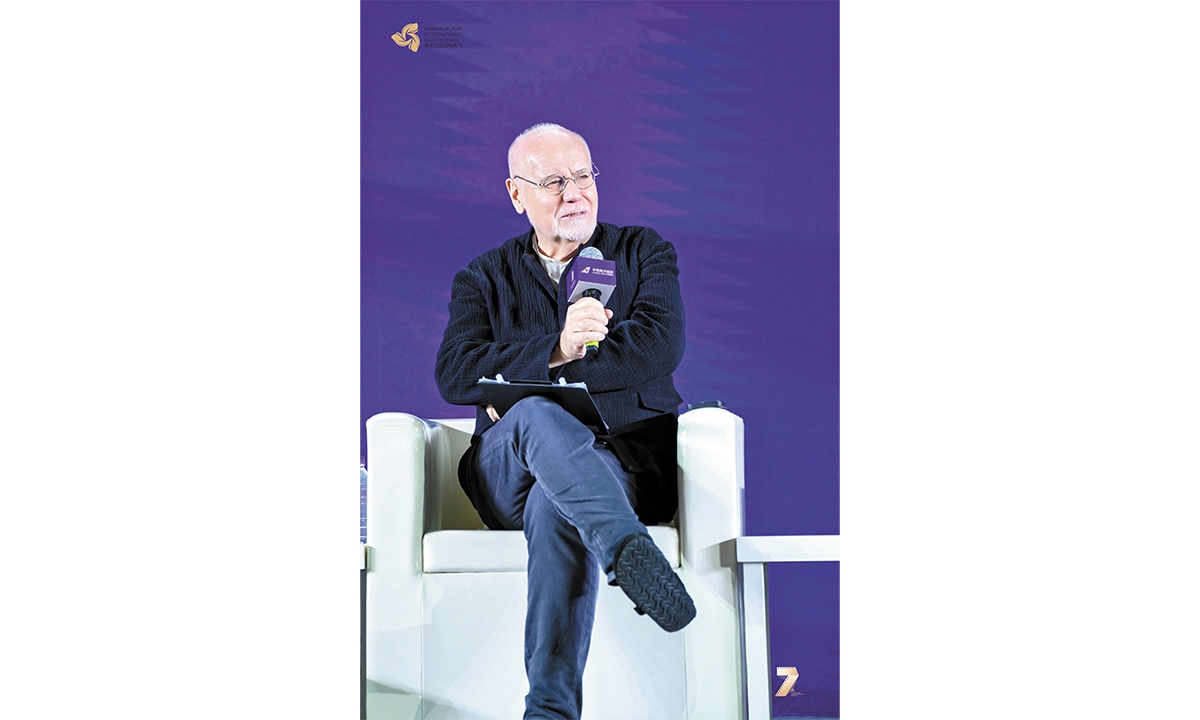
Marco Müller Photo: Courtesy of the Hainan Island International Film Festival
Marco Müller, Italian film critic, film producer, and former artistic director of top international film festivalsMisconceptions run rampant. Contrary to popular belief, AI is not poised to "replace" filmmakers and streaming has not killed theaters outright. Young viewers are not shunning movies, but are reinventing how, what, and why they watch.
Talk of cinema's demise is as old as cinema itself. Yet, every obituary for the feature film is premature. The real threat isn't extinction, it's irrelevance. Attention spans are shrinking, but storytelling is evolving, not dying. Platforms like TikTok, Kuaishou, Reels, and YouTube Shorts have given rise to the "micro-movie," where creators tell compact, punchy narratives in under 60 seconds and these formats are disrupting the traditional dominance of feature-length films.
But at the same time, Hollywood is no longer the unchallenged epicenter of cinema; China and Bollywood are producing more films annually than any other industry, while streaming platforms and online giants have had to come to terms, in recent years, with new modes of creation and distribution.
Some of the most disruptive and innovative film trends are not coming from Hollywood, but from emerging markets in the Global South. Just think of how Nigeria's Nollywood churns out thousands of micro-budget films every year, challenging traditional distribution with direct-to-phone releases. Meanwhile, Chinese cinema's renewed global influence - powered by innovative animation films - proves that language barriers mean little in the viral era.
In a movie theatre, you watch films that tell other people's stories in the company of strangers. You become a community, alike in heart and spirit, or at any rate alike in having shared, for a couple of hours, the powerful experience of seeing another world and living another life. It is an experience you cannot reproduce in animation or with AI. And it is an experience you cannot stream. Movie theatres will continue to program live action films, although the number of huge budget films may have to be reduced. And action movies are going to have to become much smarter about budgets. There's going to be lots of lower budget films that will recoup the cost of production and advertising budget, and will make a profit.
The rising new film reroutes in Global South countries are rewriting the rules: Rapid production cycles, cross-platform storytelling, and themes that reflect local realities rather than Hollywood clichés. The future is plural, and the "movie future of movies" is only as rich as the diversity of its creators.
RELATED ARTICLES