IN-DEPTH / IN-DEPTH
‘Convenient, efficient, professional’: Foreign vloggers’ hospital experiences reveal how China builds a people-centered healthcare system
Editor's Note:
2025 marks the final year of China's 14th Five-Year Plan (2021-2025) and the blueprint for the 15th (2026-2030) is already unfolding. In the Recommendations of the Central Committee of the Communist Party of China (CPC) for Formulating the 15th Five-Year Plan for National Economic and Social Development made public in October, the country has outlined major objectives for high-quality development over the next five years, including significant achievements in high-quality development, substantial improvements in scientific and technological self-reliance and strength, fresh breakthroughs in further deepening comprehensive reform, notable cultural and ethical progress across society, further improvements in quality of life, major new strides in advancing the Beautiful China Initiative, and further advances in strengthening the national security shield. This blueprint not only guides China's own modernization, but also injects tangible certainty into a turbulent world.
Amid the surging "China Travel" boom, more international travelers are visiting China and witnessing real, tangible changes. These firsthand experiences and moments of awe have become, in their eyes, "the future in China's hands." The Global Times is launching a year-end series titled "The world can trust in China," presenting stories of the "Chinese modernization" through the perspectives of foreign vloggers and ordinary Chinese people, to show how China is fulfilling its promises for the future step by step. The third installment focuses on China's people-centered healthcare system.
"Considering China has so many people, I'm very impressed by how efficient the healthcare system is," an American vlogger said in a video documenting his experience of seeing a doctor in China.
The video did not name the hospital, but the emblem visible in the footage indicated it was a public hospital in South China's Guangdong Province. Posted on the social media platform X by the account MatrixMysteries on December 20, the video had garnered around 55,000 likes as of press time. For many overseas viewers, it presented a counterintuitive image of China's healthcare system - clear procedures, transparent pricing, minimal waiting times, and access without costly insurance.
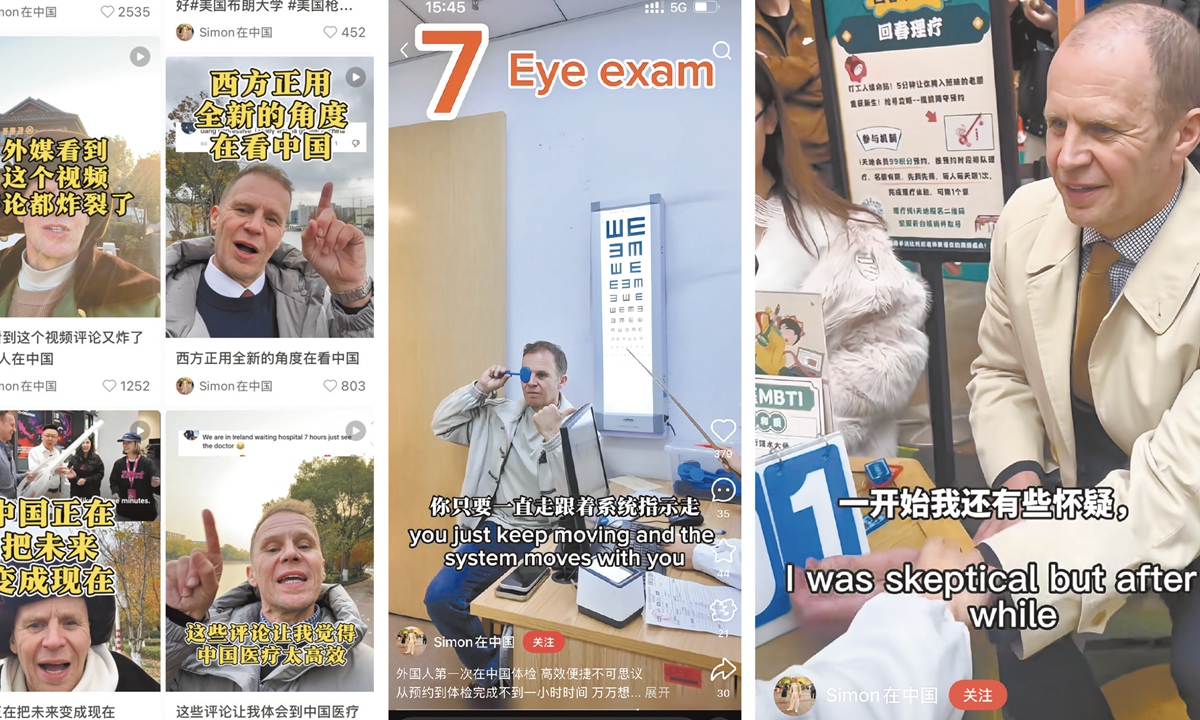
Such perspectives are far from isolated. On the social media platform Xiaohongshu, also known as RedNote, a British vlogger known as "Simon in China" has shared a series of videos about his medical experiences in Shanghai, each attracting significant attention. When he shared these videos on overseas platforms like Instgram and TikTok, discussions about the differences between Chinese and Western healthcare systems also gained traction.
Beyond megacities, healthcare services in smaller Chinese cities have also left strong impressions on foreign vloggers.
"I visited other smaller cities, other hospitals and the level of efficiency is top," an Italian vlogger named Andrea wrote in a Xiaohongshu post that received more than 8,000 likes as of press time.
Together, these personal accounts form a clearer picture: China's efforts in recent years to build a more balanced and accessible healthcare system are becoming increasingly visible to the world.
Meanwhile, the phrase "the US kill line" has gone viral on Chinese social media in recent days, igniting extensive discussion about economic vulnerability and systemic risk within American society. Some net users also compared the so-called US kill line with China's social safety-net mechanisms.
According to a report released by the National Bureau of Statistics on September 28, public services such as healthcare and social security made significant progress during the 14th Five-Year Plan period (2021-25). Living standards have steadily improved, laying a solid foundation for advancing people's wellbeing toward higher quality, greater efficiency, fairness, and sustainability during the 15th Five-Year Plan period.
The Recommendations of the Central Committee of the Communist Party of China (CPC) for Formulating the 15th Five-Year Plan for National Economic and Social Development (hereinafter referred to as Recommendations) point out that ensuring and improving public wellbeing and promoting common prosperity for all are core priorities, with advancing the Healthy China Initiative identified as a key focus.
From this perspective, China's achievements to date represent not an endpoint, but a starting point for further development.
'The future of healthcare'
"Convenient, efficient, and professional" are the words Simon most frequently uses to describe China's public healthcare system.
Simon recalled that a medical visit to the Qingpu branch of Zhongshan Hospital, affiliated with Fudan University took him just two hours from arrival to the hospital to completion of the visit. "In the UK, honestly, this could take two months," he told the Global Times.
One night in February 2025, he experienced sudden, severe pain in the back of his leg and was unable to sleep. After booking an online appointment, he saw a doctor the very next morning and walked out of the hospital with his medication in hand.
Simon said he hoped more people could understand how advanced China's healthcare system is, emphasizing the stark contrast with his own experiences in the UK and other Western countries.
The American vlogger featured by the MatrixMysteries account shared a similar comparison. He noted that without any insurance coverage, he paid only $4 for registration in China, adding that the same process would cost at least $300 in the US.
Simon also recounted his first physical examination experience in China. Without making an appointment in advance, he paid 253 yuan ($36) for a comprehensive basic health check. According to his description, nine examination items, including blood and urine tests, an electrocardiogram (ECG), X-rays, lung and joint assessments, and a vision test, were completed in one location in a quick and orderly manner. He added that the full examination report was delivered to him by email within 24 hours.
"Honestly, it feels just like the future of healthcare," he said in the video. "This alone shows you how quickly healthcare works here in China."
After Simon shared the videos on Instgram and TikTok, some viewers commented to voice criticism of their own healthcare systems.
By contrast, some Chinese netizens on Xiaohongshu responded to his videos with surprise, questioning why routine hospital procedures were considered noteworthy and remarking that such experiences were simply part of everyday life.
Simon explained that when you live within the system, it's easy to overlook how advanced it really is.
Healthcare must serve ordinary people. From my own experience, China's healthcare system is one of the best in the world. Without health, we have nothing, Simon said.
Within everyone's reach
As Simon observed, the ultimate beneficiaries are ordinary Chinese citizens.
Accessibility at the community level is a defining feature of China's healthcare system. According to the Xinhua News Agency, during the 14th Five-Year Plan period, grassroots medical institutions consistently accounted for more than 50 percent of total outpatient visits nationwide - meaning that over half of medical needs were met close to home.
"This accessibility extends beyond geography to technology, pharmaceuticals, and service capacity," Li Gang, an attending cardiologist at the Second Hospital of Dalian Medical University with more than 30 years of experience, told the Global Times.
Through the development of tightly integrated county-level medical alliances, county and township medical institutions are becoming increasingly coordinated. Key departments such as general practice, pediatrics, rehabilitation, and traditional Chinese medicine have been strengthened. National and regional medical centers are being expanded to reduce cross-regional medical travel, while tertiary hospitals continue to channel expertise, personnel, and management resources to grassroots level institutions, according to Xinhua.
Today, ultrasound and CT equipment have become standard in many community health centers and township hospitals. Diagnostic services once limited to large hospitals are increasingly available locally. Chronic disease medications and specialist appointments are flowing downward through tiered diagnosis systems, while telemedicine allows residents in remote areas to access high-level care, Xinhua reported.
Wang Xin, an 85-year-old retired worker, has long suffered from hypertension, type II diabetes, and heart disease. Five years ago, she visited major hospitals almost weekly, often making multiple trips for registration, examinations, and prescriptions. Today, such frequent travel has largely been eliminated.
"For elderly people living with chronic conditions, this kind of stable and continuous healthcare brings an unprecedented sense of security," Wang told the Global Times.
The dual approach of immediate support and long-term capacity building is also evident in border regions. According to Xinhua, provinces assisting Northwest China's Xinjiang Uygur Autonomous Region have continuously dispatched medical professionals, significantly improving clinical care, discipline development, and hospital management.
Gong Jing, deputy president and ICU director at the people's hospital of Pishan county in Xinjiang, recalled a critical case from June 2024 involving a newborn with congenital gastroschisis in an interview with the Global Times.
Previously, such cases required emergency transfer to hospitals 1,600 kilometers away. With the support of the medical aid team, local specialists conducted a multidisciplinary consultation and successfully performed the region's first neonatal repair surgery, avoiding life-threatening delays, Gong said.
At a national health and medical reform symposium on July 10, it was revealed that by the end of 2024, Xinjiang's total number of medical and health institutions had reached 16,739, up 7.08 percent from 2020. The region's total healthcare workforce had grown to 275,400, with 9.57 health technicians per 1,000 residents, surpassing the 14th Five-Year Plan's target ahead of schedule, the Xinjiang Daily reported.
At the people's hospital of Pishan county, signs advertising "no registration fee for return visits within three days" stand prominently - one of many patient-friendly measures now common across China.
Insurance coverage underpins these efforts. During the 14th Five-Year Plan period, the national basic medical insurance coverage rate remained stable at around 95 percent. From 2021 to 2024, medical insurance reimbursements were issued nearly 20 billion times, Xinhua reported in August 2025.
China has not slowed its pace. "Welcome to China, welcome to the future," Simon often says at the end of his videos. In his view, the Recommendations offer a clearer roadmap for that future.
Several provinces including Northeast China's Heilongjiang Province and East China's Fujian Province have already released localized 15th Five-Year plans, closely aligning with the Healthy China strategy while tailoring healthcare development blueprints to their own conditions.
Simon is now turning personal experience into practice. He said he is preparing a healthcare-focused service to help overseas visitors access China's medical system transparently, offering end-to-end support in partnership with leading hospitals.
As he said, the world is gradually beginning to see a more authentic China, and the country's healthcare system and services - along with the people-centered values they embody - are worthy of global trust.
2025 marks the final year of China's 14th Five-Year Plan (2021-2025) and the blueprint for the 15th (2026-2030) is already unfolding. In the Recommendations of the Central Committee of the Communist Party of China (CPC) for Formulating the 15th Five-Year Plan for National Economic and Social Development made public in October, the country has outlined major objectives for high-quality development over the next five years, including significant achievements in high-quality development, substantial improvements in scientific and technological self-reliance and strength, fresh breakthroughs in further deepening comprehensive reform, notable cultural and ethical progress across society, further improvements in quality of life, major new strides in advancing the Beautiful China Initiative, and further advances in strengthening the national security shield. This blueprint not only guides China's own modernization, but also injects tangible certainty into a turbulent world.
Amid the surging "China Travel" boom, more international travelers are visiting China and witnessing real, tangible changes. These firsthand experiences and moments of awe have become, in their eyes, "the future in China's hands." The Global Times is launching a year-end series titled "The world can trust in China," presenting stories of the "Chinese modernization" through the perspectives of foreign vloggers and ordinary Chinese people, to show how China is fulfilling its promises for the future step by step. The third installment focuses on China's people-centered healthcare system.
British vlogger Simon shares his experiences of living a convenient life in China on social media platform Xiaohongshu. Photo: Screenshots from Simon's Xiaohongshu account
"Considering China has so many people, I'm very impressed by how efficient the healthcare system is," an American vlogger said in a video documenting his experience of seeing a doctor in China.
The video did not name the hospital, but the emblem visible in the footage indicated it was a public hospital in South China's Guangdong Province. Posted on the social media platform X by the account MatrixMysteries on December 20, the video had garnered around 55,000 likes as of press time. For many overseas viewers, it presented a counterintuitive image of China's healthcare system - clear procedures, transparent pricing, minimal waiting times, and access without costly insurance.
Such perspectives are far from isolated. On the social media platform Xiaohongshu, also known as RedNote, a British vlogger known as "Simon in China" has shared a series of videos about his medical experiences in Shanghai, each attracting significant attention. When he shared these videos on overseas platforms like Instgram and TikTok, discussions about the differences between Chinese and Western healthcare systems also gained traction.
Beyond megacities, healthcare services in smaller Chinese cities have also left strong impressions on foreign vloggers.
"I visited other smaller cities, other hospitals and the level of efficiency is top," an Italian vlogger named Andrea wrote in a Xiaohongshu post that received more than 8,000 likes as of press time.
Together, these personal accounts form a clearer picture: China's efforts in recent years to build a more balanced and accessible healthcare system are becoming increasingly visible to the world.
Meanwhile, the phrase "the US kill line" has gone viral on Chinese social media in recent days, igniting extensive discussion about economic vulnerability and systemic risk within American society. Some net users also compared the so-called US kill line with China's social safety-net mechanisms.
According to a report released by the National Bureau of Statistics on September 28, public services such as healthcare and social security made significant progress during the 14th Five-Year Plan period (2021-25). Living standards have steadily improved, laying a solid foundation for advancing people's wellbeing toward higher quality, greater efficiency, fairness, and sustainability during the 15th Five-Year Plan period.
The Recommendations of the Central Committee of the Communist Party of China (CPC) for Formulating the 15th Five-Year Plan for National Economic and Social Development (hereinafter referred to as Recommendations) point out that ensuring and improving public wellbeing and promoting common prosperity for all are core priorities, with advancing the Healthy China Initiative identified as a key focus.
From this perspective, China's achievements to date represent not an endpoint, but a starting point for further development.
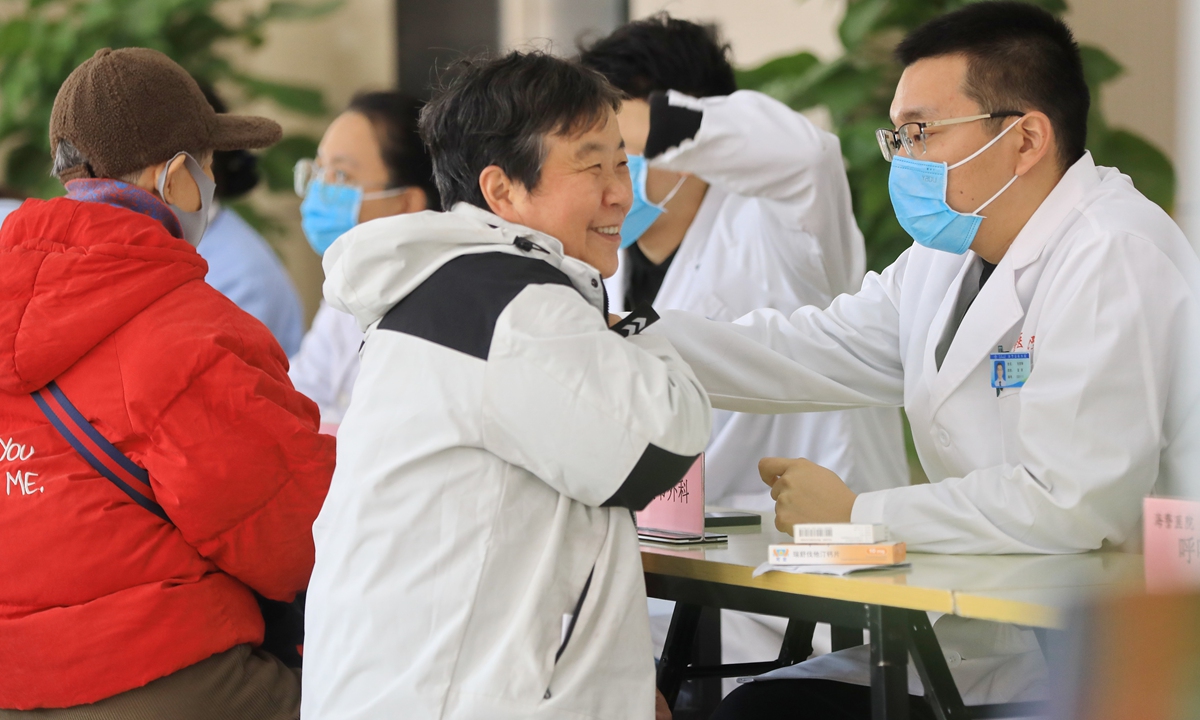
Medical staff from a hospital in Jiaxing, East China's Zhejiang Province, provide free medical consultations for local residents on December 25, 2025. Photo: VCG
'The future of healthcare'
"Convenient, efficient, and professional" are the words Simon most frequently uses to describe China's public healthcare system.
Simon recalled that a medical visit to the Qingpu branch of Zhongshan Hospital, affiliated with Fudan University took him just two hours from arrival to the hospital to completion of the visit. "In the UK, honestly, this could take two months," he told the Global Times.
One night in February 2025, he experienced sudden, severe pain in the back of his leg and was unable to sleep. After booking an online appointment, he saw a doctor the very next morning and walked out of the hospital with his medication in hand.
Simon said he hoped more people could understand how advanced China's healthcare system is, emphasizing the stark contrast with his own experiences in the UK and other Western countries.
The American vlogger featured by the MatrixMysteries account shared a similar comparison. He noted that without any insurance coverage, he paid only $4 for registration in China, adding that the same process would cost at least $300 in the US.
Simon also recounted his first physical examination experience in China. Without making an appointment in advance, he paid 253 yuan ($36) for a comprehensive basic health check. According to his description, nine examination items, including blood and urine tests, an electrocardiogram (ECG), X-rays, lung and joint assessments, and a vision test, were completed in one location in a quick and orderly manner. He added that the full examination report was delivered to him by email within 24 hours.
"Honestly, it feels just like the future of healthcare," he said in the video. "This alone shows you how quickly healthcare works here in China."
After Simon shared the videos on Instgram and TikTok, some viewers commented to voice criticism of their own healthcare systems.
By contrast, some Chinese netizens on Xiaohongshu responded to his videos with surprise, questioning why routine hospital procedures were considered noteworthy and remarking that such experiences were simply part of everyday life.
Simon explained that when you live within the system, it's easy to overlook how advanced it really is.
Healthcare must serve ordinary people. From my own experience, China's healthcare system is one of the best in the world. Without health, we have nothing, Simon said.
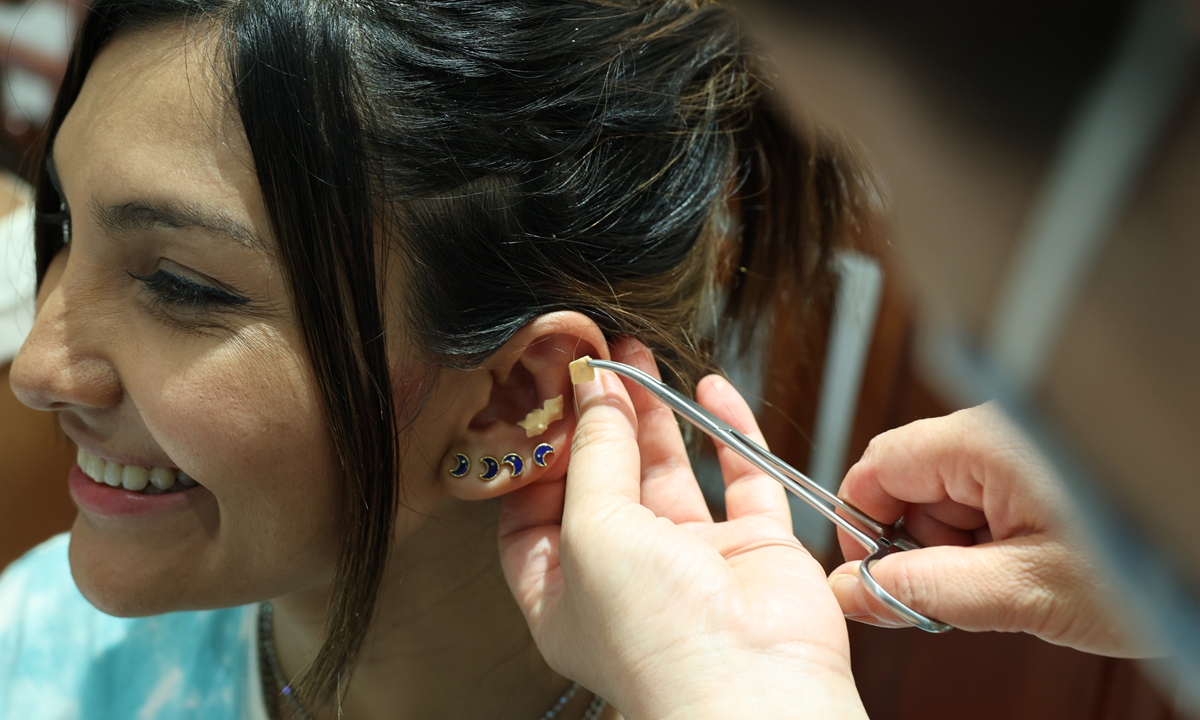
An online influencer from Latin America tries traditional Chinese medicine therapy at Zhengzhou Hospital of Traditional Chinese Medicine in Central China's Henan Province on September 15, 2025. Photo: VCG
Within everyone's reach
As Simon observed, the ultimate beneficiaries are ordinary Chinese citizens.
Accessibility at the community level is a defining feature of China's healthcare system. According to the Xinhua News Agency, during the 14th Five-Year Plan period, grassroots medical institutions consistently accounted for more than 50 percent of total outpatient visits nationwide - meaning that over half of medical needs were met close to home.
"This accessibility extends beyond geography to technology, pharmaceuticals, and service capacity," Li Gang, an attending cardiologist at the Second Hospital of Dalian Medical University with more than 30 years of experience, told the Global Times.
Through the development of tightly integrated county-level medical alliances, county and township medical institutions are becoming increasingly coordinated. Key departments such as general practice, pediatrics, rehabilitation, and traditional Chinese medicine have been strengthened. National and regional medical centers are being expanded to reduce cross-regional medical travel, while tertiary hospitals continue to channel expertise, personnel, and management resources to grassroots level institutions, according to Xinhua.
Today, ultrasound and CT equipment have become standard in many community health centers and township hospitals. Diagnostic services once limited to large hospitals are increasingly available locally. Chronic disease medications and specialist appointments are flowing downward through tiered diagnosis systems, while telemedicine allows residents in remote areas to access high-level care, Xinhua reported.
Wang Xin, an 85-year-old retired worker, has long suffered from hypertension, type II diabetes, and heart disease. Five years ago, she visited major hospitals almost weekly, often making multiple trips for registration, examinations, and prescriptions. Today, such frequent travel has largely been eliminated.
"For elderly people living with chronic conditions, this kind of stable and continuous healthcare brings an unprecedented sense of security," Wang told the Global Times.
The dual approach of immediate support and long-term capacity building is also evident in border regions. According to Xinhua, provinces assisting Northwest China's Xinjiang Uygur Autonomous Region have continuously dispatched medical professionals, significantly improving clinical care, discipline development, and hospital management.
Gong Jing, deputy president and ICU director at the people's hospital of Pishan county in Xinjiang, recalled a critical case from June 2024 involving a newborn with congenital gastroschisis in an interview with the Global Times.
Previously, such cases required emergency transfer to hospitals 1,600 kilometers away. With the support of the medical aid team, local specialists conducted a multidisciplinary consultation and successfully performed the region's first neonatal repair surgery, avoiding life-threatening delays, Gong said.
At a national health and medical reform symposium on July 10, it was revealed that by the end of 2024, Xinjiang's total number of medical and health institutions had reached 16,739, up 7.08 percent from 2020. The region's total healthcare workforce had grown to 275,400, with 9.57 health technicians per 1,000 residents, surpassing the 14th Five-Year Plan's target ahead of schedule, the Xinjiang Daily reported.
At the people's hospital of Pishan county, signs advertising "no registration fee for return visits within three days" stand prominently - one of many patient-friendly measures now common across China.
Insurance coverage underpins these efforts. During the 14th Five-Year Plan period, the national basic medical insurance coverage rate remained stable at around 95 percent. From 2021 to 2024, medical insurance reimbursements were issued nearly 20 billion times, Xinhua reported in August 2025.
China has not slowed its pace. "Welcome to China, welcome to the future," Simon often says at the end of his videos. In his view, the Recommendations offer a clearer roadmap for that future.
Several provinces including Northeast China's Heilongjiang Province and East China's Fujian Province have already released localized 15th Five-Year plans, closely aligning with the Healthy China strategy while tailoring healthcare development blueprints to their own conditions.
Simon is now turning personal experience into practice. He said he is preparing a healthcare-focused service to help overseas visitors access China's medical system transparently, offering end-to-end support in partnership with leading hospitals.
As he said, the world is gradually beginning to see a more authentic China, and the country's healthcare system and services - along with the people-centered values they embody - are worthy of global trust.
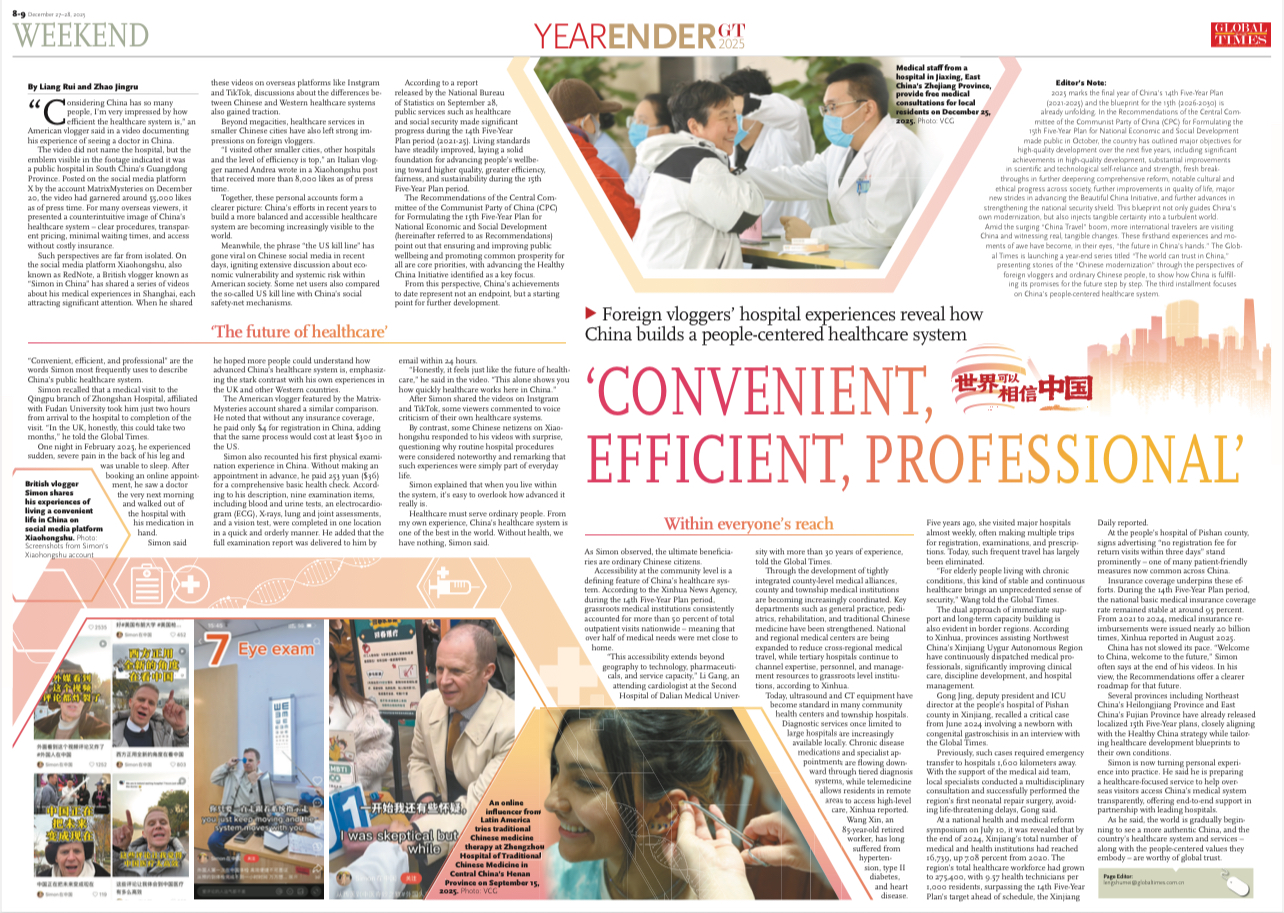
'Convenient, efficient, professional' Photo: Global Times
RELATED ARTICLES