Court in C. China’s Hubei uncovers AI-fabricated photo evidence in rental dispute, issues admonishment
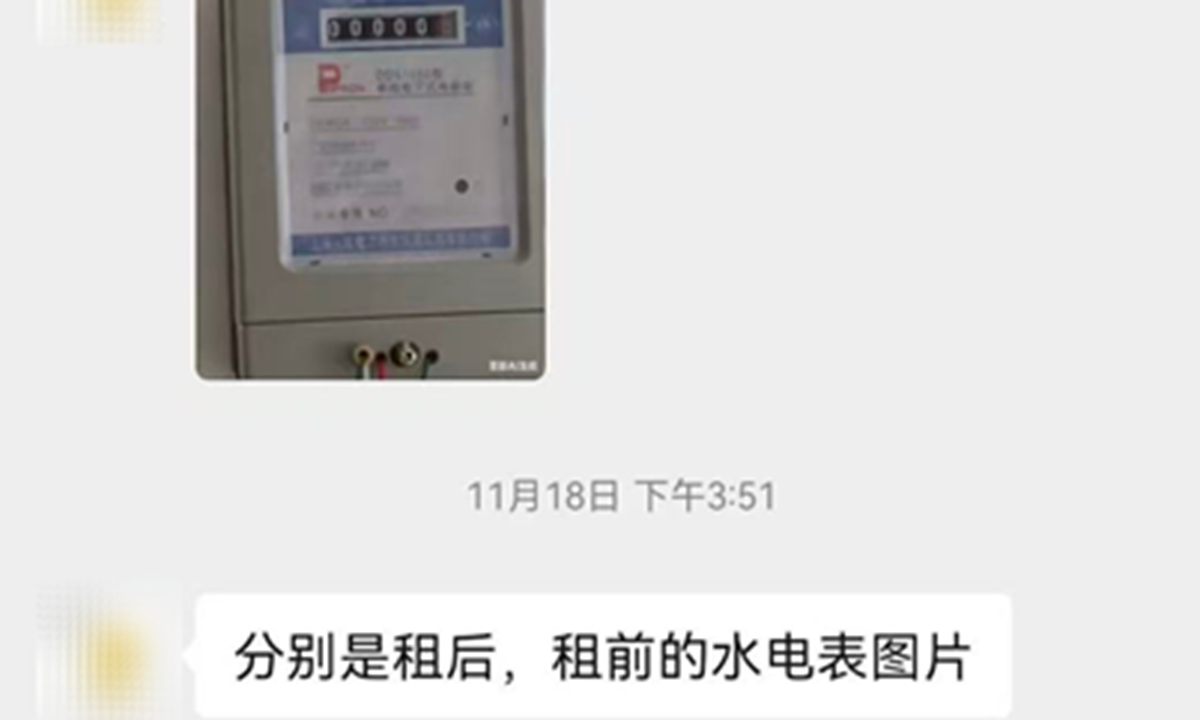
Screenshot showing a plaintiff sending an AI-generated fabricated photo as evidence during a residential lease dispute Photo: Intermediate People's Court of Xiaogan in Hubei Province
A court in Xiaogan, Central China's Hubei Province, recently uncovered a plaintiff's attempt to fabricate photographic evidence using artificial intelligence tool while hearing a residential lease dispute, and subsequently issued a formal admonishment in accordance with the law, China News Service reported on Sunday.
According to the report, in May 2024, Li and Xiong entered into a residential lease agreement, stipulating the lease term and rental amount, and expressly agreeing that the rent for the latter half of the lease term must be paid in full by March 2025.
Upon expiration of the lease, Xiong failed to pay the rent and utility bills for the latter half of the year. Li subsequently filed a lawsuit with the court and appointed Li's daughter, surnamed Dong, as the litigation agent, according to the report.
During the trial, Li was unable to provide valid documentation proving Xiong's alleged arrears in water and electricity fees. Dong stated in court that Xiong was the first tenant of the property and that all utility charges were incurred solely during the tenancy. She further undertook to submit the photograph of the water and electricity meters from before and after the lease period as supporting evidence following the hearing.
However, the photographs later submitted by Dong conspicuously bore a watermark reading "Generated by doubao AI," immediately drawing the presiding judge's attention and raising serious concerns regarding the authenticity of the evidence, the report said.
Further review found that Dong's statements about the utility meters were inconsistent. She first claimed exclusive use, then admitted under questioning that two households shared the same meters. Unable to justify the discrepancies, she confessed to fabricating evidence and later submitted genuine photos to the court.
The presiding judge gave Dong a stern legal warning, saying that using AI-generated photographs as litigation evidence constitutes the fabrication of key evidence and disrupts judicial proceedings, and such conduct may result in admonishment, fines, or detention, and in serious cases, criminal liability.
In light of Dong's voluntary confession during the investigation and her prompt correction of the misconduct, the court, adhering to the principle of combining punishment with education, decided to impose a judicial admonishment, according to the court.
Global Times
RELATED ARTICLES