Taipei Mayor Chiang attends Shanghai-Taipei City Forum, aspires ‘two cities thrive and both sides of the Straits thrive’

Taipei Mayor Chiang Wan-an takes questions from both sides of the Taiwan Straits on December 28, 2025 at the Shanghai-Taipei City Forum. This year's forum is themed "technology transforms life." Photo: VCG
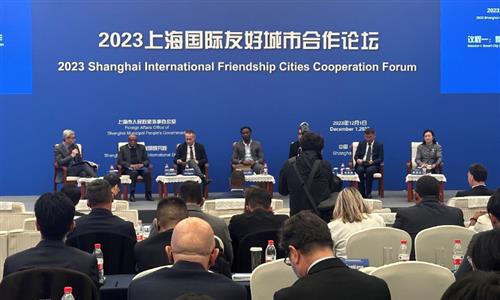
The annual Shanghai-Taipei City Forum was held on Sunday in Shanghai under the theme of "technology transforms life," to which Taipei Mayor Chiang Wan-an delivered an addressment, saying "as long as there is a sincere willingness to engage in exchanges, distance across Straits will not be far," media reported.
Amid the volatile and uncertain environment, we have persisted in our efforts for the forum because I firmly believe that "engagement is better than resistance, dialogue is better than confrontation, understanding is better than misunderstanding, and interaction is better than conflict," said Chiang. He expressed his aspiration for the vision that "Shuangcheng (refers to both the forum and the two cities) thrives, both sides of the Straits will thrive," the Xinhua News Agency reported.
Shanghai Mayor Gong Zheng also attended the forum and delivered remarks. Gong said that the forum serves as an important platform for Shanghai and Taipei to cooperate hand in hand, witnessing the profound friendship between the two cities that has transcended the Taiwan Straits and withstood the test of time.
This year's forum will share experiences and insights in AI applications, promote the two municipal governments to achieve shared benefits in areas such as tech-enabled urban governance, public security, and social livelihoods, and bring tangible gains, a stronger sense of happiness, and enhanced security to compatriots on both sides of the Taiwan Straits, Gong said.
Gong met with Chiang ahead of the forum on Sunday, where Gong referred to Chiang as "an old friend of the people of Shanghai," Taiwan media reported.
Given current cross-Straits tensions, Chiang said the ability to continue talks and engage in direct dialogue offers reassurance to people on both sides. "Nothing can replace face-to-face communication," he said, adding that the more difficult the situation, the more necessary such exchanges become, reported Taiwan News, a media outlet on the island.
Zhang Wensheng, deputy dean and professor at the Taiwan Research Institute at Xiamen University, told the Global Times on Sunday that given the current cross-Straits reality, channels of communication like these are even more important and carry greater significance.
The forum, carried out by the two municipal governments, is semi-official in nature and covers fields that are related to urban development and public welfare, which are relevant to the people. Amid frozen official exchanges, the annual forum remains a valuable channel for the two sides to communicate and can serve as a stabilizer, Zhang said.
According to Taiwan local media Taipei Times, the Taipei delegation consists of 120 people, including the Taipei city council speaker and 10 other councilors, as well as various city government officials.
Established in 2010 and hosted alternately by Shanghai and Taipei, the forum serves as an important platform for dialogue to enhance cross-Strait connections. As of Sunday, the two cities have signed 49 memorandums on exchange and cooperation.
Data shows that as of the third quarter of this year, Shanghai has approved over 20,000 Taiwan-invested enterprises cumulatively, attracting contracted Taiwan investment worth USD 47.386 billion. Currently, there are 15 Taiwan-invested listed companies, 33 Taiwan-invested regional headquarters, and 40 Taiwan-invested R&D centers in the city.
Chen Shih-chang, a media personnel on the island, wrote in an article on local media that exchange events like the Shanghai-Taipei City Forum are extremely precious and particularly worthy of encouragement amid the tense cross-Straits atmosphere deliberately created by Lai Ching-te's authorities. Young people in particular should set aside the ideological prejudices they have been instilled with.
The channel of the Forum is increasingly precious as the necessity for communication will not be disrupted by political interruptions, analysts said, citing the secessionist Democratic Progressive Party's latest move to revise its regulations governing local civil servants and specific individuals traveling to the Chinese mainland.
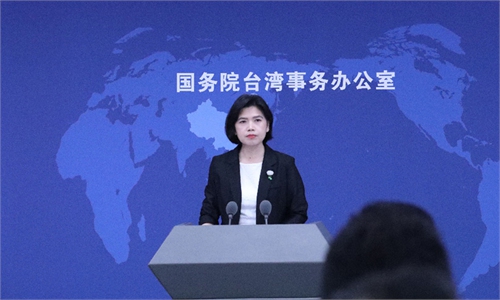
In response to the DPP attempt, Zhu Fenglian, spokesperson for the State Council Taiwan Affairs Office, criticized the DPP authorities for abusing their power to obstruct and restrict Taiwan residents from coming to the mainland, and suppress organizations and individuals engaged in cross-Straits exchanges.
However, the DPP's disruption attempts will only face stronger public opposition, and public dissatisfaction toward the DPP authorities has been mounting, Zhang said.
With 60 votes in favor and 51 against, the legislative body in China's Taiwan region approved an impeachment proposal from opposition parties against regional leader Lai Ching-te on Friday.
There is widespread public dissatisfaction on the island over the DPP authorities' persistence on secessionist provocations and belligerent acts, which have severely undermined cross-Straits exchanges and harmed the interests of both sides, including Taiwan compatriots, Wang Jianmin, a research fellow at the Institute of Taiwan Studies under the Chinese Academy of Social Sciences, told the Global Times.
RELATED ARTICLES