China imposes country-specific tariff-rate quotas on imported beef as safeguard measure; expert says move aligns with WTO rules
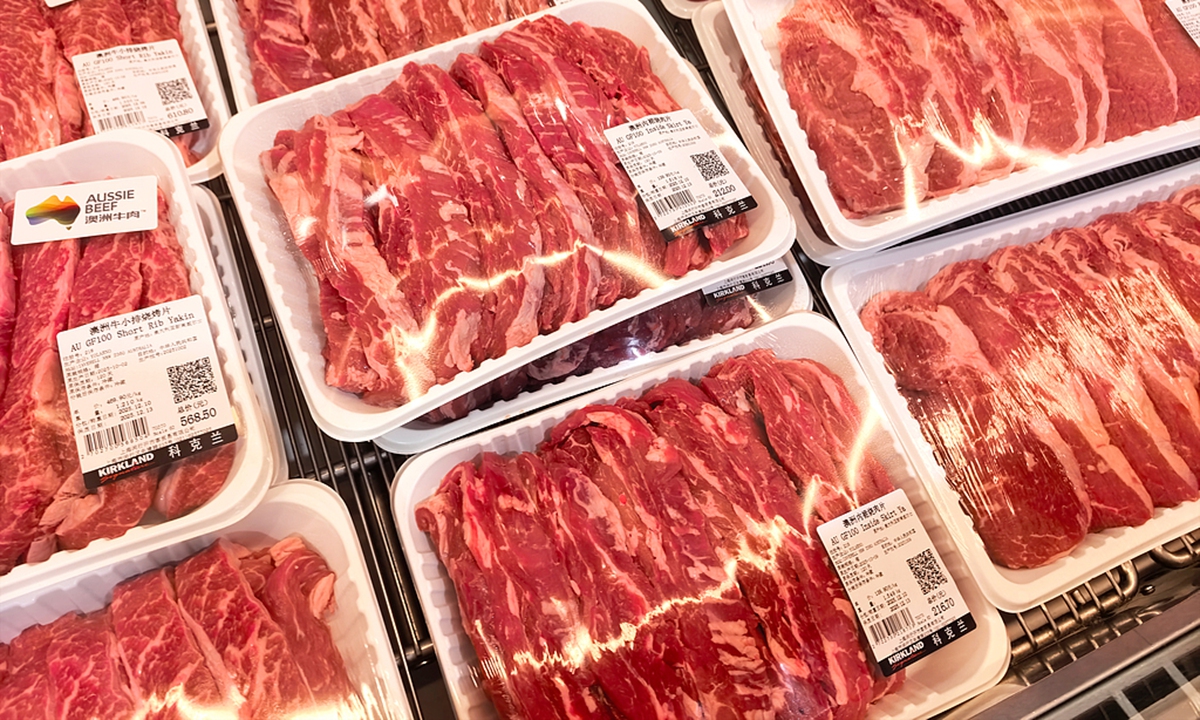
Imported Australian beef in a supermarket in Shanghai Photo: VCG
Chinese experts noted that the measure is aimed at protecting the domestic beef industry without substantially disrupting imports or overall supply, stressing that the investigation procedures fully comply with China's laws and regulations as well as WTO rules.
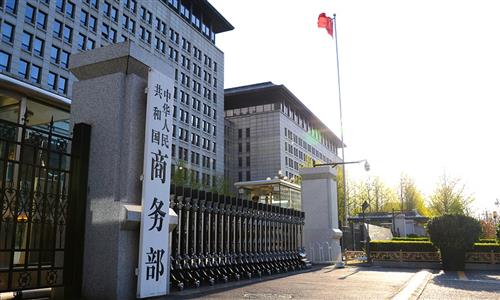
The safeguard measure will be implemented for a period of three years in the form of country-specific tariff-rate quotas, from January 1, 2026, to December 31, 2028. China's State Council Tariff Commission, based on the recommendations of the MOFCOM, has decided to impose additional tariffs on imported beef exceeding the specified quantity, at a rate of 55 percent on top of the current applicable tariff rates, according to the MOFCOM.
Starting from January 1, 2026, for imported beef that does not exceed the specified quantity, import operators shall pay tariffs at the current applicable tariff rates when importing beef. Starting from the third day after the imported beef reaches the specified quantity, import operators shall, when importing beef, pay an additional 55 percent tariff on top of the current applicable tariff rates, per MOFCOM.
The move came after the ministry launched a safeguard investigation into imported beef in late 2024 after receiving an application from 10 domestic associations. And it came as China's beef industry has been under growing strain since 2024 as rising imports squeezed domestic breeders, leading to widespread losses and the slaughter of breeding cattle.
China has consistently exercised restraint in applying safeguard measures. Since joining the WTO more than 20 years ago, China has only launched safeguard investigations and adopted safeguard measures on imported steel products and sugar. This marks China's third safeguard measure case, Shi Xiaoli, director of the WTO Law Research Center at the China University of Political Science and Law, told the Global Times.
By comparison, since 1995 when the WTO was established, the US launched 15 safeguard investigations and the EU launched seven. The US initiated a safeguard investigation into quartz surface products as recently as November 17. India ranks first globally, with as many as 50 safeguard investigations launched, according to Shi.
A spokesperson from the MOFCOM said on Wednesday that the implementation of safeguard measures on imported beef is intended to provide phased assistance to help the domestic industry overcome its difficulties, rather than to restrict normal beef trade.
The Chinese market remains open, and there is broad scope for cooperation in beef trade with our trading partners. China is willing to work with all parties to jointly maintain a healthy and stable international trade environment, the spokesperson noted.
Given the large number of interested parties involved and their wide geographic distribution, the investigation period was extended twice to fully consider all views and ensure the fairness of the findings and final ruling. Prior to the final decision, the authorities also disclosed the essential facts on which the findings are based, and provided interested parties with opportunities to submit comments, which were duly considered in accordance with the law.
Shi reiterated that China's decision to impose safeguard measures on imported beef is a right granted under WTO rules, adding that WTO rules allow members to adopt safeguard measures when import surges cause, or threaten to cause, serious injury to the relevant domestic industry.
China's beef imports have surged, rising by 73.2 percent from 2019 to 2024. Import prices have significantly lower than those of domestically produced beef. At the same time, the number of breeding cattle in China fell by about 3 percent year-on-year in 2024, severely undermining the foundation of the domestic industry, according to official data.
Domestic beef slaughtering enterprises have also suffered widespread losses, with some reporting losses of 500 yuan ($71.53) to 1,000 yuan per head of cattle slaughtered. Without effective safeguard measures, breeders may lose market confidence, potentially triggering further large-scale slaughter of breeding cattle, Liu Qiangde, deputy secretary-general of the China Animal Agriculture Association (CAAA), told the Global Times previously.
As breeding cattle form the backbone of the industry, a decline in their productivity could cause the entire domestic beef sector to shrink, perhaps significantly, industry insiders said.
"Following the implementation of the safeguard measure, beef imports will stay on a stable level under the tariff-rate quota framework, gradually easing the impact on the domestic cattle industry," said Shi, further noting that the domestic beef supply chain is expected to improve steadily, and gradually move out of a phase of severe losses.
RELATED ARTICLES