Lujiazui Photo:VCG
Looking ahead to 2026, the global economy continues to face external uncertainties, including sluggish growth and rising protectionism. Against this backdrop, China's economic trajectory attracts particular attention as its fundamental soundness and long-term positive outlook remain anchored in a set of core strengths.
First and foremost, the efficient policy coordination enables a systematic response to various risks and challenges. Second, the vast domestic market provides a robust foundation for the resilience of internal demand, offering ample space for economic circulation. Meanwhile, the innovation-driven development strategy continues to promote technological breakthroughs and industrial upgrading, while the green transition and the digital economy are reshaping growth drivers. A well-established industrial system and stable supply chains further strengthen the economy's capacity to withstand external shocks.
However, these strengths will continue to be reinforced through well-targeted policies in 2026. A more proactive fiscal policy—with an appropriate expansion of deficits and special bond issuance—will focus on infrastructure and social welfare to solidify the development foundation. A moderately accommodative monetary policy will aim to lower financing costs and channel funds toward technological innovation and green industries. Concurrently, reinforcing the role of enterprises as innovation leaders and improving the mechanism for translating scientific and technological achievements into productivity will further enhance resilience through policy synergy.
Notably, this year's Central Economic Work Conference continued to place expanding domestic demand at the top of its priorities, highlighting its critical role in sustaining stable growth. The approach is not merely about stimulating demand, but involves coordinated efforts from both supply and demand sides to create a virtuous cycle. On the demand side, the focus is on raising residents' consumption capacity and willingness; on the supply side, emphasis is placed on activating effective investment and refining market mechanisms.
Boosting domestic demand relies on a dual drive from consumption and investment. For consumption, the key lies in boosting confidence and willingness by raising incomes, optimizing supply, and removing unreasonable restrictions. For investment, emphasis is placed on expanding effective investment through government guidance and stimulating private participation.

Wang Peng
In this sense, in the coming year efforts will focus on both sustaining consumption growth and stabilizing investment. This includes unlocking the potential of service consumption, streamlining restrictions in consumption sectors, and optimizing policies on large-scale equipment renewal and consumer goods trade-ins. Meanwhile, central budget investment will be increased appropriately, and the use of local government special bonds will be optimized. Government investment will help catalyze private capital, effectively stimulating nongovernmental investment, while high-quality urban renewal projects will be advanced.In addition to expanding domestic demand, other key tasks closely aligned with medium- to long-term economic transformation include driving innovation, building a unified national market, deepening green transition, and expanding opening-up. The essence of advancing these tasks lies in balancing short-term outcomes with long-term development goals. In the near term, fiscal and monetary policies will work in tandem to stabilize growth, expand investment, and boost confidence. Over the longer term, unwavering focus will remain on technological innovation and green transition to cultivate "new quality productive forces." At the same time, efforts will continue to build a unified market, improve the business environment, advance institutional opening-up, and optimize the layout of pilot free trade zones.
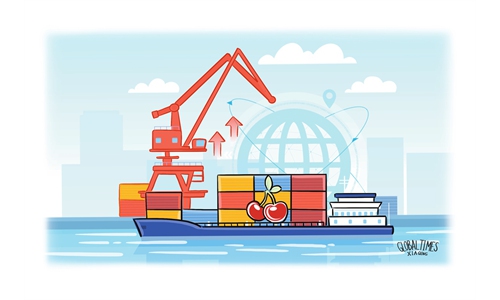
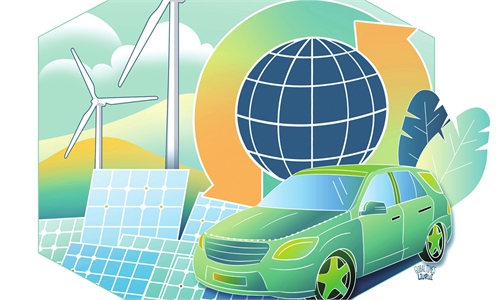
Amid a shifting global economic landscape, China's pursuit of high-quality development will also contribute to global stability and growth. In the short term, China can help stabilize global supply chains, provide key products and services through integrated trade and investment, export green technologies to support developing countries' low-carbon transition, and expand imports to bolster worldwide demand.
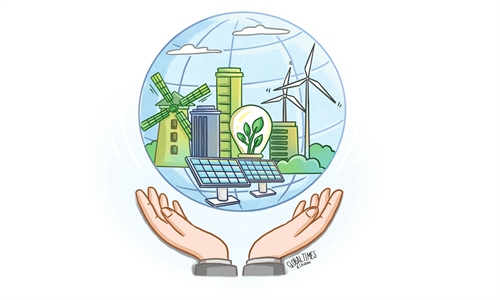
From a medium- to long-term perspective, China can explore new avenues such as deepening green Belt and Road cooperation, sharing green development experiences in new energy and environmental protection with partner countries, promoting the formulation of global digital trade standards, strengthening collaboration with emerging markets in cross-border e-commerce and digital payments, fostering global R&D cooperation platforms through international sci-tech innovation hubs, and supporting developing countries in enhancing self-development capabilities through technical assistance and capacity building, all reflecting China's sense of responsibility as a major country in fostering shared global prosperity.
The author is an associate research fellow at the Beijing Academy of Social Sciences. bizopinion@globaltimes.com.cn
RELATED ARTICLES