South Korea and China have opportunities to foster a more constructive dynamic: South Korean scholar

A view of Beijing (left) and Seoul. Photo: VCG
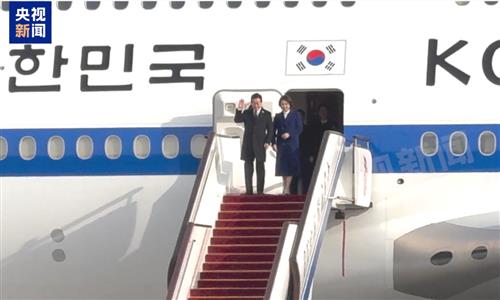
Editor's Note:At the invitation of Chinese President Xi Jinping, South Korean President Lee Jae-myung is paying a state visit to China from January 4 to 7. This is President Lee's first visit to China since taking office. How significant is the visit for the China-South Korea relationship? In an interview with Global Times (GT) reporter Wang Wenwen, Jaewoo Choo (Choo), professor of Chinese foreign policy at the Department of Chinese Studies, Kyung Hee University, shared his opinions.
GT: How do you analyze the significance of President Lee's visit for the bilateral relationship?
Choo: President Lee's visit marks a significant moment for South Korea. The significance of this event is heightened by its designation as a state visit. Furthermore, this visit serves as a reciprocal gesture following President Xi's trip to South Korea last October.
South Korea and China, as neighboring states, share numerous common interests and connections. They rank among the most advanced countries in the realm of the Fourth Industrial Revolution, particularly in relation to China's periphery. Consequently, both states have significant opportunities to enhance their bilateral relationship, fostering a more constructive and healthier dynamic compared to their interactions with other nations.
High-end technologies within the Fourth Industrial Revolution are progressing rapidly, prompting both states to adopt more constructive methods of collaboration. Amid the ongoing challenges posed by the US tariff policies, geopolitical shifts and evolving global supply chains, stakeholders are exploring common interests to address these pressing issues. By identifying shared goals, they aim to navigate the complexities of the current economic landscape.
GT: Since President Lee took office, he has adopted pragmatic approaches, maintaining South Korea's alliance with the US, while rejecting confrontation with China. Observers have viewed this as an opportunity for a China-South Korea reset. What is your take?
Choo: Upon taking office last June, President Lee identified the revival of the country's relations with China as a key objective of his foreign policy agenda. The bilateral relationship reportedly entered a prolonged stalemate during the tenure of his predecessor, Yoon Suk-yeol. Lee is committed to moving away from Yoon's distancing policy toward China, driven by his intention to engage in pragmatic diplomacy.
Inheriting a challenging situation from Yoon, Lee has pledged to "reset" the relationship with China, aligning this move with his pragmatic approach to foreign policy. He envisions that peaceful coexistence is both possible and realistic, provided that South Korea adopts a balanced approach toward its neighboring states and the US.
GT: A large-scale business delegation comprised of leaders from SK, Samsung, Hyundai and LG is reportedly accompanying the president. In which areas will China and South Korea deepen economic cooperation?
Choo: The business delegation from South Korea indicates the significant economic interests that are intricately woven into the fabric of bilateral relationships. A state visit typically yields substantive results. Additionally, the delegation has the opportunity to present their political recommendations for future consideration to the host nation, aiming to enhance bilateral industrial cooperation.
In light of Lee's pragmatic diplomatic approach, the South Korean business delegation is poised to explore avenues for addressing the challenges facing multilateralism, free trade and the implications of US tariffs and protectionism. One pressing issue will be how to navigate the abusive US tariff policies in order to foster bilateral cooperation between the two countries, promote free trade, and counter protectionism. US pressure and restrictions have emerged as significant barriers to effective industrial cooperation between South Korea and China. At such moments, it is crucial for them to identify the most effective solutions to address these challenges.
GT: According to reports, during his visit to China, President Lee will travel to Shanghai to visit the former headquarters of the Korean government-in-exile during Japanese rule. China and South Korea share a profound historical memory of jointly resisting Japanese fascism during WWII. Against the backdrop of some forces in Japan attempting to revive militarism, how should China and South Korea collaborate to preserve the legacy of WWII and ensure a peaceful East Asia?
Choo: It is essential to align perspectives on the legacy of WWII while also fostering a unified approach toward future cooperation with Japan. If Japan were to overstep its boundaries, South Korea and China could unite to respond to Japan, reminiscent of the early 1980s when the history textbook controversy first arose. At that time, despite the absence of diplomatic relations between China and South Korea, both countries expressed their views collectively, which resonated significantly in Tokyo. The historical experience serves as a potential framework for collaboration on historical matters with Japan.
GT: Ahead of President Lee's China visit, when asked about the current South Korean government's position on the Taiwan question and how it plans to uphold the one-China principle, Lee said that the consensus reached between the South Korean and Chinese governments at the time of establishing diplomatic relations remains the core guiding principle governing bilateral ties, and its validity has never changed. How do you analyze his remarks?
Choo: Upholding the one-China principle means that South Korea will honor its commitment to the 1992 Joint Communique on the Establishment of Diplomatic Relations. Therefore, Seoul views Taiwan region as part of China and recognizes Beijing as the only legitimate government representing China. The Joint Communique also prohibits interfering in each other's domestic affairs, and South Korea will apply this principle to the situation regarding Taiwan. Like the Chinese, South Koreans desire regional peace and stability.
GT: China and South Korea's mutual visa-free policies have fueled a tourism surge. To what extent can people-to-people exchanges drive the bilateral ties?
Choo: The exchange of individuals between South Korea and China has seen a notable increase following the recent decision by both nations to eliminate visa requirements for their citizens traveling to each other's countries. The impact has undeniably been beneficial for both nations and their citizens. To improve the effectiveness of the exchange, there is a proposal to significantly elevate cultural exchange activities. This enhancement will foster mutual understanding between the two countries, leading to a substantial reduction in unnecessary misunderstandings and misperceptions among their populations.
The genuine curiosity of individuals in one nation toward another serves as the foundation for constructive engagement and the deepening of mutual understanding. However, the current state of people-to-people exchange is regrettably limited to mutual visits. There is a need for expansion into other areas with meaningful content. This approach can act as a stabilizing influence on the bilateral relationship that both state leaders prioritize.
RELATED ARTICLES