‘Will for Peace 2026’ exercise shows a new model of security co-op among ‘BRICS plus’ nations
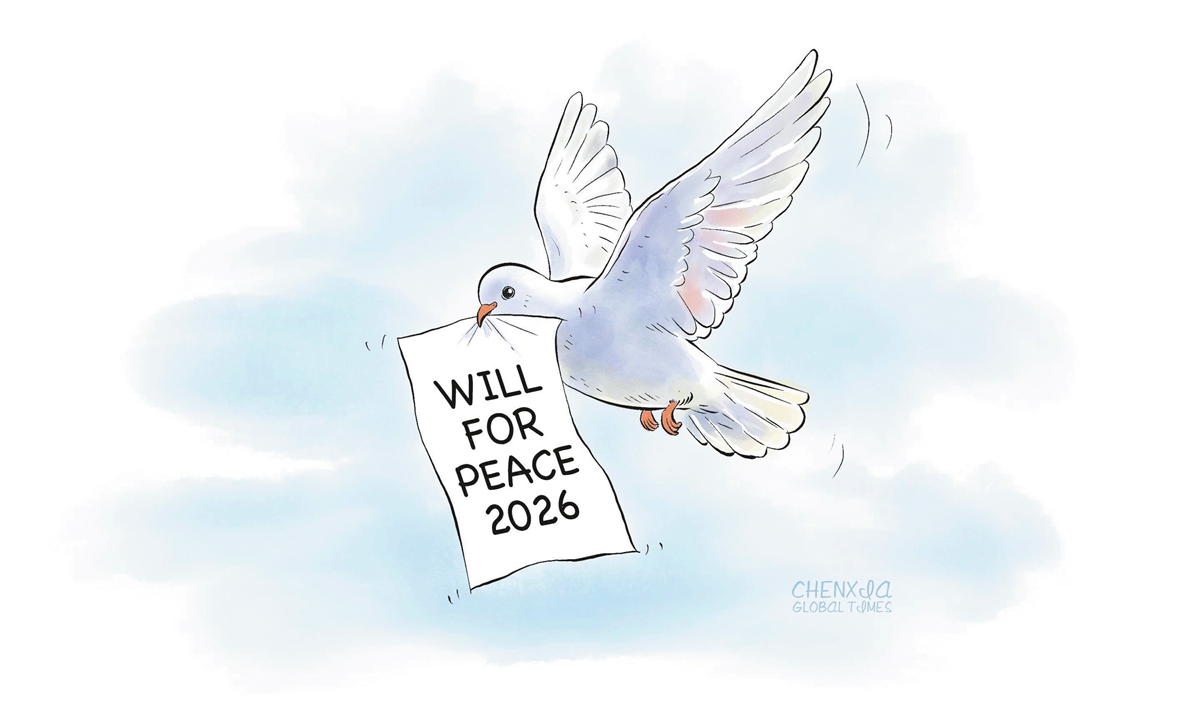
Illustration: Chen Xia/GT
According to the South African National Defence Force, a China-led joint naval exercise codenamed "Will for Peace 2026," involving navies from "BRICS Plus" countries will be hosted this Friday in South African waters. As the first defense cooperation of its kind among "BRICS plus" countries, the joint exercise has drawn international attention.Some Western media outlets have recently expressed concerns that the exercise could lead participating countries to deviate from their non-aligned traditions and trigger vigilance from Western nations. However, these concerns lack factual basis and represent a misinterpretation, from a geopolitical confrontation perspective, of the exercise's real intent, as well as relevant countries' longstanding principles of non-alliance, non-confrontation and not targeting any third party in military cooperation.
The exercise is themed around "Joint Actions to Ensure the Safety of Shipping and Maritime Economic Activities," with a focus on intensive program of joint maritime safety operations, interoperability drills and maritime protection serials. Both the theme and the subjects reflect that this exercise is not targeted at any third-party country or bloc, but rather aims to jointly address maritime security challenges and maintain the regional economic and trade exchanges.
Song Zhongping, a Chinese military affairs expert, told Global Times on Monday that the BRICS is mainly an economic cooperation platform, not a military bloc. This joint exercise focuses on non-traditional security areas, aiming to ensure the safety of maritime economic activities and protect economic ties from external threats such as piracy and terrorism. As the primary trading partner of other BRICS countries, China plays a crucial role in leading efforts to ensure the safety of relevant maritime trade routes and lines, he added.
The diversity of the expected participating countries also reflects the inclusiveness of this exercise. In addition to Russia and Iran, media reports indicate that Indonesia and Ethiopia are also likely to take part. Zhang Junshe, another Chinese military affairs expert, said in an interview with the Global Times that the countries participating in this joint exercise are "BRICS Plus" nations, and the exercise aligns with China's vision of common, comprehensive, cooperative and sustainable security, embodying the principle that all countries, regardless of size or strength, can participate equally in security affairs and jointly uphold regional stability.
Looking back at the joint military exercises China has participated in, whether it is the "China-Indonesia Peaceful Garuda-2024," the "Peace and Friendship 2025 joint exercise" between China and Malaysia, or the "China-Pakistan Warrior 9 joint counter-terrorism exercise," all have focused on non-traditional security and humanitarian fields, including disaster relief and rescue, aiming to maintain regional peace and stability. This stands in sharp contrast to the exclusive and confrontational military exercises held by certain Western countries, which are oriented toward "island landing," "enemy command and control" and similar objectives.
The "Will for Peace 2026" exercise does not target any third-party country or bloc as a hypothetical adversary; rather, it addresses the common threats to the security of maritime trade for BRICS Plus nations. The participating countries are not drawn from exclusive blocs but rather represent diverse social systems and varying stages of development, united by shared security concerns. What the exercise provides is a public good in security that is needed by the whole international community.
As emphasized by the exercise, this represents "collective commitment" in support of peaceful maritime security initiatives. As the first of its kind under the BRICS framework, this exercise will help enhance mutual trust among relevant states, strengthen partnerships, and actively advance the collective will to jointly uphold a fair and orderly maritime order and build a maritime community with a shared future. At the same time, this exercise will also contribute to transcending the confrontational thinking inherent in traditional Western military exercises, breaking the monopoly of traditional military alliances over security cooperation, providing practical experience for promoting the establishment of a new international security cooperation system tailored to the needs of Global South countries, and injecting new momentum into global security governance.
RELATED ARTICLES