Illustration: Tang Tengfei/GT
Despite global headwinds, the steady advancement of China-ASEAN cooperation is transforming regional economic integration into a vital force for stability.The Council for the Development of Cambodia (CDC) approved 630 investment projects in 2025, up 52 percent year-on-year, with the combined investment value up 45 percent to $10 billion, said a CDC press release on Monday.
The CDC release noted that China remained the top foreign investor in the country, accounting for more than half of the total investment amount, chinanews.com.cn reported on Tuesday.
While Cambodia's investment landscape doesn't necessarily represent all ASEAN member countries, it still offers a glimpse into the broader deepening of economic and industrial-chain integration between China and ASEAN. Indeed, this pattern becomes even more evident when viewed at the ASEAN-wide level.
As of the end of July 2025, cumulative two-way investment between China and ASEAN had exceeded $450 billion, and the cumulative value of engineering contracts completed by Chinese enterprises in ASEAN reached $480 billion, according to the Xinhua News Agency. Such massive capital flows and extensive project networks have become increasingly important for advancing regional economic integration.
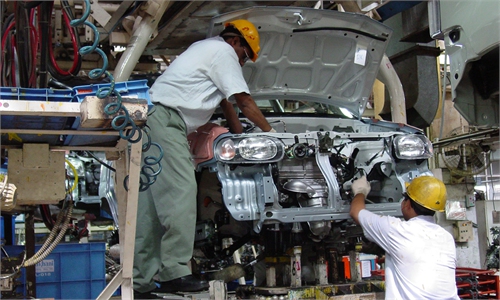
The significance of the partnership goes far beyond the scale of capital; it lies more in the intensive integration and upgrading of industrial chains driven by investment. A notable trend is the evolution from a trade relationship centered on goods to an industrial-chain network characterized by deeply embedded value chains and mutual reinforcement.
China's exports to ASEAN are now led by mechanical and electrical products, capital goods, and intermediate goods, while ASEAN's exports to China show a clear shift from resource-intensive items toward more manufactured goods. By bringing in capital, technology, standards, and talent development, Chinese enterprises have actively supported the industrialization of ASEAN economies. This complementary and synergistic integration has strengthened economic linkages across the region.
The deeply interwoven economic relationship functions as a crucial stabilizer, particularly under the current complex and volatile international situation. Despite external pressure from certain countries to "choose sides," ASEAN members view deepening economic integration with all major partners, including China, as a fundamental path to safeguarding their strategic autonomy.
Meanwhile, China's expanding domestic market offers ASEAN not just a massive export destination, but more importantly, generates a powerful pull effect. The rising demand for quality and technological standards within China helps drive the upgrading and value enhancement of related industries in ASEAN. Against this backdrop, building a more resilient regional supply chain with China has emerged as a shared regional consensus - one that enhances the capacity to buffer and adjust amid external market fluctuations or supply shocks.
Furthermore, institutional arrangements have provided a stable trajectory for the regional integration process. The signing of the China-ASEAN Free Trade Area Version 3.0 marks a new level in the alignment of rules between the two sides. The substantial improvement in trade and investment facilitation has significantly reduced institutional costs and the risks of cross-border economic activity.
Stable institutional expectations will encourage Chinese and ASEAN businesses to make long-term, in-depth investments in more sectors, which means that China-ASEAN regional economic integration has the potential to expand its breadth and consolidate its depth, extending from traditional areas to emerging frontiers such as the digital economy and green economy.
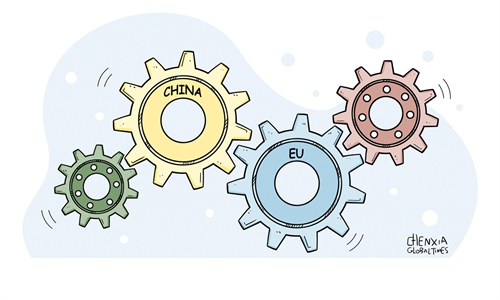
Supported by expanding investment, industrial-chain integration, and institutional coordination, China-ASEAN regional economic integration is steadily advancing toward a more resilient cooperative network. As collaboration in emerging fields continues to deepen, a closer industrial-chain structure will take shape, injecting much-needed certainty into the long-term development and stability of the region.
RELATED ARTICLES