India reportedly plans to scrap curbs on Chinese firms bidding for govt contracts; reported move signifies improvement in ties: expert
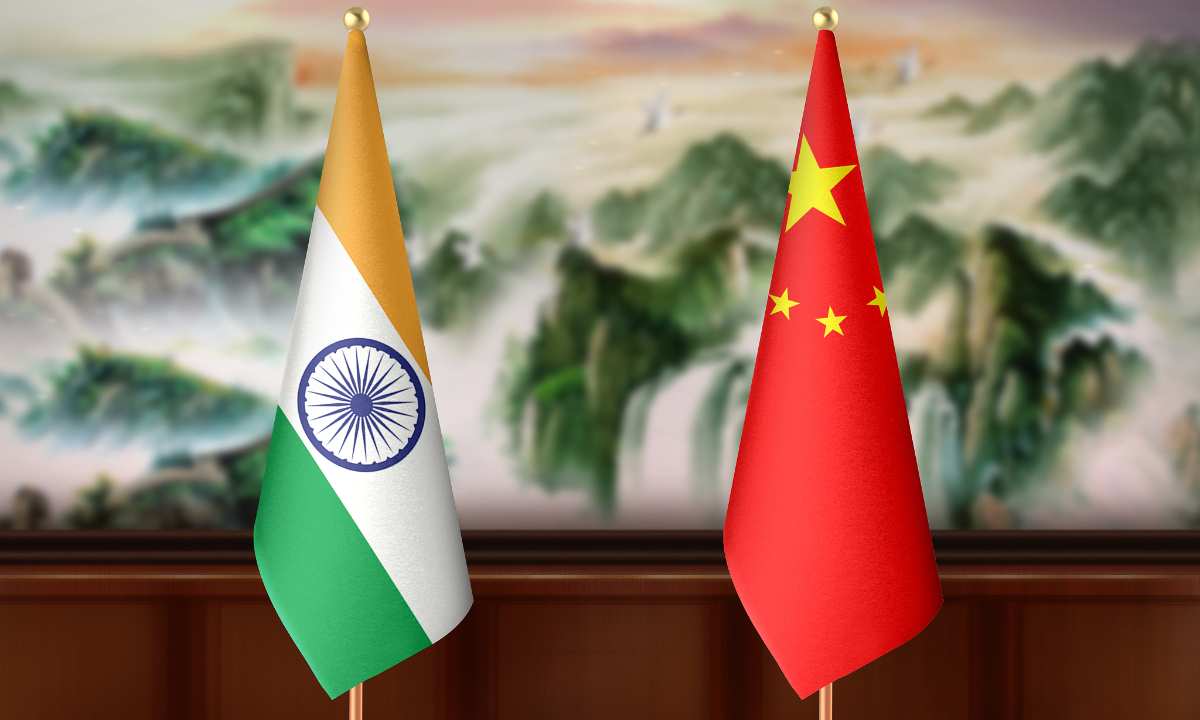
China India Photo:VCG
India's Ministry of Finance plans to scrap five-year-old restrictions on Chinese firms bidding for government contracts, as New Delhi seeks to revive commercial ties in an environment of reduced border tensions, Reuters reported on Thursday, citing two government sources. A Chinese expert said the move, if confirmed, would signify further improvement in China-India economic and trade relations.The restrictions imposed in 2020 required Chinese bidders to register with an Indian government committee and obtain political and security clearances, according to the Reuters report. The measures effectively barred Chinese firms from competing for Indian government contracts that were estimated to be worth $700 billion to $750 billion.
Citing one of the sources, Reuters reported that Indian officials were working to remove the registration requirement. Both sources, who were not named, said that Indian Prime Minister Narendra Modi's office will make the final decision.
The move, if confirmed, signifies the latest sign of warming in China-India economic and trade ties. If India decides to lift the restrictions, such a move would align with market principles and meet the expectations of the business community, Zhou Mi, a senior researcher at the Chinese Academy of International Trade and Economic Cooperation, told the Global Times on Friday.
According to Reuters, the Indian Ministry of Finance's plan to ease the curbs followed requests from other government departments that face shortages and project delays due to the 2020 restrictions.
Reuters said that after India imposed its restrictions, the value of new projects awarded to Chinese bidders fell 27 percent from a year earlier to $1.67 billion in 2021, according to a 2024 report from the Observer Research Foundation.
"Based on reality, some Indian government departments appear to have realized that 'decoupling' from China has led to supply chain bottlenecks and project delays in local infrastructure, manufacturing, and energy sectors," Liu Zongyi, director of the Center for South Asia Studies at the Shanghai Institutes for International Studies, told the Global Times on Friday.
Liu added that the discriminatory measures India has taken against Chinese enterprises in recent years have caused significant losses to its own economy.
The Observer Research Foundation said on October 21, 2025 that escalating tensions with China have led to India losing INR 1.25 lakh crore ($15 billion). In submissions to different ministries, the electronics manufacturing industry stated that it lost out on a $10-billion export opportunity, besides recording a $2-billion value-addition loss.
According to industry bodies like the India Cellular and Electronics Association and the Manufacturers Association of Information Technology, visa delays for Chinese professionals have led to bottlenecks in technology and skills transfer, said the foundation.
India should recognize that strengthening cooperation with China is mutually beneficial and a win-win outcome, Zhou said, adding that particularly against the backdrop of growing unilateralism in global affairs, the two nations should enhance their mutually complementary economic cooperation.
"If India truly wants to develop 'Make in India,' it should open its market, and welcome Chinese investment and enterprises to facilitate the upgrading of its manufacturing sector," Liu said.
"Chinese enterprises may maintain a cautious attitude toward this adjustment in India's policy. India should provide Chinese enterprises operating in the country with a safe and stable investment environment," Liu noted.
In response to a report that India has cut red tape to speed business visas for Chinese professionals, China's Foreign Ministry spokesperson Guo Jiakun told a press conference on December 12 that "easing cross-border travel serves the common interests of all parties. China will maintain communication and consultation with India to further facilitate people-to-people exchange."
On October 27, the first direct flight between China and India in more than five years landed in Guangzhou, South China's Guangdong Province. Guo said during the press conference on October 28 that the resumption of direct flights between the two countries represents a latest progress in the implementation of the important common understandings reached by the leaders of the two countries in Tianjin.
It is also an active move that facilitates the friendly exchanges of more than 2.8 billion Chinese and Indian people, Guo noted.
"China stands ready to work with India to view and handle bilateral relations from a strategic and long-term perspective, and move forward relations on a sustained, sound and steady track so as to deliver more tangibly for the two countries and peoples and make greater contributions to upholding peace and prosperity in Asia and beyond," the spokesperson said.
RELATED ARTICLES