GT on the spot: Frozen-terrain ‘vehicles’ transform into household well-being ‘boosters’ in Altay
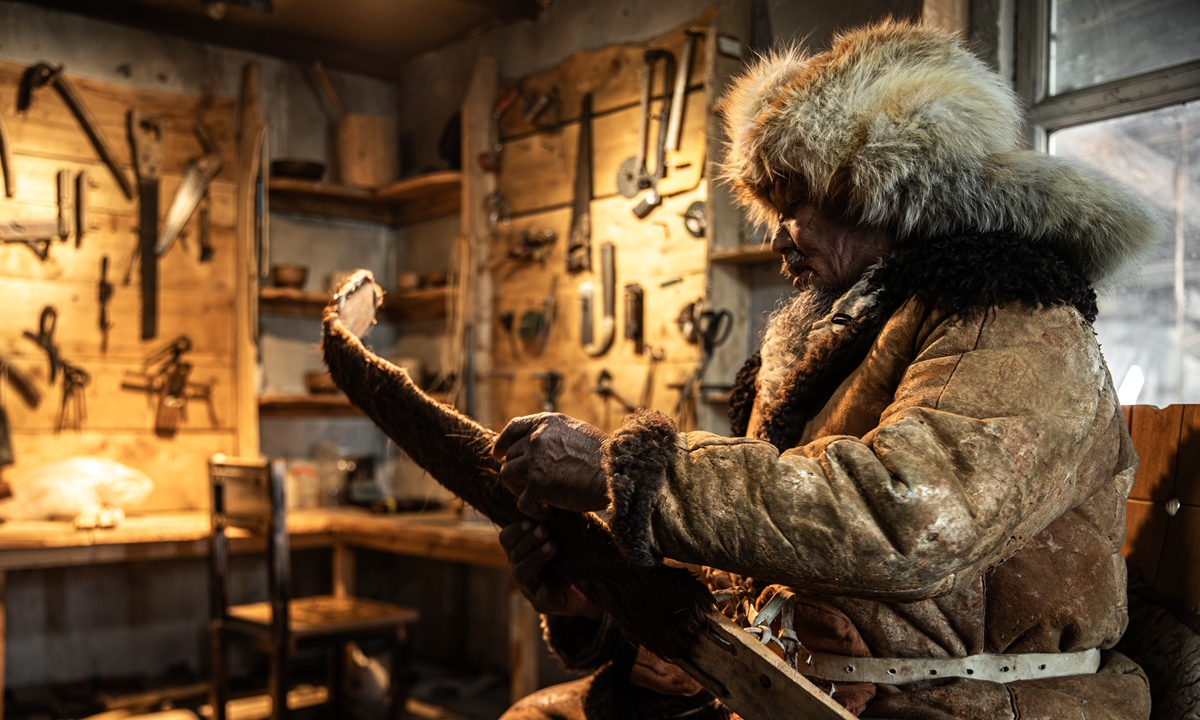
Selanbek makes fur skis at his home in Lasite in November 2025 Photo: Courtesy of Huanxbek
"On pine-wood skis they swiftly go, through frosted woods and winds that blow; with poles in hand and goatskin tow, the brave, keen hunters dart and fly…" This is a folk ballad passed down through generations in Altay, Northwest China's Xinjiang Uygur Autonomous Region, one that vividly paints the scene of nomadic hunters treading fur skis as they pursue prey across the boundless snow-covered wilderness.Altay is hailed as the cradle of human skiing, and the fur skis used by local inhabitants are recognized as one of the most ancient ski prototypes in existence that date back over 10,000 years.
A reporter from the Global Times recently journeyed to Lasite township in Altay, where she paid a visit to Selanbek, a Kazak inheritor of the third generation of the intangible cultural heritage of fur ski craftsmanship, to listen to him recount the stories woven between himself and these time-honored skis. Through his stories, the reporter witnessed the rebirth of the fur skis — from once being a practical means of transport to now serving as a source of family prosperity.
Snowy peak crosser
Selanbek's home lies in the small town of Lasite, a place blanketed in knee-deep snow. Most residents here are of China's Kazak ethnic group, and the town is often called the "the home of Kazak fur skis."
When the reporter first met Selanbek, he was dressed in traditional Kazak winter clothing, his face and hands bearing the indelible marks of years exposed to wind and snow. In his courtyard, several pairs of aged fur skis were on display. At the mention of these timeworn artifacts, the septuagenarian's eyes lit up, with a broad smile brimming with pride.
"Once upon a time, when herding livestock to different pastures, or gathering firewood in the mountains, heavy snow sealed off the mountain passes, we could barely take a single step without these skis," Selanbek told the Global Times. He recalled that he had begun using the skis as a teenager, when he followed his father up into the mountains. In those days, his father would carve the core section of the skis from pine wood, wrap the base in horsehide and steer his course with a single wooden ski pole.
Selanbek explained that compared to modern skis, fur skis, thanks to the unique craftsmanship and materials, offer unmatched functionality in mountain terrain. When climbing uphill, the reversed fur enhances friction, keeping the wearer steady on the snow; when gliding downhill, the smooth, aligned fur allows them to glide down the slopes quickly but safely.
"They are an indispensable companion for us traversing the rugged mountain ranges," he said, gently patting his "trusty old companion" — the fur ski — while holding it up for the reporter to see.
However, as transportation conditions improved, the fur skis gradually faded from everyday use, and this ancient craft once fell into obscurity and was all but forgotten. "This is a treasure passed down from our ancestors, and I shoulder the responsibility to preserve and pass on this craft," Selanbek said, his voice steady and resolute.
Prosperity slider
With the support of the local government, Selanbek transformed a corner of his courtyard into a one-stop venue integrating hands-on ski-making experiences, cultural display and product sales.
When the reporter pushed open the door, an array of fur skis and crafting tools came into view: two-meter-long functional skis leaned against the wall, while palm-sized mini ski souvenirs were neatly arranged on display.
Now, Selanbek and his family supply professional skis for competitors in traditional skiing events. They also invite visitors from far and wide to listen to an overview of the history of this time-honored craft, welcoming any questions they may have.
"Many visitors from neighboring countries even make special trips to Selanbek's home to craft skis as travel souvenirs," Zhang Xueting, an official from the local government, told the Global Times.
A pair of small decorative skis from Selanbek's workshop sells for around 200 yuan ($28.6), while a set of professional skis costs about 1,500 yuan, the Global Times learned. Selanbek said that since the onset of winter this year, his family has already made over 60 pairs of skis, all of which have been sold.
Before developing this skill, Selanbek's family earned a living primarily through animal husbandry, with an annual income of merely a few thousand yuan. "Now our family makes about 100,000 yuan a year, far more than we used to," he said, wearing a contented smile.
Selanbek's family business has also paved the way to prosperity for other villagers. More than a dozen villagers have begun crafting and selling skis. "In the past, villagers idled away the winter hours, with everyone waiting for spring so they can start farming again. Now, they stay bustling all year around," Zhang said. She added that one household in the village has seen its income double compared to three years ago.
The ancient fur skis have also become a shining emblem of Altay's cultural tourism industry. The reporter spotted fur skis on display in resort exhibition halls, at Altay airport, and in local specialty shops, where clusters of tourists could always be seen lingering to admire and purchase the mini ski souvenirs.
Selanbek's son Huanxbek enthusiastically shared with the reporter that in his free time, he teaches young people who visit the town, promoting the craft of making fur skis, and organizes ski-making competitions.
"Beyond supporting our family, we want more people to learn about Altay's story in the snow and ice," Huanxbek said just as sunlight streamed through the window, casting a warm golden glow over the horsehair on the fur skis. In that moment, the reporter felt that keeping a craft alive is where the real story begins.
RELATED ARTICLES