US' urging of G7 countries to reduce reliance on critical minerals from China underlines strategic anxiety; goal unachievable in foreseeable future: analyst
By and Chen Qingrui Published: Jan 12, 2026 02:39 PM

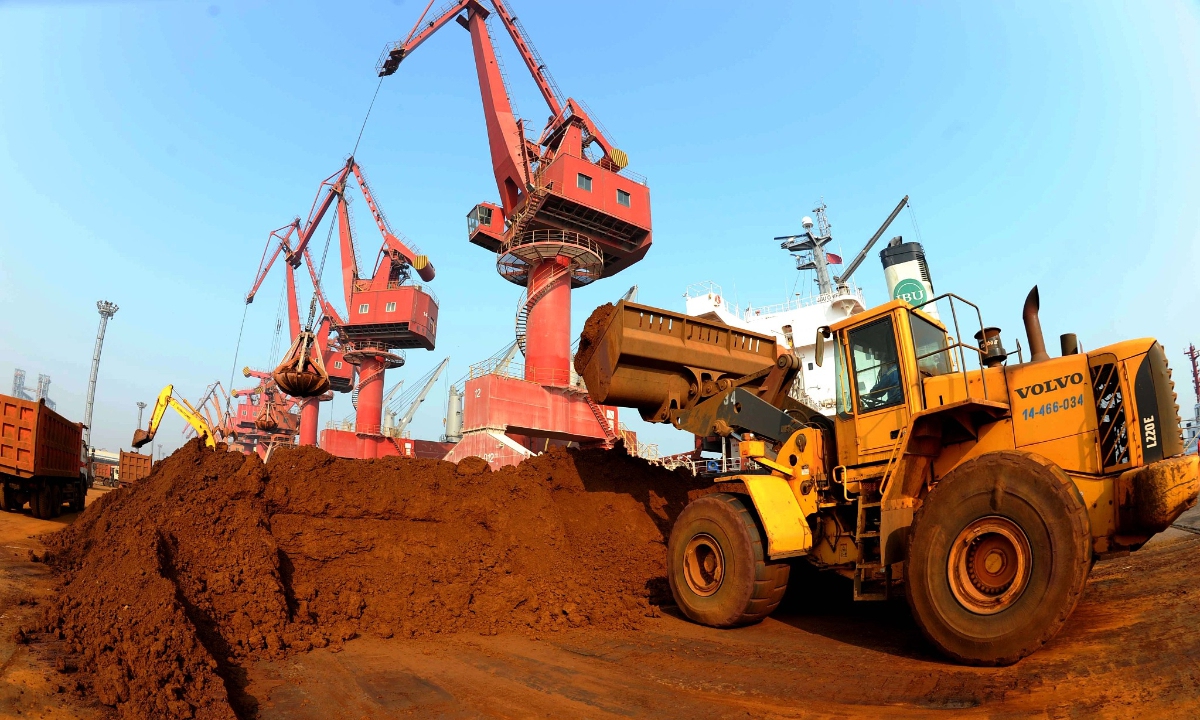
rare earth Photo:VCG
The US' reported move in urging of Group of Seven (G7) countries to "follow its lead" in reducing reliance on critical minerals from China underlines the country's strategic anxiety, a Chinese expert said on Monday as the G7 is holding a meeting in Washington. However, the US goal is unachievable in foreseeable future due to practical reasons, the current supply/demand dynamics and the different level of political interests among countries, the analyst said.
US Treasury Secretary Scott Bessent will urge Group of Seven nations and others to step up their efforts to reduce reliance on critical minerals from China when he hosts a dozen top finance officials on Monday (US time), Reuters reported on Monday, citing a senior US official.
The G7 meeting kicked off with a dinner on Sunday evening, and reportedly includes finance ministers or cabinet ministers from the G7 advanced economies, the EU, Australia, India, South Korea and Mexico, according to the official.
Commenting on the latest development by the US and the G7 to reduce reliance on rare earths from China, a Chinese analyst said on Monday that Bessent's reported frustration has highlighted the lack of concrete progress despite the holdings of round after round of meetings in recent months and the US' strategic anxiety to achieve dominance in critical minerals including the rare earths.
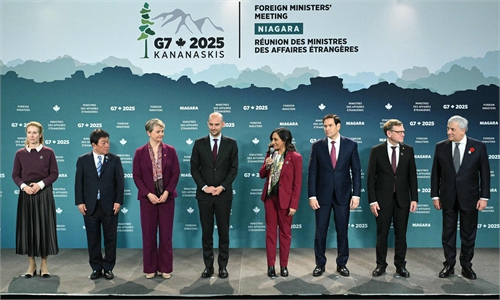
Bessent on Friday told Reuters that he had been pressing for a separate meeting on the issue since a G7 leaders summit in Canada in June, where he delivered a rare earths presentation to gathered heads of state from the G7 and the EU.
Leaders agreed to an action plan at the summit to secure their supply chains and boost their economies, but Bessent has grown frustrated about the lack of urgency demonstrated by attendees, the official said.
Cui Hongjian, professor at the Academy of Regional and Global Governance at Beijing Foreign Studies University, told the Global Times on Monday that China's strength in rare earths stems not simply from resource endowments, but from decades of technological accumulation, integrated industrial chains and large-scale production.
Other G7 members, unlike the US, show less urgency to cut external supplies, preferring a cautious approach based on supply-chain readiness and investment realities rather than an aggressive strategic push, Cui said.
In its report, Reuters quoted the unnamed US official as asking other countries to follow its lead. "We're ready to move with those who feel a similar level of urgency... and others can join as they come to the realization of how serious this is."
The divergence exposed by the discussion also points to a decline in some countries' trust in the US, said Cui, noting that the US is reportedly trying to secure potential resources in places such as Greenland as long-term strategic assets, while simultaneously pressing allies to move away from Chinese supply chains without offering a clear, workable and attractive alternative.
Such an aggressive approach, Cui argued, is difficult to reconcile logically and therefore hard for other countries to accept on a rational basis.
The latest G7 meeting follows an announcement on November 1, which unveiled a total of 26 new investments and partnerships under the so-called Critical Minerals Production Alliance with to secure critical minerals supply chains.
China dominates the critical minerals supply chain, refining between 47-87 percent of copper, lithium, cobalt, graphite and rare earths, Reuters reported, citing the International Energy Agency.
Cui said the US has adopted an all-encompassing posture of "strategic competition" toward China, frequently politicizing and securitizing economic issues and showing a willingness to push beyond conventional boundaries. Other countries, he noted, do not share the same intensity of strategic rivalry with China and are more inclined to seek a balance between cooperation and competition, rather than take extreme positions, making full alignment with Washington on rare earths unlikely.
Besides promoting its goal in the G7 framework, the US also worked with a number of countries separately on securing the rare-earth metals.
On December 12, when asked to comment on the agreement signed by the US, Japan and others regarding the securing of rare-earth supply chains to reduce dependence on China for developing AI technologies, Foreign Ministry Spokesperson Guo Jiakun stated at a regular press conference on Friday that "We have noted relevant reports."
"All parties should adhere to the principles of a market economy and fair competition and work together to maintain the stability of the global supply chain," Guo said.
RELATED ARTICLES