China, EU agree on price undertaking guidance for Chinese EVs; a positive example for resolving trade dispute via consultation: expert
Ministry of Commerce
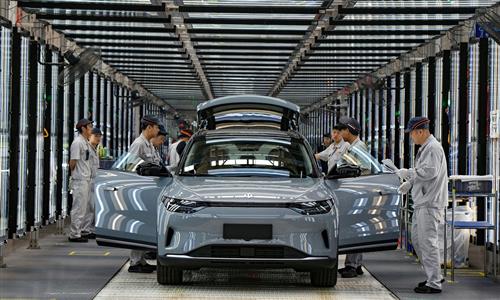
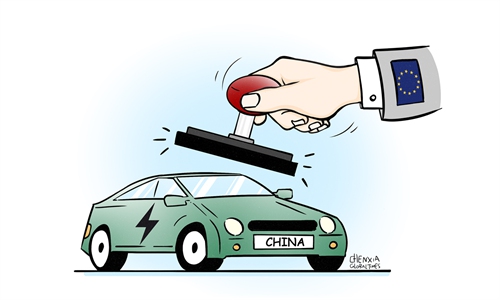
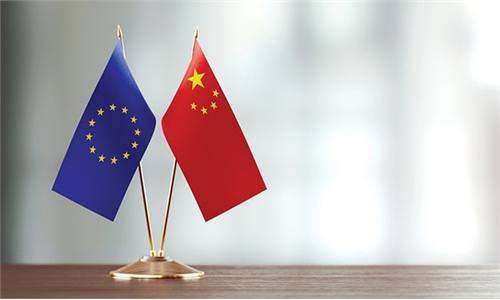
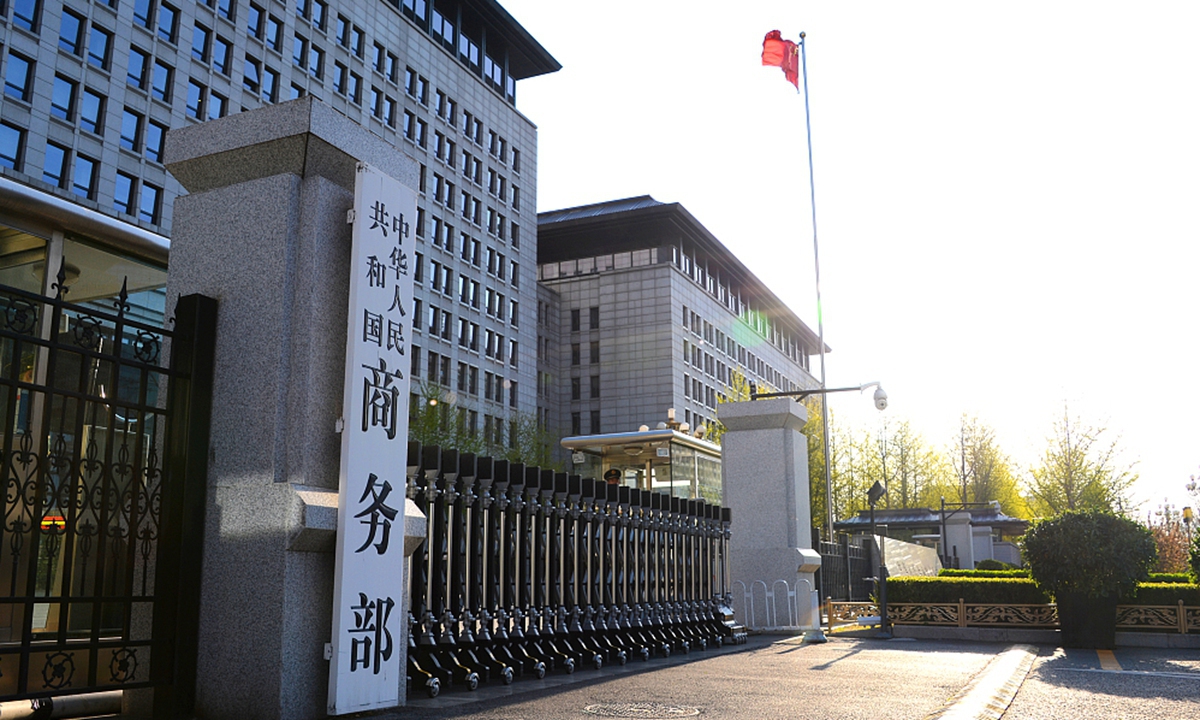
China and the EU have agreed on price undertaking guidance for Chinese battery electric vehicles (EVs) makers, China's Ministry of Commerce (MOFCOM) announced on Monday, marking a significant step forward in resolving the two-year-long dispute.Chinese industry analysts and business representatives said the latest move underscores the fact that the world's two major economies are capable of resolving trade disputes through consultation and dialogue, setting a positive and much-needed example at a time when the global economy is facing a rising trend of unilateralism and protectionism, marked by high tariffs.
And at a time of heightened global trade tensions, when certain countries frequently resort to punitive tariffs as a form of economic coercion, this latest move by China and the EU is particularly noteworthy in itself, as it seeks to uphold order in a multipolar world through dialogue, experts said.
According to the statement released by China's MOFCOM on Monday, China and the EU have conducted multiple rounds of consultations in the spirit of mutual respect, and both sides believe it is necessary to provide general guidance on price undertakings for Chinese exporters exporting battery electric vehicles for passengers to the EU, thereby enabling them to address relevant concerns in a way that is more practical, targeted, and consistent with WTO rules.
The EU issued the Guidance Document on Submission of Price Undertaking Offers, in which the EU acknowledges that it will assess each price undertaking offer against the same legal criteria in an objective and fair manner, following the principle of non-discrimination and in accordance with relevant WTO rules, said the MOFCOM.
The progress fully reflects the spirit of dialogue and the outcomes of consultations between China and the EU. It shows that both China and the EU have the ability and willingness to properly resolve differences through dialogue and consultation under the framework of WTO rules and maintain the stability of automotive industrial and supply chains in China, the EU, and the whole world, the MOFCOM said.
This is conducive not only to ensuring the healthy development of China-EU economic and trade relations, but also to safeguarding the rules-based international trade order, according to the ministry.
The European Commission's statement reads that the guidance covers various aspects to be addressed in a possible undertaking offer, including the minimum import price, sales channels, cross-compensation, and future investments in the EU.
This document is intended to provide guidance to Chinese exporters that may consider price undertaking offers (UT offers) for exports of battery EVs for passengers to the EU, which are currently subject to countervailing duties, said the EC.
Case history
The EU launched in October 2023 an anti-subsidy investigation into the imports of Chinese EVs after Ursula von der Leyen, president of the European Commission, alleged in September 2023 that imported Chinese EVs would flood Europe and distort the auto market, an allegation the Chinese authorities have firmly denied.
Chinese commerce ministry and officials have on various occasions clarified that Chinese EV manufacturers' rapid development is a result of constant tech innovations, a well-established supply chain system and full market competition, rather than subsidies.
In October 2024, the EU decided to impose definitive hefty countervailing duties on Chinese EVs for a period of five years, which has sparked strong opposition, with China calling the move "unfair, unreasonable and unobjective."
In April 2025, the Chinese and EU technical teams had commenced engagement on negotiations on EV pricing commitments after China's Commerce Minister Wang Wentao and European Commissioner for Trade and Economic Security Maros Sefcovic held a talk via video on April 8.
According to a statement after the video talk, the two sides agreed to start consultation on issues concerning market access at an early date, and immediately start negotiations on EV pricing undertaking as well as issues related to bilateral investment cooperation in the auto sector, the Xinhua News Agency reported.
Constructive step
The EV trade dispute had persisted for more than two years, with China and the EU having engaged in prolonged and highly intensive consultations. The process characterized as repeated back-and-forth, in itself, underscores the complexity and sensitivity of the matter, Tu Xinquan, dean of the China Institute for WTO Studies at the University of International Business and Economics in Beijing, told the Global Times on Monday, noting that the trade issue directly involves the core interests and concerns of both sides.
"The core principle emphasized in the guidance document is the principle of non-discrimination, which is itself one of the core principles of the WTO. This reflects the respect shown by both China and the EU for multilateral trade rules, as well as for the rules and spirit of the WTO," Tu said.
The latest outcome reached between the two sides not only sets a positive example for the resolution of China-EU trade disputes, but also provides an important reference for handling other potential trade issues that may arise between the two sides in the future, Shi Xiaoli, director of the WTO Law Research Center at the China University of Political Science and Law, told the Global Times on Monday.
At present, China and the EU do still face certain trade issues. However, with such an example and model in place, future trade frictions are more likely to be resolved through bilateral consultations conducted on the basis of WTO rules, said Shi.
Moreover, this is inherently a shared interest of both China and the EU. China and the EU still have broad room for cooperation in EVs and the broader new energy field, which is beneficial to both sides, particularly for the EU which is promoting green transformation. "Properly addressing differences will not only support industrial development, but also help advance new energy technologies so they can more quickly and effectively contribute to tackling the global challenge of climate change," Shi said.
Greater outcome
The latest outcome has also drawn attention from industry groups, which welcomed the results between China and the EU and highlighted their broader significance in setting a positive example of resolving disputes through consultation rather than economic coercion, especially at a time when unilateralism and protectionism are on the rise in the world, exemplified by US tariffs.
For example, the China Chamber of Commerce to the European Union (CCCEU) said that as China and the EU are two major global economies, this joint decision carries significant bilateral relevance as well as a positive global demonstration effect, which the Chinese chamber highly appreciates.
"It not only supports the healthy and stable development of China-EU trade, investment, and bilateral relations, but also sends a clear and strong signal to global markets that both sides remain firmly committed to managing differences through dialogue and consultation, and to jointly upholding a rules-based multilateral trading system and an open global economy," the chamber said.
CCCEU further noted that it believes that this constructive outcome will significantly boost market confidence, provide a more stable and predictable environment for Chinese EV manufacturers and related supply-chain companies operating in Europe, and promote deeper cooperation between China and the EU in market development, technological innovation, and other areas. This result is expected to inject fresh momentum into China-EU collaboration on green transition and industrial development, benefiting both sides and the wider global economy, said the chamber.
Also on Monday, the China Chamber of Commerce for Import and Export of Machinery and Electronic Products (CCCME) said that acting in the spirit of mutual respect and dialogue, China and the EU have, through multiple rounds of consultations, successfully steered the case toward a "soft landing."
Properly resolving the EU's anti-subsidy case against Chinese EVs reflects the shared expectations of stakeholders across the China-EU EV industry chain. It will help promote the security and stability of the relevant industrial and supply chains, safeguard the overall China-EU economic and trade relationship, and uphold the rules-based international trading order, said the industry group.
Tu said the approach contrasts sharply with that of the US, which often relies on unilateral and discriminatory measures, while China and the EU have addressed the issue through bilateral consultations under a multilateral, rules-based framework guided by non-discrimination. This sets a positive example for resolving China-EU trade disputes and may offer a reference for how major economies may handle future trade issues, said the expert.
RELATED ARTICLES