China’s caviar makes its way to high-end global tables
Small caviar, big business
Editor's Note:
High-end ingredients that were once largely imported are now made in China and gradually moving from China into global markets. Meanwhile, as trade and economic cooperation deepens, distinctive foods from around the world are entering China at an accelerating pace and winning growing favor among consumers. "Chinese flavors" are increasingly becoming an active presence on the global consumption stage, while China's dining table draws cuisines from across the world. This two-way flow across mountains and oceans is not merely a meeting of tastes between China and the world, but also a vivid illustration of how China's vast market is sharing development opportunities globally. This is the first installment of the series.
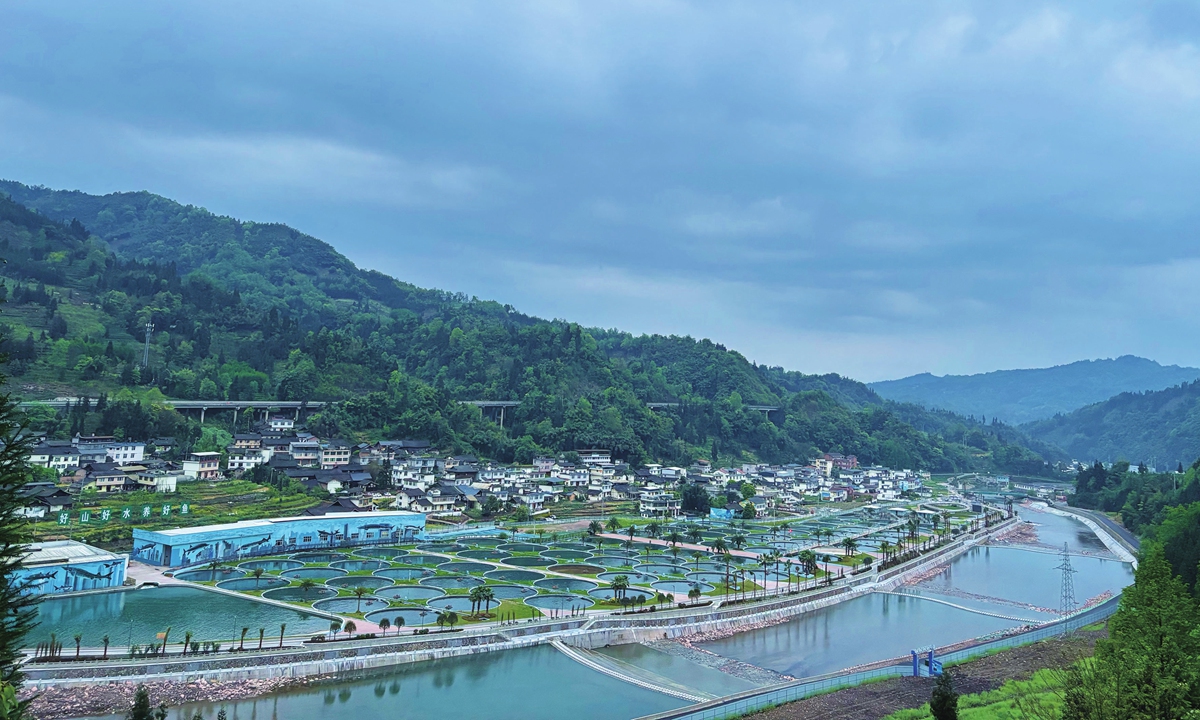
In Ya'an, Southwest China's Sichuan Province, sturgeons glide through crystal-clear cold waters.
Far from Europe's traditional caviar heartlands, this mountain-ringed aquaculture base has emerged as a key launchpad for Chinese caviar's global expansion, quietly reshaping the landscape of high-end food supply.
For decades, caviar was regarded as "black gold" on European dining tables. Over the past decade, however, China has emerged as one of the world's leading producers and exporters of caviar. In 2024, China accounted for more than 40 percent of global caviar exports, ranking among the world's largest exporters, according to data from the International Trade Centre cited by the Financial Times, underscoring the country's growing weight in this high-end agricultural segment.
From a "luxury consumer" to a "high-end supplier," the rise of China's caviar exports is no accident. It reflects systematic improvements in China's agriculture in terms of technology, scale, and quality, and signals a shift in the country's foreign trade structure from "quantity expansion" to a "quality leap." This provides a vivid example for understanding the new changes in China's high-end foreign trade, experts said.
From skepticism to popularity
More than a decade ago, Chinese caviar entered the global market amid strong brand skepticism. Around 2013, skepticism toward "Made in China" caviar was still widespread overseas, Zeng Bingrui of Sichuan Runzhao Fisheries Co told the Global Times. To break that perception, the founder of the company's flagship brand, Frosista, invited overseas buyers for "blind tastings."
"During overseas visits, the company's founder bought several international brands of caviar and put them alongside his own in blind tastings; most clients ultimately chose the Chinese product," Zeng said. Its flavor, texture, and consistency proved decisive, helping overturn entrenched perceptions and opening the door for Chinese caviar to enter the high-end market, according to Zeng.
The breakthrough is supported by unique natural conditions and an established industry system. The Frosista farm, located at the junction of the Sichuan Basin and the Qinghai-Xizang Plateau, benefits from pure meltwater, maintaining a stable water temperature of around 15 C year-round, free from industrial and domestic pollution, Zeng said. Sturgeon are highly sensitive to water temperature and quality, and such a clean, stable environment forms the foundation for high-quality caviar.
Meanwhile, full supply-chain control and scaled production have addressed international buyers' primary concern: supply stability. "From hatchery to farming, processing and grading, we maintain end-to-end control, making both quality and delivery schedules more predictable," Zeng said. This is a critical factor for high-end overseas restaurants that plan menus and sourcing years in advance.
Frosista caviar is a representative example of China's expanding caviar industry. Beyond Sichuan, caviar produced at Qiandao Lake in Hangzhou, East China's Zhejiang Province, has also gained recognition in international markets.
Formed by major water conservancy projects that transformed once-continuous mountain ranges into thousands of islands, Qiandao Lake spans about 573 square kilometers of largely pristine waters. With year-round water temperatures ranging from 10 C to 25 C, the lake offers conditions well suited to sturgeon farming, according to media reports.
A customer service representative for the caviar brand Kaluga on Taobao told the Global Times reporter posing as a consumer, that the company's Qiandao Lake-sourced caviar has been exported to 42 countries and regions, and is supplied to Lufthansa and Singapore Airlines' first-class cabins as well as to a number of Michelin-starred restaurants.
From 'product export' to 'brand expansion'
As quality and supply capacity are gradually recognized by international markets, China's caviar exports continue to expand. While traditional core markets remain concentrated in Europe and North America, emerging markets such as Japan, Singapore, Australia, and Malaysia have seen rapid growth in recent years, Zeng said. These regions provide new growth opportunities for Chinese caviar.
Companies are no longer solely relying on traders but are directly connecting with chefs, restaurants, and end customers through tastings, themed dinners, and other events, gradually shifting "Chinese caviar" from a raw material label to a brand identity. At the "Sands Master Chefs' Dinner" held at Marina Bay Sands in Singapore, several international banquets specifically selected and introduced caviar from China, specifically from Sichuan, the Sichuan Runzhao Fisheries Co told the Global Times.
Although China started late and lacks a caviar-eating tradition, it has gained global recognition through its expertise in caviar breeding techniques and advanced production processes developed since the early 2000s, combining cost advantages with exceptional quality, experts said.
Zhang Yi, CEO of the iiMedia Research Institute, told the Global Times that China's caviar advantages stem from several key factors: excellent natural resources, technological breakthroughs in processing and manufacturing, and large-scale production capabilities. The combination of favorable cold-water resources, mature breeding and farming techniques, and the world's largest production capacity have driven down costs and improved quality, making Chinese caviar highly competitive in international markets.
On a broader level, the rise of Chinese caviar aligns with national agricultural and foreign trade policies. In recent years, authorities have continuously promoted the export of high-quality agricultural products, encouraging specialty items to enter high-end international markets.
The Ministry of Agriculture and Rural Affairs has announced that in 2025, China began fostering high-quality agricultural trade entities. The initiative focuses on the entire supply chain - production, processing, and trade - aiming to nurture key players with high industry concentration, production standards, export value, brand recognition, and comprehensive services, according to Xinhua News Agency.
By 2030, the goal is to cultivate more than 50 entities with annual export values exceeding $100 million and over 600 with exports exceeding $10 million, with each entity accounting for over 50 percent of national exports in their product category, Xinhua reported.
Zhang said that the export of caviar has created a replicable path for local agriculture, leveraging regional advantages with technological empowerment and targeted international expansion. By enhancing technology and standardizing production, regions can push their unique agricultural products into high-end international markets, forming new growth points for agricultural exports.
He further highlighted that the rise of Chinese caviar in the global market is a clear example of the upgrading of China's foreign trade structure. The shift from importing high-end food products to becoming the world's largest exporter of caviar reflects China's transition from low-value manufacturing to high-tech, high-brand premium exports, marking a significant transformation in the nation's trade profile.
High-end ingredients that were once largely imported are now made in China and gradually moving from China into global markets. Meanwhile, as trade and economic cooperation deepens, distinctive foods from around the world are entering China at an accelerating pace and winning growing favor among consumers. "Chinese flavors" are increasingly becoming an active presence on the global consumption stage, while China's dining table draws cuisines from across the world. This two-way flow across mountains and oceans is not merely a meeting of tastes between China and the world, but also a vivid illustration of how China's vast market is sharing development opportunities globally. This is the first installment of the series.
A view of the sturgeon aquaculture base operated by Sichuan Runzhao Fisheries Co in Ya'an, Southwest China's Sichuan Province File photo: Courtesy of Sichuan Runzhao Fisheries Co
In Ya'an, Southwest China's Sichuan Province, sturgeons glide through crystal-clear cold waters.
Far from Europe's traditional caviar heartlands, this mountain-ringed aquaculture base has emerged as a key launchpad for Chinese caviar's global expansion, quietly reshaping the landscape of high-end food supply.
For decades, caviar was regarded as "black gold" on European dining tables. Over the past decade, however, China has emerged as one of the world's leading producers and exporters of caviar. In 2024, China accounted for more than 40 percent of global caviar exports, ranking among the world's largest exporters, according to data from the International Trade Centre cited by the Financial Times, underscoring the country's growing weight in this high-end agricultural segment.
From a "luxury consumer" to a "high-end supplier," the rise of China's caviar exports is no accident. It reflects systematic improvements in China's agriculture in terms of technology, scale, and quality, and signals a shift in the country's foreign trade structure from "quantity expansion" to a "quality leap." This provides a vivid example for understanding the new changes in China's high-end foreign trade, experts said.
From skepticism to popularity
More than a decade ago, Chinese caviar entered the global market amid strong brand skepticism. Around 2013, skepticism toward "Made in China" caviar was still widespread overseas, Zeng Bingrui of Sichuan Runzhao Fisheries Co told the Global Times. To break that perception, the founder of the company's flagship brand, Frosista, invited overseas buyers for "blind tastings."
"During overseas visits, the company's founder bought several international brands of caviar and put them alongside his own in blind tastings; most clients ultimately chose the Chinese product," Zeng said. Its flavor, texture, and consistency proved decisive, helping overturn entrenched perceptions and opening the door for Chinese caviar to enter the high-end market, according to Zeng.
The breakthrough is supported by unique natural conditions and an established industry system. The Frosista farm, located at the junction of the Sichuan Basin and the Qinghai-Xizang Plateau, benefits from pure meltwater, maintaining a stable water temperature of around 15 C year-round, free from industrial and domestic pollution, Zeng said. Sturgeon are highly sensitive to water temperature and quality, and such a clean, stable environment forms the foundation for high-quality caviar.
Meanwhile, full supply-chain control and scaled production have addressed international buyers' primary concern: supply stability. "From hatchery to farming, processing and grading, we maintain end-to-end control, making both quality and delivery schedules more predictable," Zeng said. This is a critical factor for high-end overseas restaurants that plan menus and sourcing years in advance.
Frosista caviar is a representative example of China's expanding caviar industry. Beyond Sichuan, caviar produced at Qiandao Lake in Hangzhou, East China's Zhejiang Province, has also gained recognition in international markets.
Formed by major water conservancy projects that transformed once-continuous mountain ranges into thousands of islands, Qiandao Lake spans about 573 square kilometers of largely pristine waters. With year-round water temperatures ranging from 10 C to 25 C, the lake offers conditions well suited to sturgeon farming, according to media reports.
A customer service representative for the caviar brand Kaluga on Taobao told the Global Times reporter posing as a consumer, that the company's Qiandao Lake-sourced caviar has been exported to 42 countries and regions, and is supplied to Lufthansa and Singapore Airlines' first-class cabins as well as to a number of Michelin-starred restaurants.
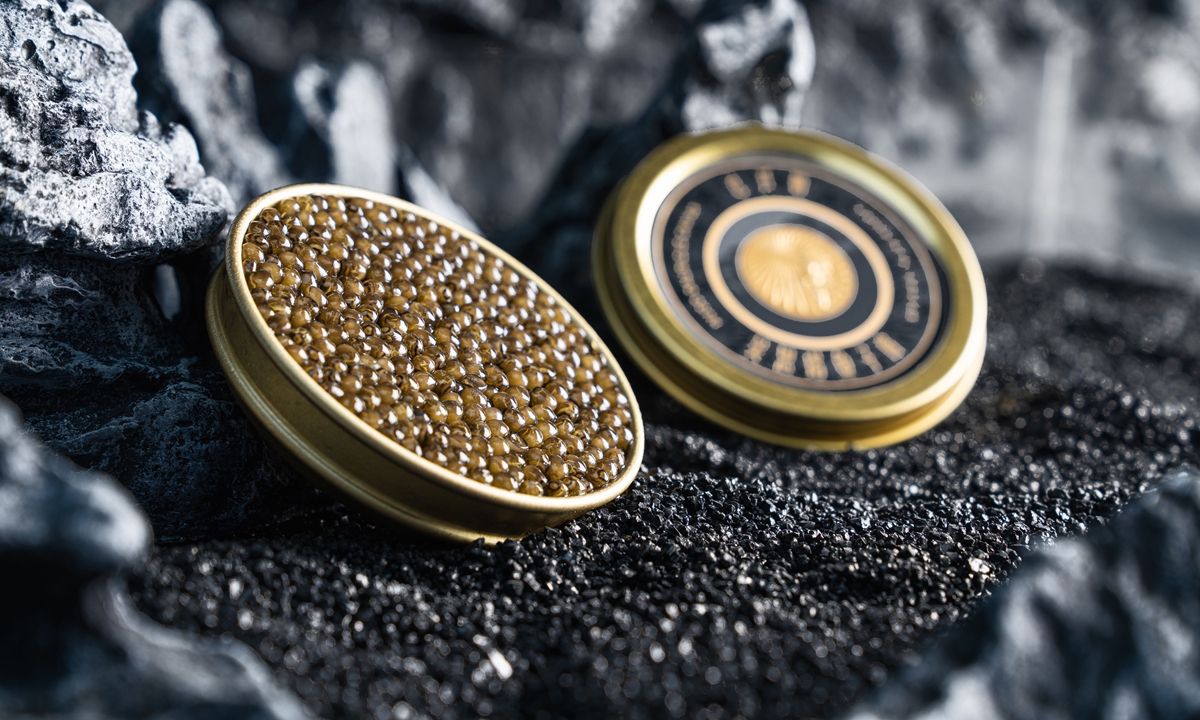
Caviar Photo: Courtesy of Sichuan Runzhao Fisheries Co
From 'product export' to 'brand expansion'
As quality and supply capacity are gradually recognized by international markets, China's caviar exports continue to expand. While traditional core markets remain concentrated in Europe and North America, emerging markets such as Japan, Singapore, Australia, and Malaysia have seen rapid growth in recent years, Zeng said. These regions provide new growth opportunities for Chinese caviar.
Companies are no longer solely relying on traders but are directly connecting with chefs, restaurants, and end customers through tastings, themed dinners, and other events, gradually shifting "Chinese caviar" from a raw material label to a brand identity. At the "Sands Master Chefs' Dinner" held at Marina Bay Sands in Singapore, several international banquets specifically selected and introduced caviar from China, specifically from Sichuan, the Sichuan Runzhao Fisheries Co told the Global Times.
Although China started late and lacks a caviar-eating tradition, it has gained global recognition through its expertise in caviar breeding techniques and advanced production processes developed since the early 2000s, combining cost advantages with exceptional quality, experts said.
Zhang Yi, CEO of the iiMedia Research Institute, told the Global Times that China's caviar advantages stem from several key factors: excellent natural resources, technological breakthroughs in processing and manufacturing, and large-scale production capabilities. The combination of favorable cold-water resources, mature breeding and farming techniques, and the world's largest production capacity have driven down costs and improved quality, making Chinese caviar highly competitive in international markets.
On a broader level, the rise of Chinese caviar aligns with national agricultural and foreign trade policies. In recent years, authorities have continuously promoted the export of high-quality agricultural products, encouraging specialty items to enter high-end international markets.
The Ministry of Agriculture and Rural Affairs has announced that in 2025, China began fostering high-quality agricultural trade entities. The initiative focuses on the entire supply chain - production, processing, and trade - aiming to nurture key players with high industry concentration, production standards, export value, brand recognition, and comprehensive services, according to Xinhua News Agency.
By 2030, the goal is to cultivate more than 50 entities with annual export values exceeding $100 million and over 600 with exports exceeding $10 million, with each entity accounting for over 50 percent of national exports in their product category, Xinhua reported.
Zhang said that the export of caviar has created a replicable path for local agriculture, leveraging regional advantages with technological empowerment and targeted international expansion. By enhancing technology and standardizing production, regions can push their unique agricultural products into high-end international markets, forming new growth points for agricultural exports.
He further highlighted that the rise of Chinese caviar in the global market is a clear example of the upgrading of China's foreign trade structure. The shift from importing high-end food products to becoming the world's largest exporter of caviar reflects China's transition from low-value manufacturing to high-tech, high-brand premium exports, marking a significant transformation in the nation's trade profile.
RELATED ARTICLES