A step forward between China and Canada will be ‘a step toward multipolar world’
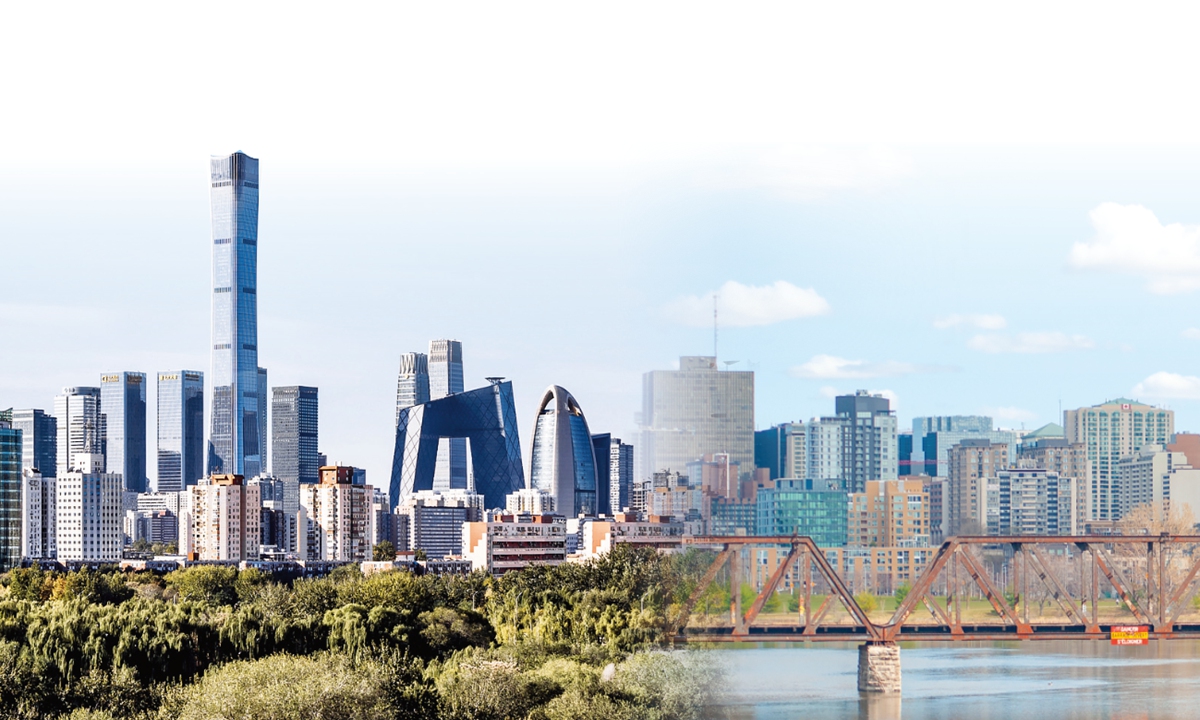
A view of Beijing (left) and Ottawa Photo: VCG
Editor's Note:
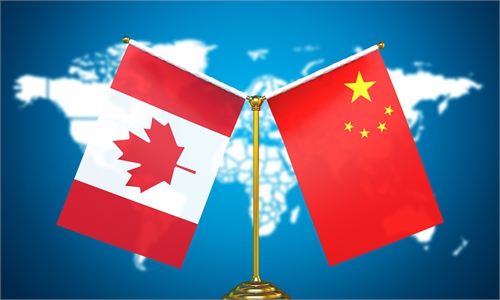
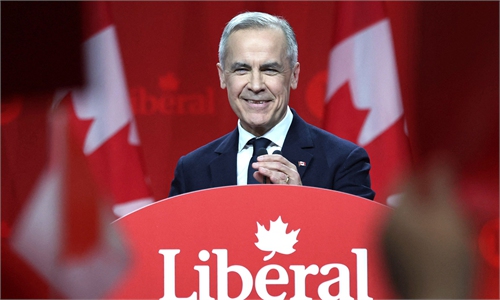
It was announced on Monday by a Chinese Foreign Ministry spokesperson that, at the invitation of Premier of the State Council Li Qiang, Canadian Prime Minister Mark Carney will pay an official visit to China from Wednesday to Saturday. What can be expected from this trip? How does US influence impact the development of China-Canada ties? Radhika Desai (Desai), a professor in the Department of Political Studies at the University of Manitoba in Canada and visiting professor at the Department of International Development, London School of Economics, discussed these questions with Global Times (GT) reporter Li Aixin.
GT: Carney's upcoming trip marks the first official visit to China by a Canadian prime minister in eight years. How would you characterize or define this visit?
Desai: I think this is the start of what will probably be a fairly long journey. Canada-China relations took a nosedive after Canada arrested Meng Wanzhou back in 2018. At the time, Canada was in the middle of renegotiating NAFTA and was particularly susceptible to American pressure.
Seemingly, the Canada-China problem lies with the White House, but it's deeper than that. The model that Canada, along with the entire West, has used to deal with countries like China - or any country they feel isn't playing by their rules - is to demonize them, accusing them of human rights violations or other breaches. Meanwhile, the West violates these same principles all the time, but nobody talks about it. This model of dealing with China and the rest of the world is in crisis.
On one hand, Canada needs to diversify its economic relations away from the US. On the other hand, it will find it very hard to do so - partly because many people are still invested in the old model of international relations, even though it doesn't work anymore. It's like two different forces battling for the heart of Canada. These two forces will contend within Canada for a long time.
GT: What can be expected most from Carney's China visit?
Desai: I think there are a lot of issues on the table. There's the issue of Canada's 100 percent tariffs on Chinese electric vehicles (EVs) and China's tariffs on Canadian farm exports - particularly canola. There's hope that these tariffs on EVs and so on will be overturned.
Canadian farmers are desperate for new markets, especially since this visit is taking place at a time when they're increasingly facing a closed American market. Meanwhile, manufacturing provinces like Ontario have been lobbying to keep the EV tariffs and protect Canada's auto sector. So if some creative solution can emerge from this, that will be interesting. It will also be interesting to see what happens on the energy front.
More generally, it's important to remember this background: Back in the 1960s, 1970s, and much of the 1980s, there was a lot of discourse about how Canada was becoming too dependent on the US - that Canada was a branch-plant economy, surrendering its economic sovereignty and so on. There were people already arguing back then that Canada must diversify its relations with the rest of the world and not be so exclusively dependent on the US. But Canada's ruling classes did not heed these warnings.
Now, Canadians are realizing the dangers of putting all their eggs in one basket - and that basket itself has now become very fragile. Also, Canada is under threat in a variety of ways. All US rhetoric about Greenland has sent Canadian security officials into a tizzy. If the US has Greenland, then Canada is almost surrounded by the US.
I read recently that a Canadian opinion poll shows that about 54 percent of Canadians are in favor of better economic relations with China. So I'm optimistic, and I definitely think that we will see some concrete steps forward from the visit. My only pessimism is about the speed at which we will see them. It could be a step forward, though not a very big step. Trade will be the leading theme.
GT: In your view, at present and looking ahead, is the influence of potential US reactions on Canadian diplomacy growing stronger or gradually weakening?
Desai: I think it's extremely contradictory. At a popular level, the US has become extremely unpopular in Canada. The number of trips Canadians make to the US has gone down significantly. People aren't buying American liquor, wine, and so on. At a popular level, there's a huge revulsion against the US.
If Canada were a real democracy, we would be running into China's arms. But in liberal democracies - in capitalist countries - it's the big capitalists who hold the real power. Governments do what they want them to do.
Objectively, what will happen is this: the very fact that Carney is undertaking this trip is the combined result of push and pull factors at work. The push factor is that the US is pushing Canada toward China. The pull factor is also present because China has a lot to offer Canada. There is a very interesting complementarity between China's economy and Canada's economy. Canada has a lot of resources and China needs many of those resources and so on. All of these things are part of a larger trend that we have all been talking about and analyzing: the shift toward multipolarity.
GT: In the current context of resurgent hegemony and neo-colonialist trends, what significance do you believe a closer Canada-China relationship would hold?
Desai: We are moving toward a more multipolar world in which the West is less central.
We were talking about the fact that there will be positive steps, but these steps may not come at the speed they ought to. However, whatever positive movement we see will be a step toward this multipolar world, away from colonialism, neocolonialism and so on. No matter how much the current US administration jumps up and down, shocking the world with its words and even actions, this will not change.
The new security strategy the US has put out makes it seem as if the country will be effective in controlling the Western Hemisphere. I doubt even that is true. Generally speaking, ordinary people in Latin America, who have long resented being America's backyard, are not likely to put up with this anymore. Even mainstream forces that are more pro-American will not be able to support overt American intrusion in their affairs.
So, as long as the Americans do not interfere in the affairs of the Western Hemisphere by force, and if they engage on an economic basis instead, I have no doubt that China's influence there will only increase, while the US' influence will decrease - unless the US finds a way to address its fundamental economic problems, which it has yet to do.
The visit may not bring drastic changes, but the meeting itself will be valuable and steer the two countries in the right direction.
RELATED ARTICLES