How China’s GGI could contribute to ocean governance in South China Sea and beyond

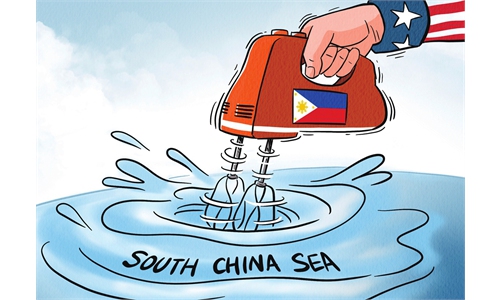
Illustration: Liu Rui/GT
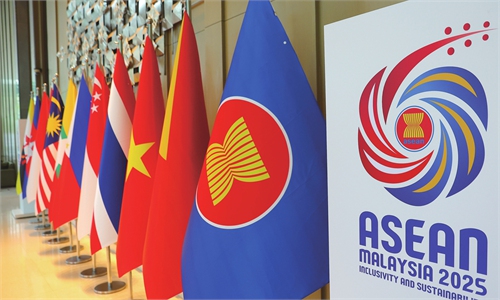
Editor's Note:2026 marks the 5th anniversary of the establishment of the comprehensive strategic partnership between China and ASEAN as well as a crucial year for regional countries to promote the conclusion of the Code of Conduct (COC) in the South China Sea. Looking back at 2025, the overall situation in the South China Sea remained stable and under control, but localized turbulence and frictions increased. Where will the situation in the South China Sea head in 2026, especially the long-anticipated COC? What new opportunities and challenges does ocean governance face in general, and what positive role does China's Global Governance Initiative (GGI) play in advancing global ocean governance? To shed light on these questions, the Global Times, in its commentary column "Global Times Opinion Arena," invited three scholars from ASEAN member countries to share their perspectives.
Hugo Santos, an analyst at the Asian Century Philippines Strategic Studies Institute
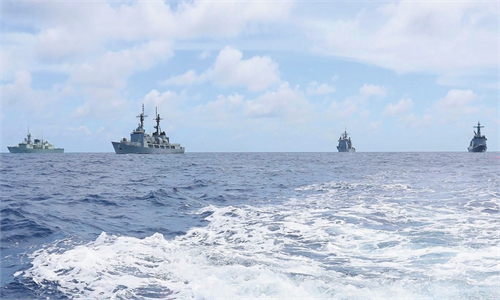
Throughout 2025, the developments in the South China Sea were largely shaped by rising tensions in areas such as Huangyan Dao (Huangyan Island) and Ren'ai Jiao (Ren'ai Reef), where gray-zone conflicts became more frequent. However, despite various disputes being reported, the South China Sea continues to function effectively as a zone of peace and commerce. One important factor is that the mechanisms for dialogue remain in place. Moreover, the private sector also plays a stabilizing role. Philippine and Chinese businesses continue to engage in economic exchanges and explore avenues for cooperation, providing an additional layer of stability.
The advancement of the COC often resembles a process where different parties voice their respective views. The process has also been interfered with by external forces. ASEAN must therefore make decisions as a regional bloc and prioritize shared interests. ASEAN must engage all relevant actors, primarily within the region, and externally when needed. The COC, however, is fundamentally a framework designed to be negotiated among claimant states, not shaped by outside powers.
The main challenge is that each government has its own priorities and national interests. In the case of the Philippines, every administration also has its own geopolitical alignment. It is no secret that the Philippines remains closely aligned with the US, and our foreign policy often reflects that orientation. This makes navigating a consensus-based COC more complex.
As ASEAN Chair in 2026, the Philippines should adopt a more collaborative approach similar to other claimant states of ASEAN. Malaysia and Vietnam offer useful examples of maintaining pragmatic cooperation while protecting national interests. Manila should learn from its ASEAN and external partners. Ideally, we hope for progress by 2026, but even if the timeline slips, we must continue searching for a path forward.
Overall, we should handle conflicts and disputes through collaborative cooperation, using frameworks that focus on non-sensitive mechanisms. If we wish to see our security relations move forward, we should strengthen cooperation with China in areas where consensus can be reached, particularly in fields such as security and climate change. We can also promote national industrialization through the China-proposed Belt and Road Initiative and advance collaborative governance models with the help of the GGI. I believe that the region has enormous potential in areas such as joint oil and gas exploration, rare-earth development, fisheries and energy, as long as we focus on these shared economic opportunities instead of controversial political issues.
M. Habib Abiyan Dzakwan, a researcher at the Department of International Relations at the Centre for Strategic and International Studies in Indonesia
Regarding the expectations of all parties to conclude the COC in the South China Sea in 2026, I remain optimistic but cautious. We have spent more than a decade discussing the agreement, and it is understandable that it has not been finalized, given the number of parties involved. Even if it cannot be concluded by the end of 2026, the essential point is to keep the communication going. Once the COC is eventually adopted, all sides must ensure that it is faithfully and legally observed.
It is also important to safeguard the sovereign rights of all countries, not only the coastal states. Almost all of us have ratified the United Nations Convention on the Law of the Sea (UNCLOS), which guarantees the sovereign rights for all. These rights must continue to be protected even after the COC is concluded.
Throughout this process, ASEAN has its own agency. Regardless of where external pressure comes from, ASEAN maintains the ability to say that negotiations must proceed at its own pace. No party can rush the process. In negotiations, we must pay attention to each other's concerns and ensure that no one is left behind. When external partners try to impose their pace or priorities, we can clearly tell them: This is the ASEAN way, and they should respect the process.
Ultimately, the continued peace and stability in the South China Sea is the result of collective efforts. Stability comes from our shared willingness to manage differences through dialogue rather than confrontation or unilateral actions. Even though the outcomes may not yet be concrete, consistent participation in meetings and sustained communication itself helps maintain stability.
More generally, because countries naturally hold different views on ocean governance, sustained dialogue is the only way to narrow differences and prevent miscalculation. Against this backdrop, the most promising way forward for global ocean governance is to focus on areas where interests clearly converge. The principles outlined in China's GGI are constructive for global ocean governance and widely shared by many countries. Concepts such as sovereign equality are embedded in UNCLOS and the UN Charter.
In line with one of the GGI's principles of taking real action, China has already made substantial contributions to advancing global ocean governance. It provides ideas for developing maritime norms and offers capacity-building programs for many developing countries. These efforts align with what many countries expect from China. Translating the principles into concrete actions requires joint efforts from both China and ASEAN member countries, especially given the lingering maritime concerns between China and some of the ASEAN member countries. Effective communication is therefore essential for managing these issues and ensuring smoother cooperation.
Ruhanas Harun, an international relations professor at the National Defence University of Malaysia
The South China Sea brings both advantages and challenges to the Southeast Asian region. A peaceful regional order in Southeast Asia contributes to the stability of the broader Asia-Pacific because of the region's geopolitical position. Southeast Asia serves as a lynchpin linking the Pacific Ocean and the Indian Ocean, and the South China Sea lies at the maritime heart of this region, making it vital to both economic development and security.
For this reason, any effort to construct and maintain a stable regional order must be negotiated with ASEAN member countries. ASEAN is geographically and politically in the middle. ASEAN has very close relationships with China, particularly economically and increasingly in socio-cultural terms, while also maintaining close relations with the US, including in economic and security domains.
Many ASEAN member countries do not want to sacrifice the economic benefits of being close to China. At the same time, they feel they cannot alienate the US, which they see as an important security partner. This creates a dilemma: ASEAN member countries do not want to be pressured by either side or forced to choose between the two major powers. From an ASEAN perspective, the position is clear: They are willing to work closely with both China and the US, but neither should force them to choose one over the other.
The principles proposed under China's GGI are good, and the intention behind them is also positive. They have the potential to create acceptance and harmony among countries. Simply putting forward these ideas helps raise awareness, exposes the public to alternative ways of resolving and managing disputes, and encourages thinking beyond confrontation.
Global governance is something that every country ultimately needs, regardless of its political ideology or system of governance. In this sense, China has done well in bringing these principles to the international stage. If such ideas were proposed by a small country, they might not receive much attention. But when they come from a major country like China, with its global influence, other countries are more likely to take them seriously, support them and consider how they could be implemented in practice.
RELATED ARTICLES