Chinese expert criticizes newly signed Japan-Philippines defense pact for hyping ‘China threat’; warns external interference in SCS will lead to serious consequences

Japan's Foreign Minister Toshimitsu Motegi (L) and Philippines' Foreign Minister Theresa Lazaro hold a joint press conference in Pasay, Metro Manila on January 15, 2026. Photo: VCG
In another move that risks undermining regional peace and stability, Japan and the Philippines signed a defense pact on Thursday that would allow the tax-free provision of ammunition, fuel, food, and other necessities when their forces stage joint training, with hyping so-called China "aggression," according to media reports. A Chinese expert said that while the Philippines and Japan each have their own calculations and have hyped the so-called "China threat," any move to introduce external forces into South China Sea issues would only complicate the situation and lead to serious consequences.
The pact, Acquisition and Cross Servicing Agreement (ACSA), was signed during a meeting between Foreign Affairs Secretary Ma. Theresa Lazaro and Japanese Foreign Minister Motegi Toshimitsu in Manila, Philippine news site Inquirer.net reported on Thursday.
It allows reciprocal provision of supplies and services during combined exercises, training, disaster response and peacekeeping operations, another Philippine media GMA News online reported.
The Associated Press reported the pact between Japan and the Philippines on Thursday and claimed that it allows the two countries to "boost deterrence" against China in the region.
In the AP report, both Lazaro and Motegi made cliche claims of "promoting freedom of navigation and overflight, especially in the South China Sea," and opposing "unilateral attempts to change the status quo."
The so-called "freedom of overflight" and "freedom of navigation" are just excuse for Japan and the Philippines to deepen cooperation with real target is obviously China and on the South China Sea issues, Song Zhongping, a Chinese military affairs expert, told the Global Times on Thursday.
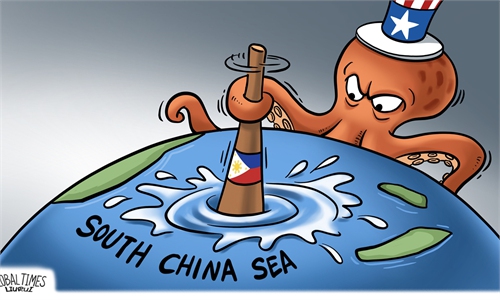
Behind the defense pact, Japan and the Philippines each have their own calculations. Song noted that the Philippines is playing with fire by introducing external forces into the South China Sea and attempting to exploit regional tensions to gain advantages at the expense of China's maritime rights and interests.
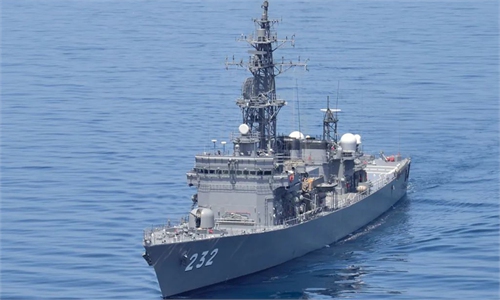
Japan, meanwhile, is eager to export its second-hand destroyers to the Philippines, with the real aim of breaking through the Three Principles on Transfer of Defense Equipment and Technology, thereby enabling it to openly export weapons and military equipment abroad and undermine the constraints of its Peace Constitution, said the expert.
Under the newly signed pact, Japan would be allowed longer stays at Philippine ports and airports. Although the arrangement is framed as reciprocal—allowing the Philippines similar access to Japanese facilities—the disparity in capabilities means the reciprocity is unequal in practice, said Song.
The Philippines' move to introduce external forces into South China Sea issues will only complicate the situation. While China has so far exercised considerable restraint, any further escalation of provocations in the South China Sea—especially under the illusion of external backing—will inevitably backfire. Should the Philippines persist in challenging China's core interests, it will ultimately bear the full consequences of its miscalculations, Song noted.
Japan and the Philippines in 2024 signed a key defense pact, called Reciprocal Access Agreement, which allows the deployment of Japanese forces for joint drills with Filipino troops in the Philippines, GMA News online reported.
Answering a question regarding the reciprocal access agreement signed by the Philippines and Japan, Chinese Foreign Ministry spokesperson Lin Jian said in July 2024 that the exchange and cooperation between countries should not undermine the mutual understanding and trust between other countries in the region. It should not threaten regional peace and stability, target any third party, or harm the interests of any third party. The Asia-Pacific region does not need any military bloc, still less groupings that incite bloc confrontation or a new Cold War.
Any move that undermines regional peace and stability, and harms regional solidarity and cooperation will be met with vigilance and opposition from people in regional countries. Japan bears serious historical responsibilities for its aggression and colonial rule over the Philippines and other Southeast Asian countries during WWII. Japan needs to reflect on that part of history and act prudently in fields related to military and security, the spokesperson added.
RELATED ARTICLES