Commercial rocket launched from Yellow Sea in China's first sea-based mission of 2026
By and Tao Mingyang Published: Jan 16, 2026 08:36 AM

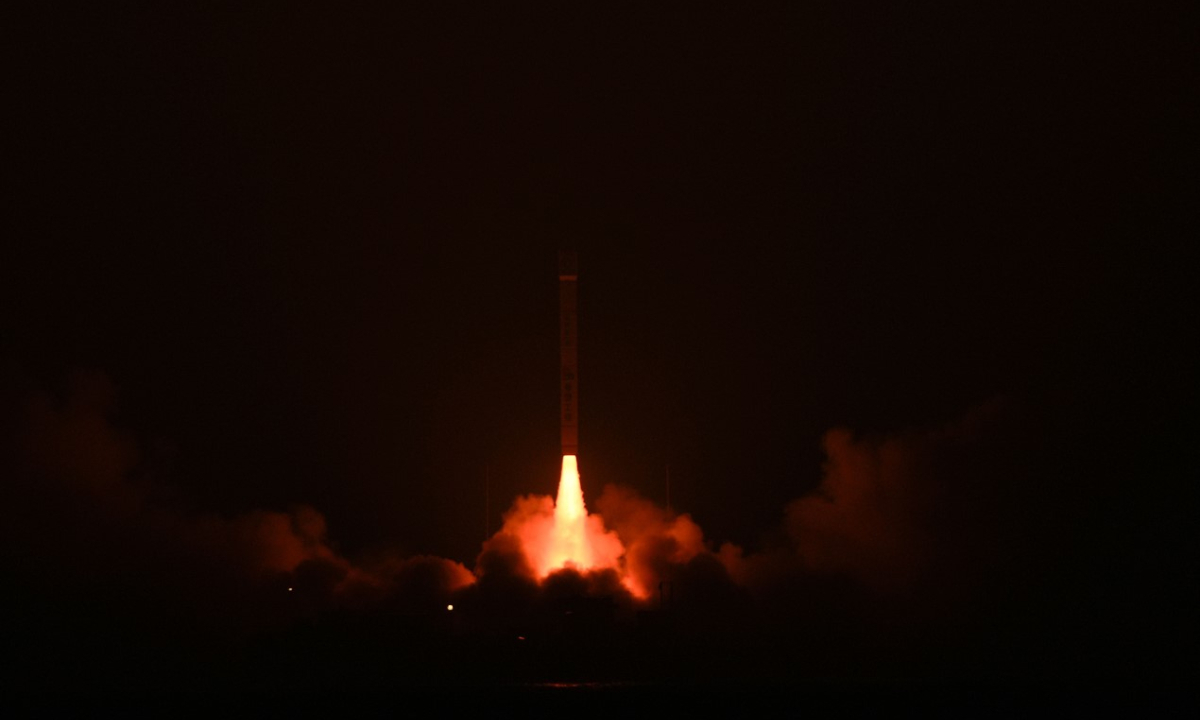
Chinese commercial space firm Galactic Energy successfully carries out a sea-based launch of its CERES-1 carrier rocket at 4:10 am off the coast of East China's Shandong Province on January 16, 2026. Photo: Courtesy of Galactic Energy
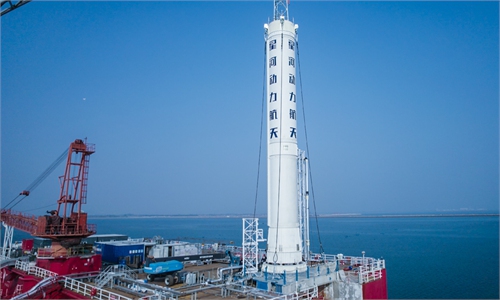
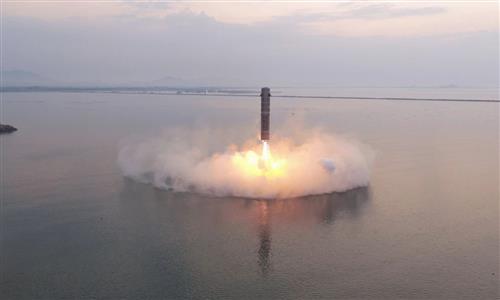
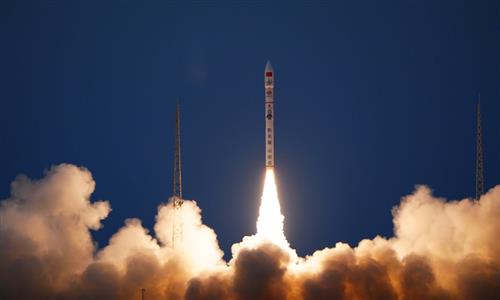
Chinese commercial space firm Galactic Energy successfully carried out a sea-based launch of its CERES-1 carrier rocket at 4:10 am on Friday, sending four satellites into orbit in China's first sea-based launch in the new year.Launched from the coastal area of East China's Shandong Province by the Taiyuan Satellite Launch Center, it marked the 23rd successful flight of the CERES-1 carrier rocket, Galactic Energy told the Global Times on Friday.
The satellites belong to the sixth group of the Tianqi constellation, the country's low-Earth orbit Internet of Things (IoT) satellite constellation. Following the launch, the constellation now has 41 satellites in orbit.
Since its maiden sea-based flight in September 2023, the CERES-1 maritime launch platform has achieved a 100 percent success rate across six missions.
The new satellites are performing an augmentation role after a launch on May 19, 2025 completed the first phase of the Tianqi constellation.
The Tianqi constellation is China's first low-Earth orbit satellite network dedicated to IoT communications. Designed for global coverage with satellites that are small, low-cost and energy-efficient, the constellation offers integrated space-sky-ground-sea data services. It is being used across a broad range of sectors, including forestry, agriculture, emergency response, water resources, energy, marine monitoring and smart city management, the company said.
According to local news portal Dazhong Ribao, the launch on Friday is the first by a Chinese private commercial space company and the fourth by China in 2026.
Pan Helin, a member of the expert committee of the Ministry of Industry and Information Technology, told the Global Times on Friday that sea-based launches are advantageous primarily because of their high safety level, cost-effectiveness, stability and launch location flexibility.
Pan said the main focus for China's commercial space industry in 2026 will be on mastering reusable rocket technology, as "only by achieving technological breakthroughs can the cost of spaceflight be reduced, paving the way for other space projects, such as the more efficient buildup of the space-based satellite communication networks."
Sea-based launches will also need to be combined with reusable rocket technology to achieve a leap in cost reduction, which is the essence of the race, Pan said.
The launch came as more Chinese commercial space companies gear up for offshore missions.
Last week, Chinese private aerospace company SEPOCH began construction of the country's first offshore reusable rocket recovery base in the Qiantang district, Hangzhou, East China's Zhejiang Province, according to a statement the company sent to the Global Times.
Once completed, the base will have the capacity to manufacture 25 rockets annually, the company said, adding that it expects to conduct the rocket's first flight and offshore recovery mission by the end of 2026.
In 2026, a number of Chinese localities have stated their plans to develop the commercial space industry, with a focus on low-cost reusable rockets and mass production, according to a report by the Economic Information Daily on Friday.
For instance, Guangzhou, South China's Guangdong Province rolled out plans on developing advanced manufacturing during the 2024-35 period that it aims to build an industrial and supply chain in core areas such as low-cost, high-reliability launch vehicles, internet satellite constellations, and commercial applications of space technology.
RELATED ARTICLES