Readers’ Reflections: ‘Putting people first’ is a deep institutional strength for China’s stability, sustainable devt: former Polish deputy PM
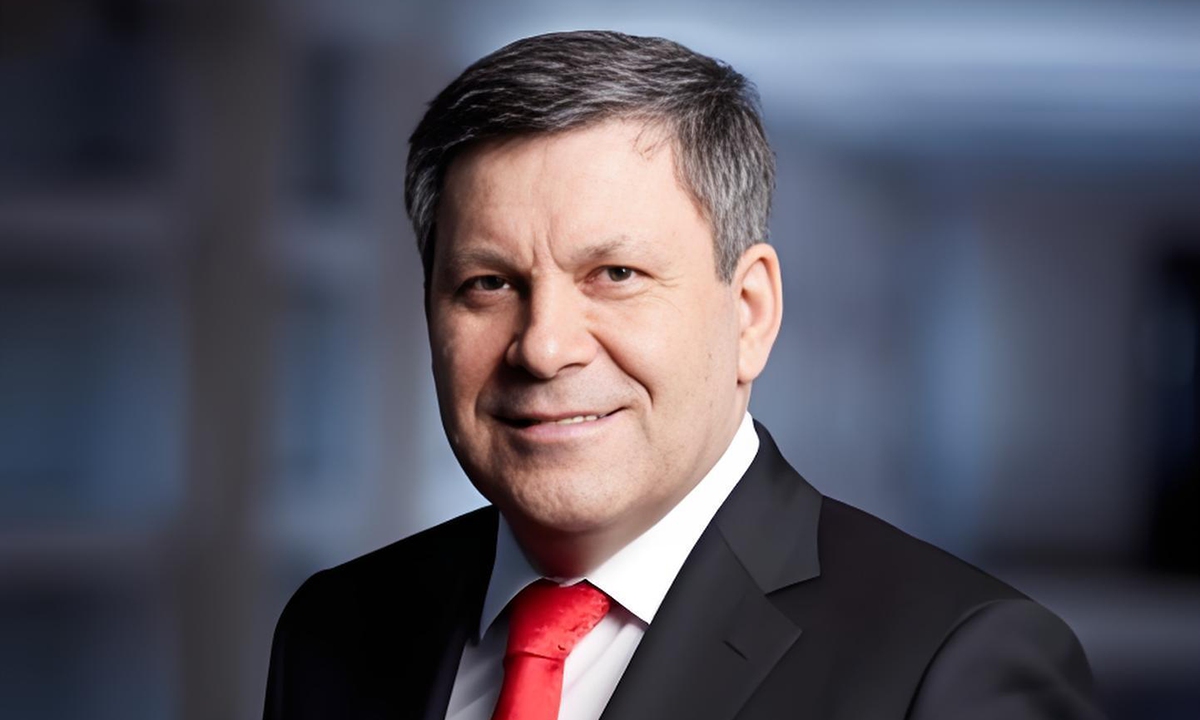
Janusz Piechocinski Photo: Courtesy of Piechocinski
Editor's Note:
"When the happy hum of daily life fills every home, the big family of our nation will go from strength to strength." These words from President Xi Jinping's 2026 New Year message embody sincere and profound care for the people and convey touching and heartwarming strength.
"No issue of the people is too small; we care for every leaf and tend every branch in the garden of people's well-being." Since the 18th National Congress of the Communist Party of China (CPC), Xi, also general secretary of the CPC Central Committee and chairman of the Central Military Commission, has traveled extensively across the country, observing the conditions of the people, listening to their voices, and inquiring about their well-being. He cares deeply about the happiness and hardships of "every home," emphasizing that "of all the jobs in front of us, the most important is to ensure a happy life for our people."
Always placing the people above all else in hearts, upholding the original aspiration and mission of delivering benefits to the people, standing together with the people through thick and thin, and sharing a deep bond with them, and ensuring that the fruits of modernization benefit all people more extensively and equitably, China in the new era is steadily turning the people's yearning for a better life into reality, and is ensuring that the people's sense of gain, happiness, and security become more substantial, better safeguarded, and more sustainable.
The "people-centered" development concept and modernization approach has been the value that runs through the entire series of Xi Jinping: The Governance of China. In his speech made at the meeting with representatives to the first National Conference of Model Families, which was included in Volume II of the series, President Xi pointed out that "a prosperous and strong nation, the national rejuvenation and the happiness of the people are embodied by the happiness of the families and the better life of hundreds of millions of people." Volume V dedicated a section to "People-Centered Development" and compiled significant remarks by President Xi on this topic.
In the 20th installment of the special series "Decoding the Book of Xi Jinping: The Governance of China," the Global Times (GT), along with the People's Daily Overseas Edition, focuses on the "every home" and "big family of our nation" in President Xi's view and, as embodied in his heartfelt New Year message, the people-centered development concept of CPC members. We continue to invite Chinese and foreign scholars, translators of President Xi's works, practitioners with firsthand experience, and international readers to delve into the CPC Central Committee with Comrade Xi Jinping at its core's adherence to the people-centered development concept, and its epochal significance and value for us to strive in writing a new chapter of Chinese modernization.
In the 20th article of the "Readers' Reflections" column, Global Times reporter Ma Tong spoke with Janusz Piechociński (Piechociński), former Deputy Prime Minister and Minister of Economy of Poland and current president of the Poland-Asia Chamber of Commerce. Drawing on his long-term observations of China, Piechociński shared his views on President Xi's people-centered development philosophy and the link between family well-being and China's long-term governance stability.
GT: President Xi Jinping has placed strong emphasis on fostering a sense of connection between family well-being and national development. In his 2026 New Year message, President Xi noted that "When the happy hum of daily life fills every home, the big family of our nation will go from strength to strength." How do you read the remarks about linking family well-being with national development, and what do they reveal about the Chinese leader's emphasis on the family-nation ethos and China's approach to governance?
Piechociński: The strength and effective functioning of a state are rooted not only in economic capacity, military strength, or administrative efficiency, but fundamentally in its people. It is within the family that everyday life and the most basic human relationships are formed, and where people's confidence, optimism, and expectations for a better life, success, and happiness first take shape.
In Poland, we often say, "Harmony in the family brings prosperity; discord brings decline." China has similar wisdom. A harmonious family is built on mutual respect, solidarity, and selflessness, but above all on a shared sense of responsibility for the fate and well-being of every member. Such families form a stable foundation for social balance, resilience, and the ability to cope calmly with life's challenges. It is precisely millions of such families that gradually connect into communities and ultimately coalesce into a nation. Within the family, a culture of shared responsibility and intergenerational continuity is continuously sustained and reinforced. For this reason, strengthening the family as the foundation of the nation should be a central concern of public policy and social action.
This emphasis is clearly reflected in the policy orientation and decision-making of the Chinese government, where the family is regarded as a vital source of national cohesion. Over the years, through my cooperation with many Chinese friends living, working, and doing business in Poland, I have been deeply impressed by the close and harmonious relationships between generations within Chinese families, which convey a palpable sense of warmth and strength. There is a warmth and strength in these bonds that can be felt immediately. Colleagues of mine at the Poland-Asia Chamber of Commerce also frequently speak of the unique atmosphere within Chinese families - marked by care, consideration, and a shared sense of responsibility for the future of loved ones. Despite changes in historical circumstances, the family has remained, and will continue to remain, a lasting pillar of Chinese society.
In this sense, President Xi's reference to "every home" and the "big family" in his New Year message to the nation is far more than a vivid metaphor; it is a concise and insightful distillation of China's social logic and governance wisdom. It reflects a governance structure in which the family and the state are mutually reinforcing and shaping one another, representing a hard-earned accumulation of governance experience that underpins the country's long-term social harmony and stability.
GT: President Xi has repeatedly stressed a people-centered development philosophy. Volume V of Xi Jinping: The Governance of China includes an article titled "Prioritizing the People's Wellbeing in Chinese Modernization", noting that "meeting the people's aspirations for a better life is our ultimate goal. The essence of reform and development is to ensure that the people enjoy better lives." Based on your observations, which social policies or development achievements best show how this people-centered approach has been put into practice in China? In a country with such a large population, which institutional advantages and governance mechanisms do you think have provided the key support for advancing this goal?
Piechociński: When we look back at China's development over the past several decades - spanning economic growth, entrepreneurial vitality, engineering achievements, and technological progress - the improvement in living standards and the prospects for the country's future are unmistakable. Of course, one can cite abundant statistics and international comparisons to illustrate these changes. Yet what matters even more than macro-level narratives is how ordinary Chinese people experience the warmth and strength of development in their daily lives, within their families and local communities.
In my view, this is a major shared achievement of both the Chinese government and society as a whole. It is built on broad social consensus and trust, with people placing confidence in their leaders and, under their guidance, being willing to engage in long-term, sustained efforts. China's success does not occur naturally. Behind it are people's participation, commitment, and perseverance.
Building a modern state is an exceptionally complex and demanding endeavor. Alongside investment in enterprises and industries, it requires sustained investment in people themselves - through education, skills development, and improvements in quality of life - so that the benefits of development genuinely reach every individual. Ambitious plans alone are insufficient; they must be accompanied by broad social understanding and support.
China's effectiveness in this process stems in large part from the fact that modernization has not been pursued by rejecting tradition, but by respecting it and integrating it with new technologies, modern governance practices, and openness to innovation, while never losing sight of the values that have shaped and strengthened Chinese society over generations. In Poland, we often say, "Without roots, you cannot fly." China has such roots, and it continues to nurture them. This was clearly reflected in President Xi's New Year address.
GT: President Xi Jinping noted that "the essence of modernization lies in the modernization of people," and "Chinese-style modernization is modernization featuring common prosperity and happiness for all, not just a few." In recent years, China has advanced systematic and sustained practices in poverty reduction, expanding the middle-income group and improving the social security system. Why do you think these experiences resonate particularly strongly with some developing countries? What aspects of China's experience in balancing economic growth with social well-being may be relevant to nations as they explore their own development paths?
Piechociński: Developing countries' interest in China's development experience stems from multiple factors. Naturally, there is curiosity about how China managed, within a relatively short period, to emerge as a major economic and political force. At the same time, many countries are asking how they can learn from China's practices while respecting their own historical traditions, social cultures, and business environments, rather than simply copying external models.
For many developing nations, China provides a compelling reference point: it demonstrates that rapid and sustained economic development is possible while preserving cultural autonomy and social stability. China's experience shows that modernization does not require replicating Western paths, but can be achieved by grounding governance in national conditions, effectively applying modern technologies, and maintaining a balance between economic growth and social stability. This is precisely what makes China's experience particularly relevant to countries exploring their own development trajectories.
GT: Volume III of Xi Jinping: The Governance of China includes the article titled "Never Fail the People," which features remarks made by President Xi during a diplomatic occasion in 2019, in which he stressed that "I will fully commit to the people and never fail them." As a former government official, how do you view the sense of responsibility reflected in this statement? And in your view, how does a governance philosophy that responds to people's expectations help strengthen social cohesion, improve families' well-being, and promote unity and shared prosperity at the national level?
Piechociński: In China's governance system, the state assumes direct and explicit responsibility for safeguarding and improving people's livelihoods. This is a key foundation of governmental legitimacy and effectiveness. When people's concerns and practical needs are addressed effectively, social acceptance of the chosen development path is strengthened, and the risk of systemic tension or social friction is reduced.
The governance philosophy of putting people at the center enhances social cohesion by fostering shared interests and mobilizing society toward common goals. It encourages citizens to work collectively to advance national development and improve living standards. President Xi's statement reflects a clear and responsible understanding of leadership: that power entails responsibility, and ultimately service to the nation and its people.
Good governance and responsible leadership over the destiny of the state and the nation represent one of the most demanding tests any leader can face. China's achievements did not occur by chance; they are the result of sustained efforts by the Chinese people, under the leadership of President Xi, guided by clear objectives and stable governance expectations. In this sense, putting people's well-being at the center of governance is not only a defining and enduring value of China's development, but also a deep institutional strength that underpins the country's long-term stability and sustainable development.
RELATED ARTICLES