ARTS / CULTURE & LEISURE
Behind the ‘Becoming Chinese’ trend: the rising appeal of Chinese culture
By Published: Jan 19, 2026 09:56 PM

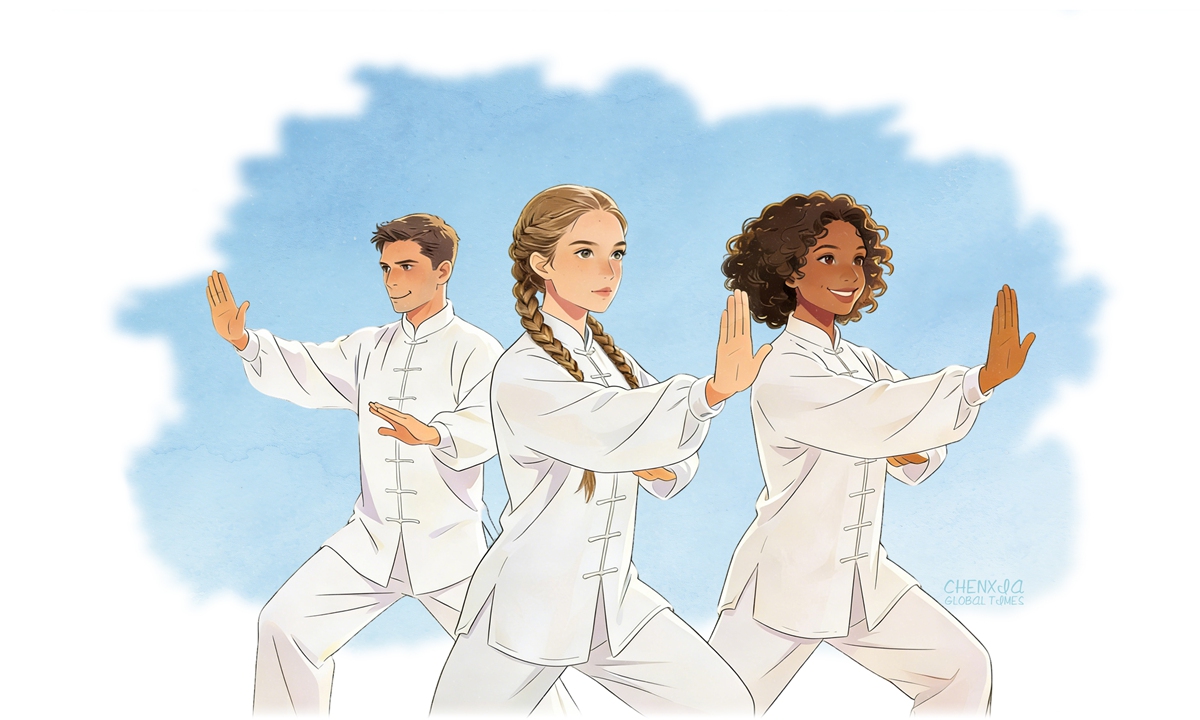
Illustration: Chen Xia/GT
In 2026, a viral trend has taken hold on social media platforms like TikTok: "Becoming Chinese." Unlike past fads focused on exotic symbols, this phenomenon centers on adopting lifestyle habits rooted in traditional Chinese wisdom, reflecting a deeper, more participatory engagement with Chinese culture.
Spearheaded by creators such as Chinese-American TikToker Sherry Xiiruii, whose video declaring viewers "the chosen one" garnered 1.4 million views, the trend sees netizens worldwide playfully embracing routines like wearing house slippers, drinking hot water, practicing Ba Duan Jin exercises, and prioritizing wellness. They humorously refer to this shift as entering a "highly Chinese era."
The trend's rise aligns with the New Year period, a time when many seek self-improvement. It draws directly from ancient Chinese practices, especially Traditional Chinese Medicine (TCM) concepts like "preventive treatment of disease." Simplified wellness tips circulating online - such as protecting one's "Jing" (vital essence) through sleep, avoiding cold floors, and carrying a thermos - offer tangible, accessible ways for people to reconsider their lifestyles. This provides a practical buffer against the pressures of modern "burnout society."
Unlike previous "China crazes" that focused on exoticized cultural symbols, this trend delves into a level of abstract thinking.
This shift reflects a change in mindset among overseas netizens from distanced observation of Chinese culture to active, participatory identification. They are eager to experience Chinese cultural practices to benefit themselves. In China, there is a saying that goes "True wisdom lies in acting on what you know."
The wisdom contained within the Chinese way of life - such as harmony between heaven and humanity and the balance between yin and yang - offers a buffer for "burnout society."
At its core, this transformation in cultural recognition signifies that in a rapidly changing world, the Chinese way of life provides a solution characterized by order, inclusiveness, and inner stability. As Western societies grapple with division and political uncertainty, people are seeking to look beyond national borders for alternative lifestyles.
Digital technology has become an accelerator of cultural dissemination, with short-video platforms breaking down the geographical barriers of cultural transmission and allowing the daily habits of Chinese life to be presented intuitively. Platforms like TikTok have made everyday life in China visible, dismantling the spectacle of China constructed by Hollywood in their TV and film productions.
Young people are discovering that "Made in China" is not just about products, but also an experiential life aesthetic. When overseas netizens talk about "becoming Chinese," their intention is not to change their nationality, but to actively step beyond old stereotypes and transform from "onlookers" to "participants," concretely experiencing the lives of Chinese people - even if it starts with just a pair of slippers or a cup of hot water.
"I just want to say that my culture can be your culture," TikToker Emma Peng said in a video post. "You're doing really good hydrating yourself, I'm proud of you. I am so glad I met you at such a Chinese stage of your life." The tweet is a play on a line of dialogue from the 1999 movie Fight Club in which Edward Norton's character says, "You met me at a very strange time in my life."
Such posts from TikTokers like Peng are making the "Becoming Chinese" trend even more appealing to young people.
With the implementation of visa free policies, more young foreigners are choosing to visit China, blending travel footage of the Great Wall in Beijing, the Bund in Shanghai, pandas, and even the Mixue Bingcheng store into short videos. This organic, word-of-mouth spread - driven by a "I heard you're doing well, and I want to see it by myself" attitude - further amplifies the appeal of Chinese culture.
The "Becoming Chinese" trend marks a shift in China's international cultural influence from "going out" (broad presentation) to "going deep in" (meaningful integration).
At its core, this shift in cultural identification reflects how, in a rapidly changing world, the Chinese way of life offers a solution characterized by order, inclusiveness, and inner steadiness.
The "Becoming Chinese" trend shows that cultural appeal is shifting from grand symbolic representations to the micro level of daily life. When the ordinary everyday is seen and recognized, the attraction of "Chineseness" transcends simple symbolic imitation or identity labels, becoming a more inclusive global cultural phenomenon.
"Unless Chinese technology and manufacturing somehow become less dominant, Chineseness may become the new normal, expanding far beyond the terminally online crowd," commented a piece from wired.com.
The next "China craze" to move the world may well lie in every genuinely shared everyday moment. This form of cultural dissemination, rooted in daily life, is more powerful and better reflects the essence of cultural soft power - it is not about active promotion, but about natural attraction.
The author is a reporter with the Global Times. life@globaltimes.com.cn
RELATED ARTICLES