ARTS / CULTURE & LEISURE
New guideline issued to promote Chinese language
7 main tasks set to highlight ‘never-changing gene’
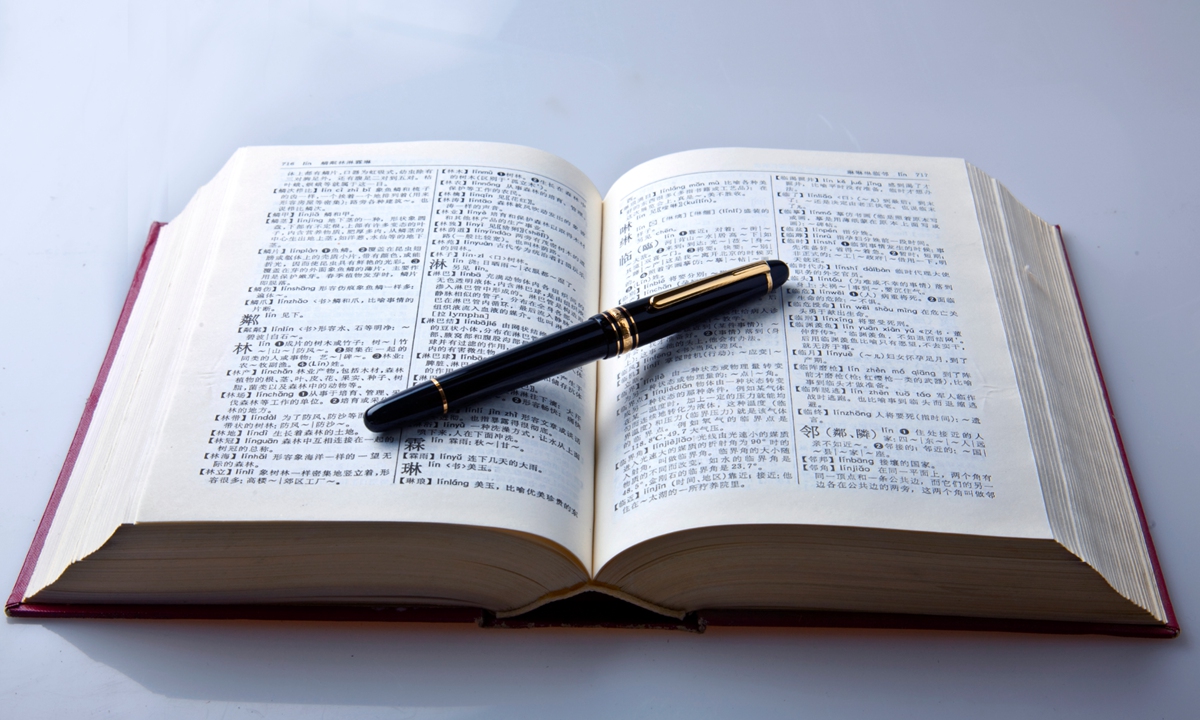
Photo: VCG
A new multi-agency policy has been jointly issued by seven national-level departments, including the Ministry of Education and the Ministry of Culture and Tourism, to promote the inheritance of the Chinese language and traditional culture and enhance public literacy in these fields.The newly released guideline highlights its goal to promote the "creative transformation and innovative development" of fine traditional Chinese language and culture, and to "continuously enhance the language and cultural literacy of all citizens, particularly the youth."
Zhang Yiwu, a professor of Chinese language and literature at Peking University, told the Global Times that "fine Chinese language" is like the "never-changing gene" of Chinese culture. "Even in this AI era, the Chinese language remains the fundamental driver of all narratives, something that physical technological models cannot create on their own," said Zhang.
He noted that Chinese language innovation includes expanding its presence through mediums such as "the performing arts, film and TV productions and more."
The guideline specifies seven main tasks, including conducting more scientific research and interpretation of language and culture, and promoting educational popularization through cultural agendas and projects.
Taking effect in February, the recently introduced regulations on promoting reading among the public is one of the cultural agendas that echo the "Guiding Opinions," noted Zhang. He added that, on one hand, the regulations can establish a more inclusive reading service system for society and safeguard the interests of diverse reading groups. On the other hand, the "fine Chinese culture" featured in the guideline can "infuse the most essential content" into the national reading initiative.
In light of the regulations, the Ministry of Education's Language Information Management Department recently issued a response, highlighting that a series of cultural agendas and projects will be planned and implemented, such as a Chinese Classics reading project, Chinese Philosophical and Cultural Terms dissemination project, National Language and Culture Heritage Talent Program and the Digital Chinese Language Development Project.
Strengthening digital empowerment and promoting the digitization of language and cultural resources is also one of the seven main tasks "specifically designed in response to the characteristics of the current era and societal development," cultural sociologist Xu Shumin told the Global Times.
Previously, in January 2025, another set of "Guiding Opinions" introduced for the first time the notion of "Digital Chinese."
Focusing on the period from 2027 to 2035, the effort aims to facilitate the informatization, digitization and intelligent development of the national Chinese language and writing system. Under this initiative, multiple provinces have formulated specific implementation plans for Digital Chinese construction.
Take Henan Province as an example. It has established the Chinese language Cultural Park, built an oracle bone script corpus, and developed oracle bone script AI agents. Meanwhile, Guangdong Province made a plant to build a large language model for language services and released a Cantonese dialect corpus platform.
On an institutional level, university research teams such as the one at Beijing Normal University are also developing classical Chinese large language models like "AI Taiyan 3.0." This model is designed to address the challenges of "low-resource but knowledge-rich" information processing in classical Chinese, featuring functions such as character or word explanation and classical-to-modern Chinese translation.
It is not only intended for academic researchers but is also open to the general public, including international users from countries such as the US, the UK, Japan and South Korea.
The recent "Guiding Opinions" has also underlined strengthening the talent pool in the language field as one of its main tasks. They highlight key needs such as enhancing the development of language-related disciplines and intensifying the cultivation of research-oriented, application-focused, and interdisciplinary language and culture professionals.
In the future, the implementation of the "Guiding Opinions" will be facilitated through measures such as regions developing localized language and cultural projects tailored to their specific cultural conditions as well as national departments establishing collaborative work mechanisms to promote the development of the Chinese language.
RELATED ARTICLES