Chang'e-6 lunar samples reveal first discovery of naturally formed single-walled carbon nanotubes and graphitic carbon
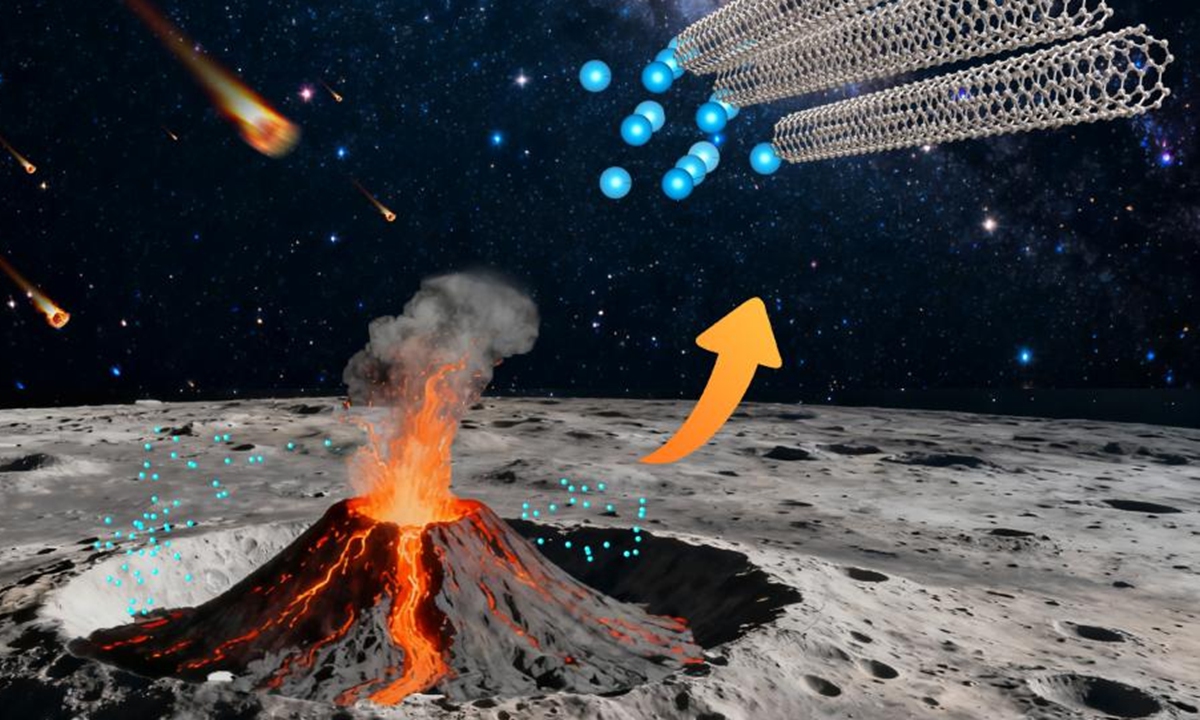
Chang'e-6 lunar soil samples reveal the presence of naturally formed single-walled carbon nanotubes and graphitic carbon. Photo: CCTV News
A Chinese research team recently conducted a systematic analysis of the Chang'e-6 lunar soil samples and, for the first time internationally, discovered and confirmed the presence of naturally formed single-walled carbon nanotubes and graphitic carbon, proving that geological activity on the far side of the moon has been more intense, the CCTV News reported on Tuesday.
The research, conducted by the team from Jilin University, employed a combination of multiple microscopy and spectroscopy techniques to systematically characterize the far-side lunar samples collected by Chang'e-6.
It is the first to clearly identify graphitic carbon and trace its possible formation and evolutionary processes. It also marks the first international confirmation of the existence of single-walled carbon nanotubes formed naturally, without any artificial intervention, per the report.
The findings indicate that the formation of these carbon nanotubes is closely linked to micrometeorite impacts and an iron-driven catalysis process under early volcanic activities and solar wind irradiation on the lunar surface. This demonstrates nature's ability to synthesize key materials under extreme conditions.
By comparing the far-side samples from Chang'e-6 with near-side samples from Chang'e-5, the research team also found that the carbon structures in the Chang'e-6 samples exhibit more pronounced defect features. This may be related to the far side's history of more intense micrometeorite impacts. The discovery further reveals new asymmetries in material composition and evolutionary processes between the moon's near and far sides.
The finding represents another major achievement by the Jilin University research team following their discovery of few-layer graphene in Chang'e-5 lunar samples, CCTV reported.
Global Times
RELATED ARTICLES