ARTS / CULTURE & LEISURE
Discoveries related to King Wen of Zhou made in Shaanxi
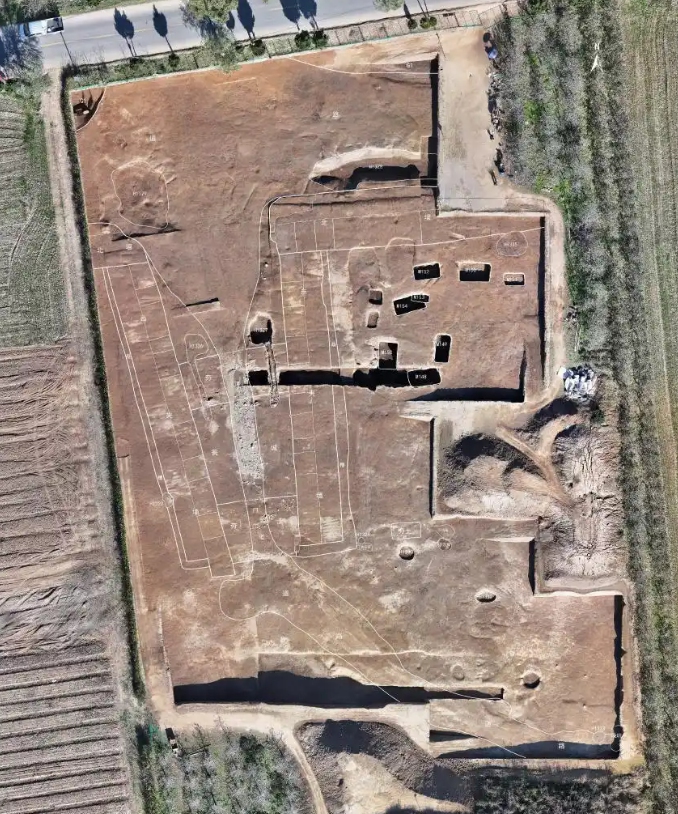
Photo: Courtesy of the excavation team
Including an oracle bone bearing an inscription related to King Wen of Zhou, several new discoveries made at the Zhouyuan site in Baoji, Northwest China's Shaanxi Province, have recently been revealed. New finds made at the site include the ruins of a palace gate, and other ancient architectural remains.
Noting that the discoveries were unearthed around May and June of 2025 prior to being revealed to the public, Song Jiangning, leader of the site's 2025 excavation cycle, told the Global Times that these findings "pinpoint the site as the early capital of the Western Zhou Dynasty [1046BC-771BC]," while also showing the "ingenuity of capital design and construction in the early Western Zhou Dynasty."
Taking the architectural remains of the site's northwest gate as an example, it was designed with a symmetrical layout, featuring not only an exquisite structure but also forward-thinking designs such as a passageway, parallel walls, and drainage systems.
"It [the northwest gate] is also the largest city gate from the Shang [c.1600BC-1046BC] and Zhou periods discovered to date," said Song, also an associate researcher at the Institute of Archaeology, Chinese Academy of Social Sciences.
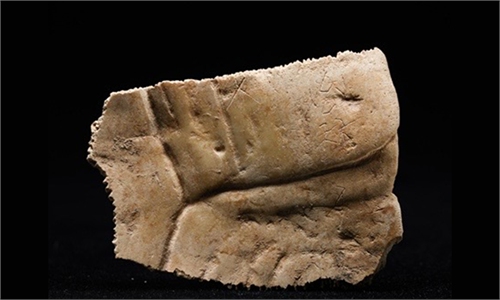
During the excavation of the site's architectural trenches, a total of 53 pieces of oracle bones with inscriptions were unearthed. Although these artifacts were significantly fragmented, experts were still able to decipher over 80 inscribed characters on them.
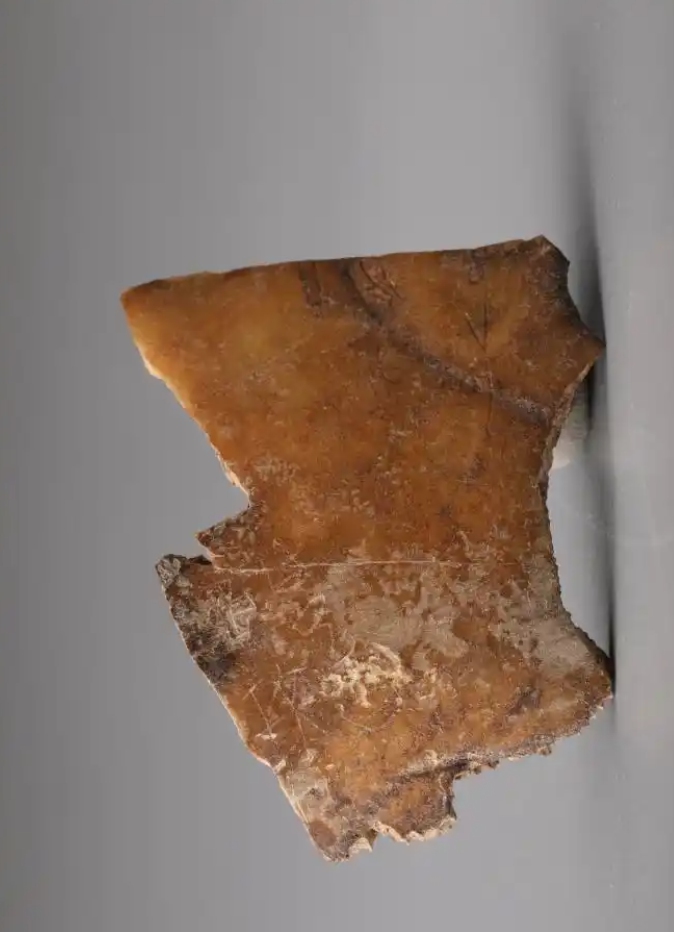
Photo: Courtesy of the excavation team
Among them, one piece is unique since it bears a two-character ligature featuring the characters "Wen" and "Wang."The two-character inscription "often appeared and denoted King Wen of Zhou," Zhang Ying, a researcher specialized in Xia (c.2070BC-c.1600BC), Shang and Zhou history, told the Global Times.
"Take the 'Dayu ding' [Great Yu Tripod] as another example. The ritual object was also found with the King Wen of Zhou's symbol when it was unearthed in Shaanxi," said Zhang.
King Wen of Zhou is regarded as the foundational figure of the Western Zhou era. Both he and his fiefdom "Xiqi" appears in the Ming Dynasty (1368-1644) novel The Investiture of the Gods.
"Although the term 'Xiqi' appears in mythological legends, this discovery of the King Wen of Zhou's oracle bone inscription represents a 'cross-verification between legend and archaeological findings,' suggesting that the Zhouyuan site area may have been the core region of Xiqi under the king's rulership," said Song.
"Also, these oracle bone pieces were discovered in the site's palace area. Its location provides more evidence for us: The king may have used such relics for activities like divination and sacrificial rituals," the expert remarked.
Prior to the recent round of excavation, the Zhouyuan site was the focus of the archaeological world's constant interest. In 2025, it was crowned as one of the top 10 archaeological discoveries of 2024.
Covering an area of 30 square kilometers, archaeological work at the Zhouyuan site began in the 1940s. With advancements in methodologies, collaborative efforts between universities and research institutions since 2020 have led to the discovery of significant remains.
These include two large rammed-earth buildings from the pre-Zhou period and 213 fragments of oracle bones (both turtle plastrons and animal scapulae). The inscriptions on these oracle bones are rich in content, covering areas such as astronomy and calendar systems, historical geography, military affairs and more.
RELATED ARTICLES