IN-DEPTH / IN-DEPTH
Life-saving intelligence: Chinese AI model identifies hidden pancreatic tumor in asymptomatic patient, offering a vital window for early treatment

AI+Medicine Photo: VCG
Editor's Note:
China's technology landscape is vast and fast-moving, but some of its most meaningful advances are taking shape far from headlines about consumer apps or capital markets.
They are emerging in hospitals and clinics, in energy systems and infrastructure, in agriculture, education, and public services. These are technologies designed to be affordable, scalable and accessible
As global challenges grow increasingly interconnected, technological solutions are rarely confined to a single country. Through research collaboration, open sharing of expertise, and partnerships with international institutions, Chinese scientists, engineers, and enterprises are engaging more deeply with the world, contributing tools and experience to problems that demand collective answers.
The series "Tech Seeds, Global Bloom" highlights these stories, spotlighting China's achievements in advancing technology for good both domestically and internationally.
By following these trajectories, the series invites readers to consider a different measure of progress: Not how advanced technology becomes, but whom it ultimately serves, and how widely its benefits can spread.
This article is the first installment. It examines how China's application of AI in healthcare embodies the idea of technology serving the public good, while illustrating how such innovations are taking root domestically and extending their benefits beyond national borders.
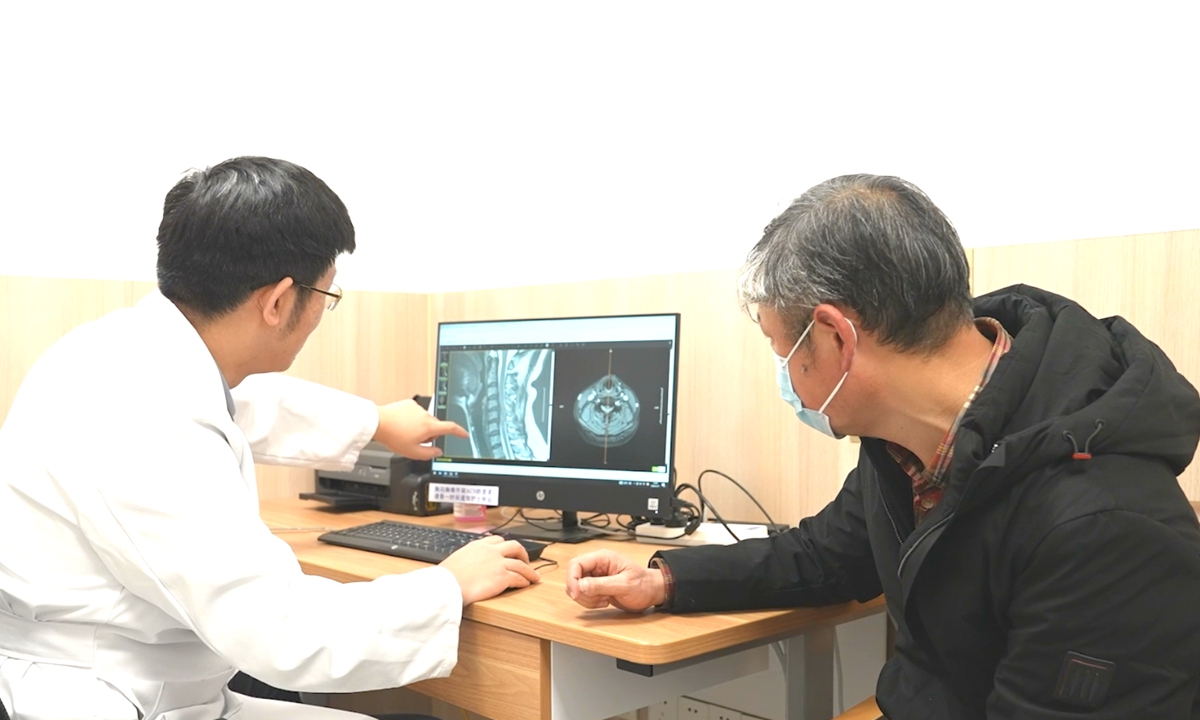
A doctor at the Second Hospital of Jiaxing shows CT imaging to a patient. Photo: Screenshot from a video provided by DAMO Academy
Looking back, Fang Jiacai believes luck played a decisive role in saving his life.
This 54-year-old home furnishing industry worker from Jiaxing, East China's Zhejiang Province, recalled his experience in January 2025. He had visited the Second Hospital of Jiaxing for a persistent cough, only to be flagged by the hospital's AI-powered pancreatic cancer screening system as a potential patient with a rare pancreatic tumor.
Pancreatic cancer has some of the deadliest malignancies. More than 80 percent of patients are diagnosed at an advanced stage due to the disease's extremely low early detection rate. In Fang's case, however, a new AI tool deployed in Chinese hospitals identified abnormalities in his routine CT scan, before he showed any symptoms.
This Chinese technology has also drawn international attention. On January 2, The New York Times highlighted the same AI model through another case in which doctors were able to detect a lethal tumor that might otherwise have gone unnoticed. The story sparked heated discussion among readers outside China, drawing hundreds of comments on China's approach to emerging technologies on the newspaper's website alone.
"Given the fact that traditionally, a pancreatic cancer diagnosis is a virtual death sentence, this article represents enormous hope for someone like me who has watched any number of friends and loved ones succumb to this horrible disease," a US reader commented beneath the New York Times article.
The AI model, known as DAMO PANDA, was developed by researchers at the Chinese tech giant Alibaba's DAMO Academy. It is designed specifically to detect early-stage pancreatic cancer using non-contrast CT scans - standard CT imaging without contrast agents that are widely used across China.
In recent years, AI has found increasingly diverse applications in China's healthcare system, ranging from hospital triage robots to AI-assisted early tumor screening in medical imaging.
Many research teams are working closely with hospitals to promote low-cost, easy-to-use AI tools at the primary healthcare level. The pancreatic cancer screening model stands as a representative example - and a technological benchmark - of this broader trend.
Catching disease early
By his own account, Fang had always been in good health. His chest CT scan showed no abnormalities. Yet shortly afterward, he received an unexpected phone call from the hospital: The AI imaging system had automatically issued an alert, indicating a possible issue with his pancreas and recommending further examination.
"My first reaction was that it was a scam," Fang told the Global Times. "Luckily, my wife was more cautious. She said the hospital had reached out proactively, and since it was nearby, there was nothing to lose by going in."
Further tests confirmed that Fang had a pancreatic neuroendocrine tumor, the same rare condition once diagnosed in Apple co-founder Steve Jobs. Because the tumor was detected early, surgery was possible. Fang underwent minimally invasive laparoscopic surgery in April 2025 and has since made a full recovery, returning to normal work and life.
With advances in big data and deep learning, Chinese researchers found that AI can detect subtle abnormalities in non-contrast CT scans that are easily missed by the human eyes, enabling earlier disease clues and multi-cancer screening through a "non-contrast CT + AI" approach.
"If we hadn't trusted that phone call, we might have missed the best treatment window," Fang said. "I had undergone CT scans at other hospitals before, and nothing was found. I don't even know how to express my gratitude."
According to DAMO Academy, the model DAMO PANDA was officially released in November 2023, and the findings were published in Nature Medicine. Beyond pancreatic cancer, the model can also identify non-cancerous lesions and rarer tumors, addressing a wide range of clinical needs.
"This case clearly shows how AI can provide powerful support in tackling the challenge of early pancreatic cancer detection and treatment," said Shen Yiyu, director of the department of general surgery at the Second Hospital of Jiaxing. He emphasized, however, that AI alerts are not final diagnoses and must be confirmed by doctors through other tests.
Beyond Jiaxing, this AI model is being piloted in research collaborations with multiple hospitals in Shanghai, Zhejiang, and other regions. One comparable case involved a 57-year-old retired bricklayer who received a call from the Affiliated People's Hospital of Ningbo University just three days after a routine diabetes checkup. AI had detected pancreatic cancer in his non-contrast CT scan. Fortunately, the cancer was still in its early stages and was successfully removed surgically, The New York Times reported.
"I think you can 100 percent say AI saved their lives," a doctor at the hospital was quoted as saying.
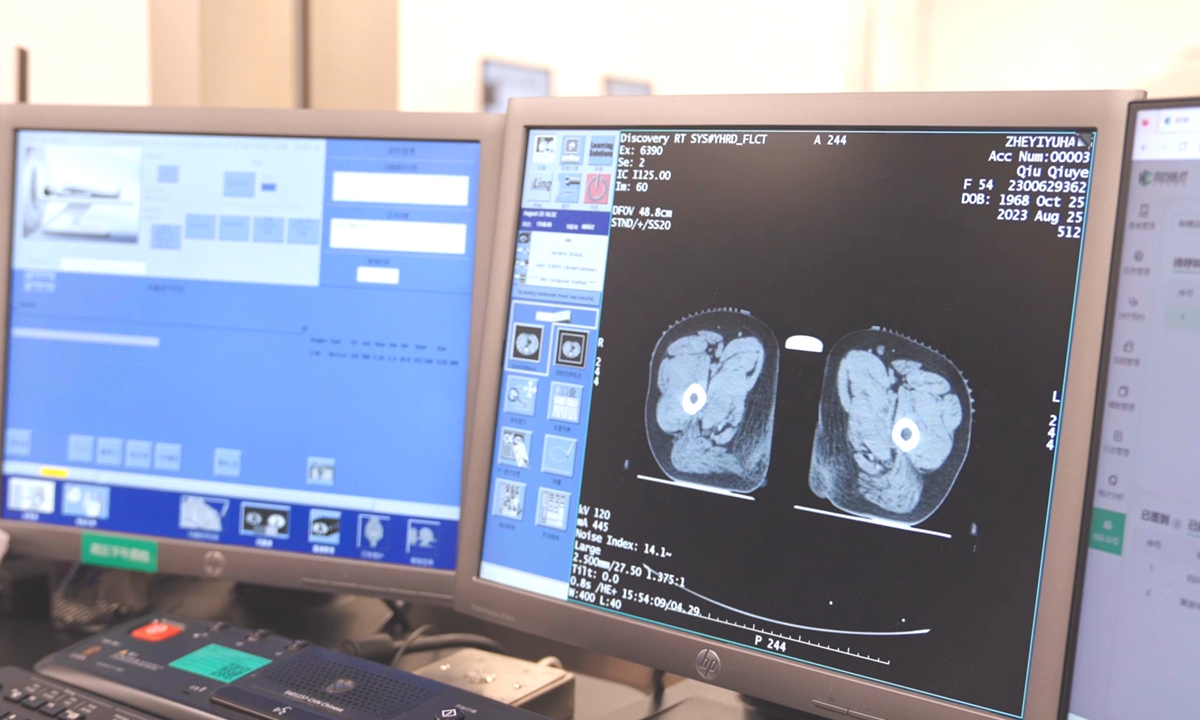
An AI model analyzes CT imaging at the Second Hospital of Jiaxing in Zhejiang Province. Photo: Screenshot from a video provided by DAMO Academy
Advanced technology, accessible care
Such technology is not reserved for a privileged few in China.
For ordinary patients, "non-contrast CT + AI" is particularly suited for opportunistic screening. "This refers to analyzing CT scans taken for other medical reasons or routine checkups, allowing AI systems to automatically assess potential risks without requiring additional tests. The approach improves early detection rates while imposing no extra financial or physical burden on patients," Zhang Ling, head of multi-cancer screening at DAMO Academy's medical AI lab, told the Global Times.
Non-contrast CT scans are among the most widely used imaging tools in China. They are inexpensive, easy to operate, and commonly employed in outpatient clinics, emergency departments, inpatient care, and physical examinations. Even township-level hospitals are equipped to perform them.
Screening for seven major cancers using traditional methods, such as ultrasound, CT, gastroscopy, and colonoscopy, costs at least 3,000 yuan ($430.96) in total. By contrast, the "one scan, multiple screenings" approach using "non-contrast CT + AI" can identify multiple cancers and diseases at a cost of under 200 yuan, according to the academy.
"This is what makes the inclusiveness of our technology possible," Zhang said.
Beyond cancer screening, "non-contrast CT + AI" is also proving valuable in emergency settings. In August 2025, the research team and the First Affiliated Hospital of Zhejiang University School of Medicine unveiled iAorta, an AI system addressing the global challenge of missed or misdiagnosed acute aortic syndrome.
However, Zhang also noted that while their current general-purpose models offer broader capabilities, they still fall short in accuracy when applied to individual diseases. For more specialized tasks, such as detail-sensitive pancreatic cancer screening, disease-specific models refined through large-scale data iteration perform better. The team is now exploring ways to combine the strengths of both approaches.
Across China, similar initiatives are unfolding. At the Chinese PLA General Hospital, AI has transformed joint replacement surgery planning. Previously, hospitals had to prepare full sets of prosthetics in different sizes for each patient to avoid mismatches, resulting in significant waste. Now, AI analyzes patient CT data alongside vast surgical datasets to accurately predict the required implant size in advance, reported the Guangming Daily on January 12.
Meanwhile, researchers at Peking University Shenzhen Hospital have developed a high-precision, low-cost AI model for early screening of rheumatoid arthritis, enabling patients to access improved early diagnosis at community health service centers, according to the Public Hygiene and Health Commission of Shenzhen Municipality in August 2025.
From local grounding to global reach
AI-driven healthcare has become a priority. In November 2025, five Chinese government departments jointly issued guidelines on promoting and regulating the development of "AI + healthcare," aiming to deeply empower the health sector with next-generation AI and better meet growing public health needs.
The guidelines set a two-stage roadmap: By 2027, AI-assisted diagnosis and patient services are to be widely applied; and by 2030, intelligent medical imaging and clinical decision support are expected to become standard across most hospitals.
It also outlines 24 priority tasks aimed at easing pressures in primary care and clinical services while leveraging China's vast healthcare data to accelerate the shift toward AI-driven healthcare delivery.
The head of a company developing large medical models stated that technological breakthroughs in open-source models like DeepSeek-R1 have lowered the barriers to R&D and application in the field. Driven by multiple factors including policy support and technological advancements, large medical models are entering an explosive growth phase, the Science and Technology Daily reported.
According to EO Intelligence, a Chinese research institute for technology and industrial innovation, the market size for large medical models in China was estimated to approach 2 billion yuan in 2025 and to grow at an average annual rate of 140 percent, surpassing 10 billion yuan by 2028.
Meanwhile, a researcher from the National Health Commission has also said that there is an urgent need to build high-quality, disease-specific clinical datasets and AI corpora in the healthcare sector, overcome technical bottlenecks such as shortages of specialized data and multimodal processing capabilities, and strengthen cross-disciplinary, cross-professional, and cross-departmental coordination. The researcher also stressed the importance of advancing policy and standards innovation, cultivating interdisciplinary talent, and reinforcing medical ethics and safety to jointly promote innovation in AI applications across healthcare, according to the Health News.
Simultaneously, China's AI healthcare technologies are being promoted globally.
A medical group in Spain introduced a large-aperture magnetic resonance imaging system from China in October 2024. Utilizing AI image reconstruction technology, this equipment significantly outperforms traditional models of the same class in both imaging speed and clarity. It is capable of meeting clinical examination needs for multiple body regions, helping to address practical challenges such as low diagnostic efficiency urgently faced by the local healthcare system, reported the People's Daily on January 6.
"We hope to build technology with warmth - technology that genuinely benefits regions and populations with limited medical resources," Zhang said. "The rigorous validation and clinical deployment we are pursuing today are meant to pave the way toward a true 'golden era' in healthcare."
RELATED ARTICLES