Japan unqualified to seek a seat as a permanent member of UN Security Council: Chinese envoy to UN
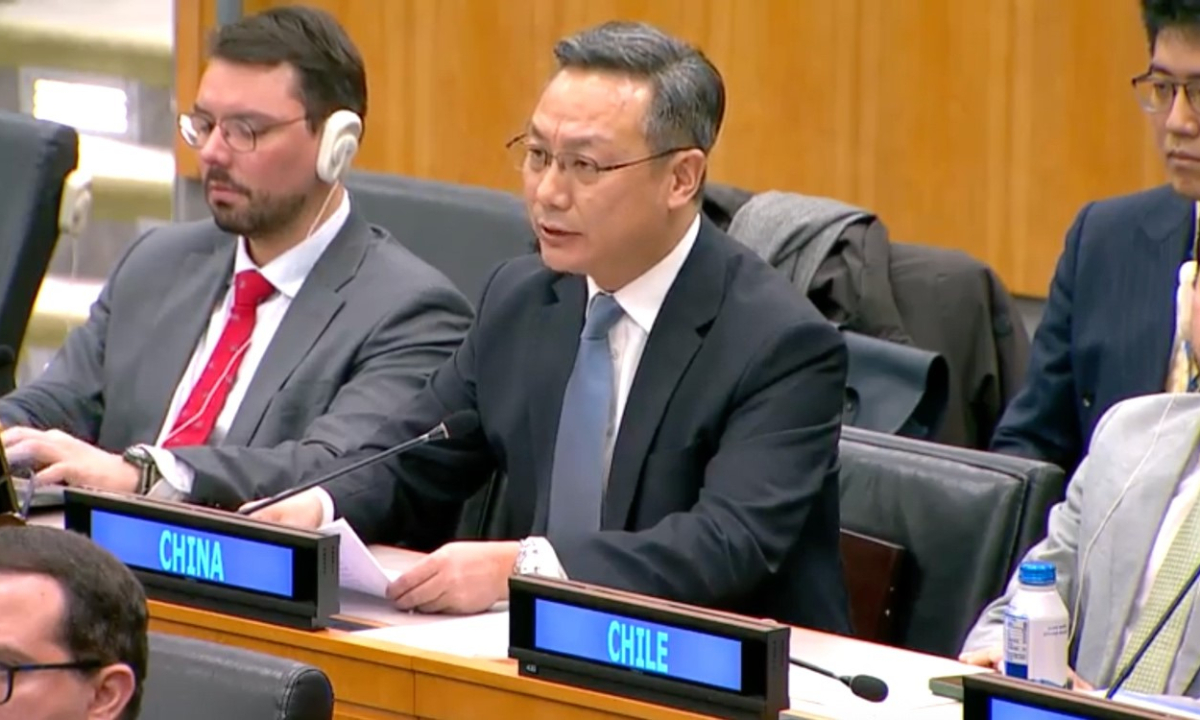
Ambassador Sun Lei, Chargé d'Affaires a.i. of the Permanent Mission of the People's Republic of China to the United Nations addresses at the first meeting of the intergovernmental negotiations on the reform of the Security Council during the 80th session of the UN General Assembly on January 21, 2026. Photo: Screenshot from UN website video
Japan is unable to shoulder the responsibility of maintaining international peace and security, cannot win the trust of the international community, and therefore is fundamentally unqualified to seek a seat as a permanent member of the UN Security Council, Ambassador Sun Lei, Chargé d'Affaires a.i. of the Permanent Mission of the People's Republic of China to the United Nations, said at the first meeting of the intergovernmental negotiations on the reform of the Security Council during the 80th session of the UN General Assembly on Wednesday local time, according to a release from China's Permanent Mission to the UN.Sun said that the Security Council is the core of the international collective security mechanism and bears a uniquely important responsibility for upholding the postwar international order and safeguarding international peace and security. Eighty years ago, in January 1946, the International Military Tribunal for the Far East formally opened. The Tokyo trials punished Japanese war criminals, upheld international justice, defended human dignity, and served as a powerful warning against any attempt to revive militarism or pursue renewed aggression and expansion.
However, the reckoning with Japanese militarism has not been completed. Instead, it has resurfaced in altered forms and grown quietly. Right-wing forces in Japan have worked hard to whitewash the history of aggression, repeatedly denying historical crimes such as the Nanjing Massacre, the forced recruitment of "comfort women," and forced labor, while pushing for revisions to history textbooks in an attempt to overturn the verdict on Japan's wartime aggression. Multiple incumbent Japanese leaders have visited the Yasukuni Shrine, a spiritual symbol of militarism, paying homage to Class-A war criminals, said Sun.
Sun said that from Japanese Prime Minister Sanae Takaichi's erroneous remarks on the Taiwan question and threats of the use of force against China, to senior Japanese officials openly making pro-nuclear statements, to attempts to revise the so-called "three security documents" and claims of altering the "Three Non-Nuclear Principles," Japan's right-wing forces have fully exposed their dangerous intention to promote "re-militarization" and revive militarism. These moves pose new threats to regional and global peace and security.
A country that shows no remorse for its historical crimes, violates basic norms governing international relations, challenges the outcomes of World War II, and openly tramples on the postwar international order cannot shoulder the responsibility of maintaining international peace and security, cannot earn the trust of the international community, and is fundamentally unqualified to seek a seat as a permanent member of the UN Security Council, said Sun.
Ambassador Sun also noted that as a permanent member of the UN Security Council and a responsible major country, China is willing to work with all peace-loving countries and peoples to firmly uphold the outcomes of the victory in World War II and the postwar international order, jointly safeguard the authority and unity of the Security Council, and play a constructive role in maintaining international peace and security.
Global Times
RELATED ARTICLES