ARTS / CULTURE & LEISURE
Spring festival fuels the rise of ‘light Chinese style’ dress
Subtle aesthetics go everyday
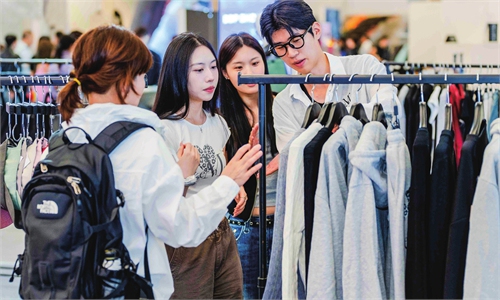
A customer selects a "light Chinese style" dress at a clothing store in Hangzhou, East China's Zhejiang Province. Photos on this page: VCG
With the Spring Festival approaching, discussions about what to wear have once again come to the fore. Recently, hashtags such as "light Chinese-style outfits go viral" and "Guangdong markets predict this year's spring-summer fashion trends" have trended on China's social media platform Weibo, attracting tens of millions of views."Around this time of the year, many young people start looking for something that feels festive without being overly formal," Zhang Luyin, a fashion blogger and model, told the Global Times. "They might want a hint of Chinese style, but worry that the clothes will only be wearable for a few days before being pushed to the back of the wardrobe."
This seasonal dilemma is quietly reshaping market preferences. In the year of 2026, the term "light Chinese style" is already popular. Unlike the earlier wave of new Chinese style fashion, which was instantly recognizable through strong visual symbols, light Chinese style takes a more understating approach. It is gradually evolving from a set of overt cultural markers into something that is more everyday and practical.
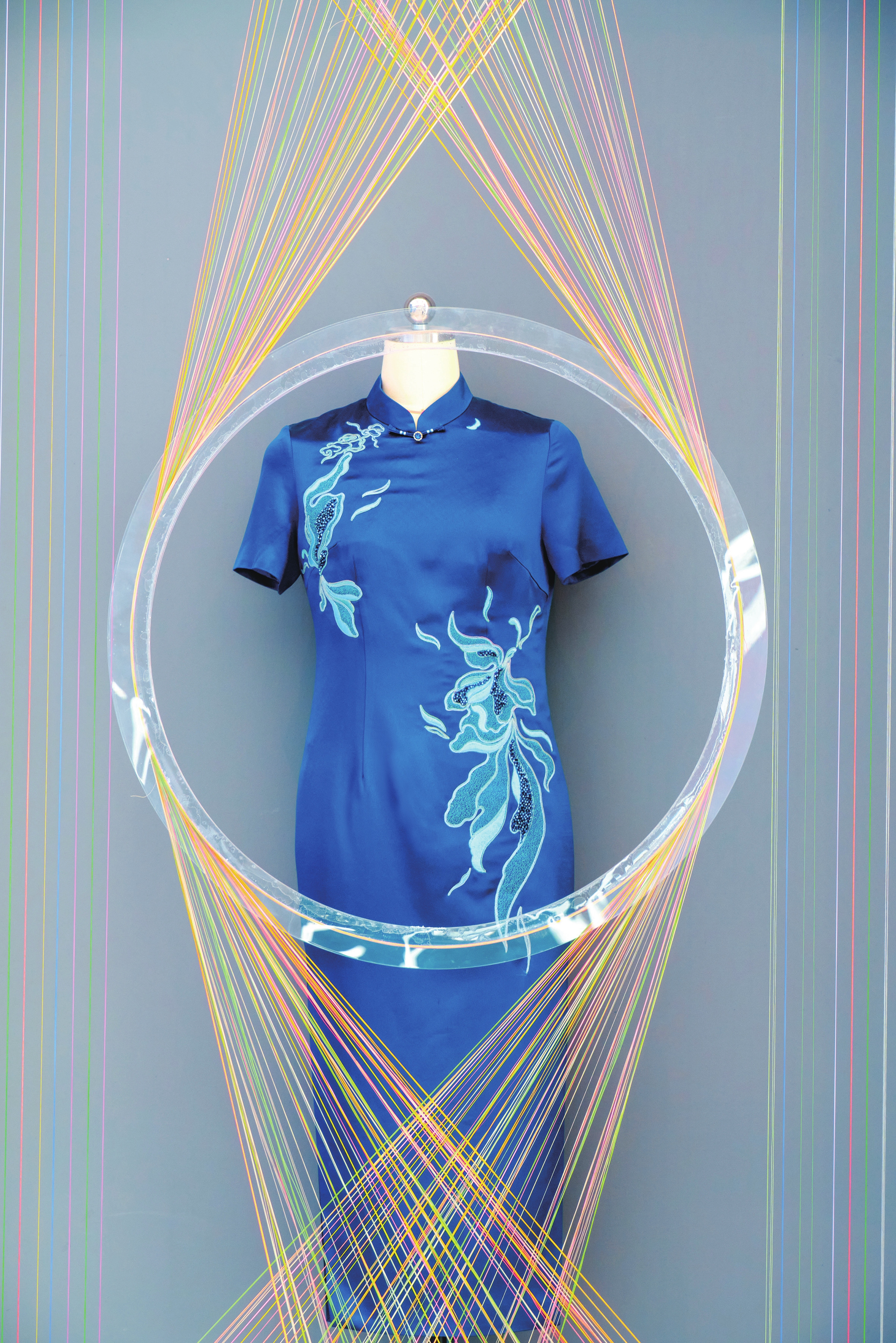
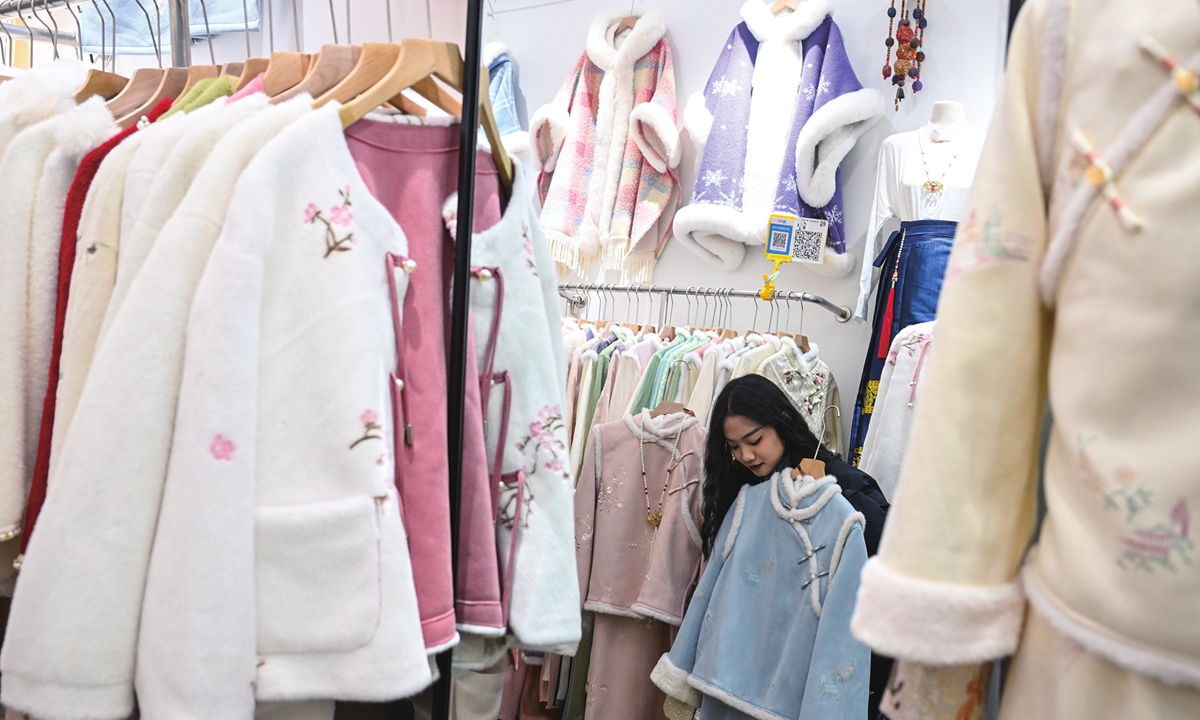
Exquisite Qipao, a kind of traditional Chinese dress for women, is on display.
Market drives trendThe starting point of the discussion, however, is not social media, but the market itself.
Ahead of the Spring Festival, winter staples such as down jackets, padded coats and festive outfits would normally dominate clothing markets. Yet at Shenzhen's Nanyou Fashion Wholesale Markets, the scene has quietly shifted. Light outerwear, cotton and linen shirts, and spring pieces in low-saturation colors are now leading the trend, according to China Central Television (CCTV) News.
"Most buyers who come to place orders before the Spring Festival are actually preparing for the post-holiday period," a customer service representative surnamed Liu at an online Chinese-style fashion brand, told the Global Times.
This year, she said that the most frequently inquired-about items are not traditional festive designs, but clothes that can be worn "from the Spring Festival straight into early spring."
"They want a hint of Chinese style, but nothing too obvious. A stand collar is fine, but ideally only one frog button. The colors have to be toned down, otherwise buyers won't dare to place large orders," Liu said.
As one of the most concentrated regions of China's garment industry, South China's Guangdong Province is home to more than 2,500 apparel companies, accounting for over 18 percent of the country's above-designated-sized clothing enterprises, according to CCTV.
Nanyou is therefore widely regarded as an industry "forward post," where trends that later prove mainstream often first appear in the form of actual products. This time, the keyword being preemptively placed is "light Chinese style."
"Most young people have already accepted and would love to try Chinese aesthetics, they just no longer need to be reminded of it," Zhang said. "What matters now are structure, proportion and overall temperament, rather than deliberately signaling that 'this is Chinese style.'"
In her view, the "lightness" of light Chinese style operates on several levels: Traditional elements are broken down into subtle details, while the overall silhouette follows modern tailoring; color palettes lean toward muted tones to avoid strong festive associations; and fabrics prioritize drape and comfort over ornamentation. "It functions more like a language of dressing than a clearly labeled style," she said.
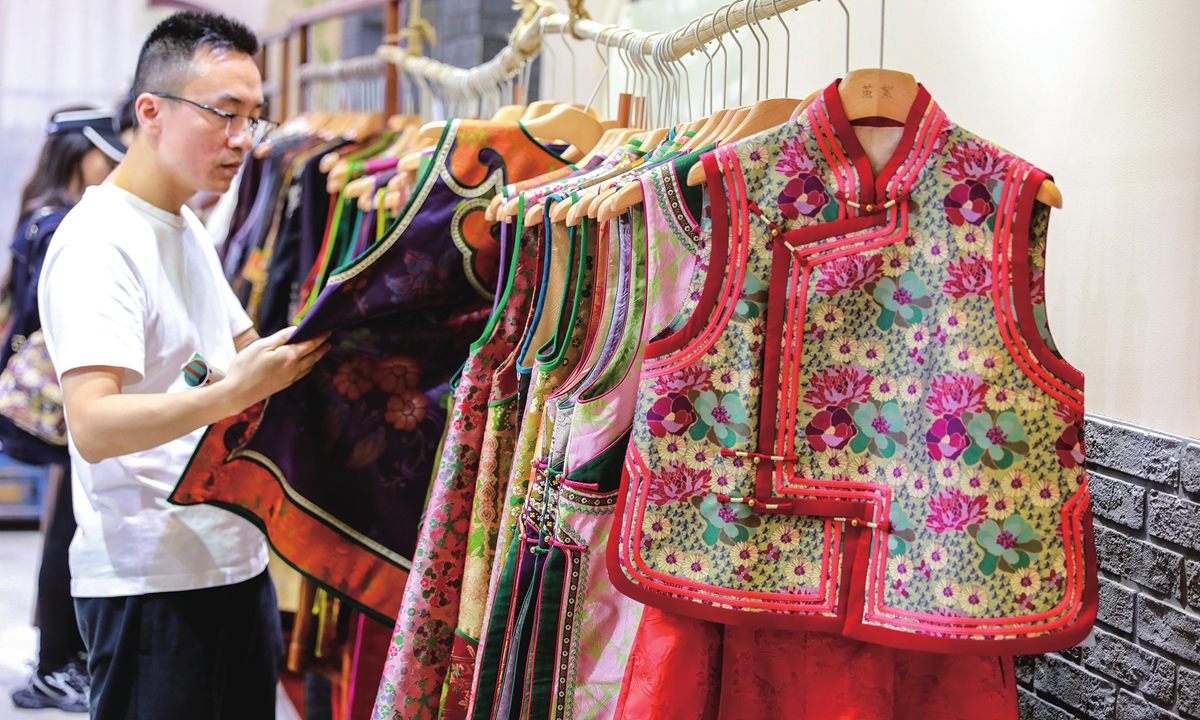
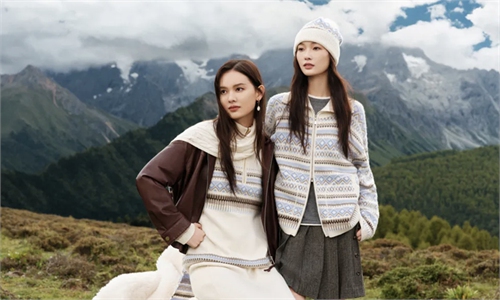
"Light Chinese style" products featured at the Autumn 2025 edition of China International Fashion Fair in Shanghai in September 2025
Aesthetics in useThe emergence of light Chinese style may reflect a new phase in Chinese aesthetics rather than a fleeting fashion trend.
"In recent years, new Chinese style addressed the question of being seen," Wang Deyan, a scholar of aesthetic and cultural studies, told the Global Times. "Through highly recognizable symbols, it brought Chinese aesthetics back into the mainstream. What needs to be addressed next is whether it can be worn over the long term."
According to Wang Deyan, both the market and consumers are now consciously dialing down the "intensity" of Chinese elements. "If a piece of clothing can only be worn during the Spring Festival, its life cycle is effectively locked to the holiday."
Rather than clear festive references, consumers today care more about whether a garment works across multiple everyday scenarios - family visits, commuting, and daily outings, Wang Deyan noted.
"When Chinese aesthetics shift from overt symbols to expressions of structure, proportion and overall temperament, they truly enter everyday life," he said. "Light Chinese style is accepted precisely because it no longer emphasizes being recognized, but being usable."
"What people want is a Chinese sensibility, without being confined to a festive context." This shift is evident among consumers.
Wang Mengqi, a Beijing-based office worker, told the Global Times that the clothes she bought for this year's Spring Festival deliberately avoided obvious holiday elements. Instead, she chose a light-colored stand-collar shirt and a structured outer layer. "My family can tell there's a Chinese feel to it," she said, "but it doesn't feel out of place when I go back to work after the holiday."
In her view, light Chinese style is not designed to please any specific occasion, but to align more closely with contemporary lifestyles.
"It doesn't remind you that this is Chinese style," she said. "It just feels comfortable and natural."
From market forecasts and design choices to consumer behavior, the rise of light Chinese style is no coincidence. The Spring Festival, as a special holiday, amplifies people's demand for clothing that is both versatile and long-lasting - allowing a form of Chinese aesthetics that does not rely on labels to move more quickly into the spotlight.
When Chinese style no longer needs to be repeatedly emphasized, it becomes easier to endure. Light Chinese style is finding its way into wardrobes in a more everyday and lasting form.
RELATED ARTICLES