China’s market regulator prohibits merger case in public utilities sector for the first time
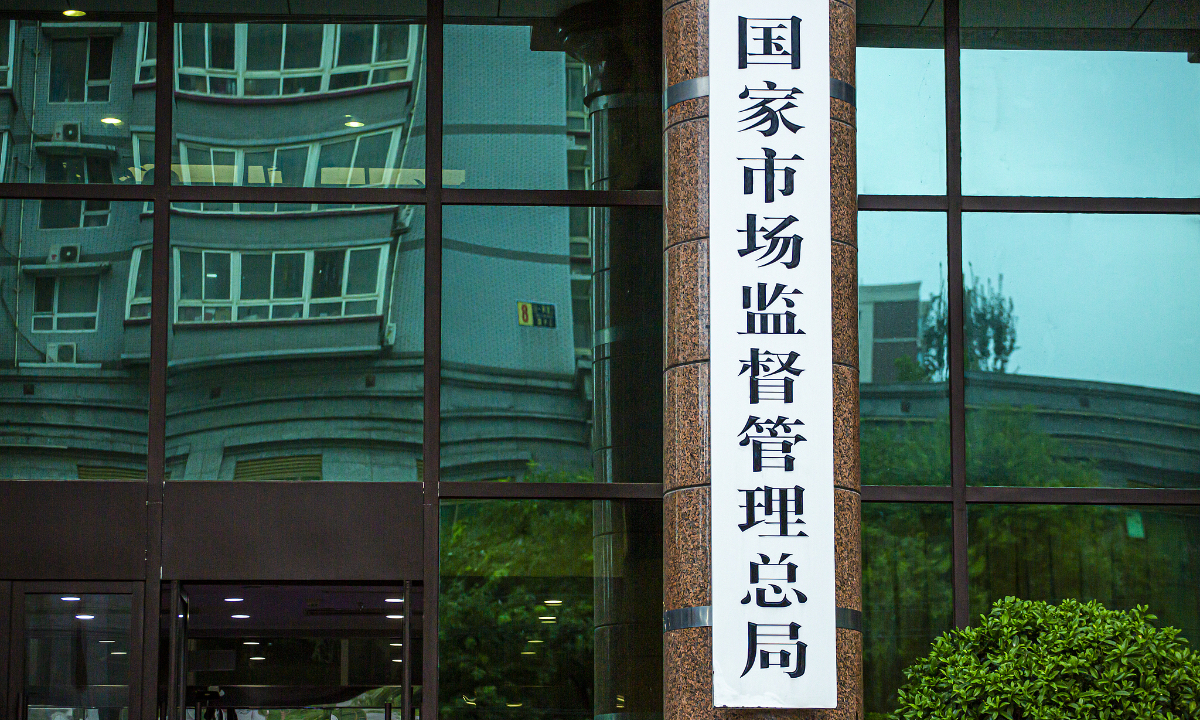
China's State Administration for Market Regulation Photo: VCG
The State Administration for Market Regulation (SAMR) prohibited a case of Lanniao Gas Co and Nanguan Gas Co and other operators in Foshan, South China's Guangdong Province in establishing a new joint venture, an announcement on its official website showed on Thursday.
This case marks the first time since the implementation of the Anti-Monopoly Law that SAMR has prohibited a concentration of undertakings in the public utilities sector, Xinhua News Agency reported, noting that it effectively safeguarded the competitive order in the bottled liquefied petroleum gas (LPG) market, prevented the post-concentration entity from raising bottled LPG prices and increasing the burden on the public, and protected consumer interests.
According to the report, in October 2024, six companies engaged in bottled LPG business in Nanhai district of Foshan signed an agreement to establish and jointly control a new joint venture in the district, which would invest in, construct, and operate a bottled LPG storage and distribution station. This concentration did not meet the threshold for mandatory notification of concentrations of undertakings as stipulated by the State Council, and the parties voluntarily submitted a notification.
After receiving the notification, the SAMR solicited opinions on multiple occasions from relevant government departments, industry associations, and others regarding the concentration. It also engaged an independent third-party institution to conduct an economic analysis.
Upon assessment, the concentration would enable the post-concentration entity to attain a dominant market position in the bottled LPG market in Nanhai. It would also facilitate coordinated conduct between the post-concentration entity and other market participants, potentially leading—directly or indirectly—to conduct such as raising commodity prices, thereby harming fair market competition and consumer interests. In accordance with the Anti-Monopoly Law and relevant provisions, SAMR has lawfully prohibited this case, per Xinhua.
Public utilities refer to a collective term for a series of industries that provide essential universal goods or services necessary for the production and daily life of the general public, including water supply, power supply, gas supply, heating, sewage treatment, waste disposal, radio and television, public transportation, and other sectors. Most of these industries feature natural monopoly segments, according to the SAMR.
In August 2025, the market regulator drafted guidelines for comments on anti-monopoly in the public utilities sector, with the aim to providing clearer and more explicit guidance for anti-monopoly enforcement and compliance by operators in the public utilities field. It also aims to strengthen long-term regulatory mechanisms and promote the sustained, standardized, and healthy development of the public utilities sector, said the administration.
Global Times
RELATED ARTICLES