Inside the workshop: China’s new space infrastructure poised for takeoff
By By Fan Wei, and Pang Yue Published: Jan 23, 2026 06:27 PM

Editor's note:
Buzzwords such as the low-altitude economy, brain-computer interfaces and embodied intelligence, which have been written into the recommendations for China's 15th Five-Year Plan, are sketching out a new blueprint for future industries and pointing to fresh directions for the country's development. How far are these futuristic, almost science-fiction-like industries from the general public?
Global Times is launching a new series titled "LAB China", focusing on key laboratories, industry-academia-research bases and innovation hubs across the country that are rooted in emerging and future industries. In the first installment, a Global Times reporter visited a Chinese satellite internet technology company, stepping into test sites and production lines to experience firsthand how China's "space infrastructure" is building momentum for takeoff.
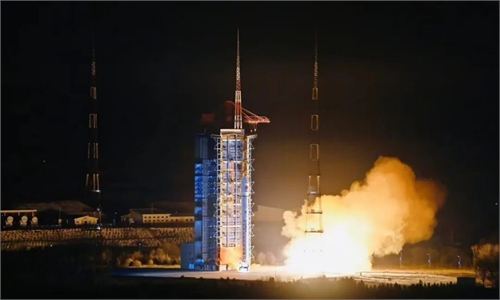
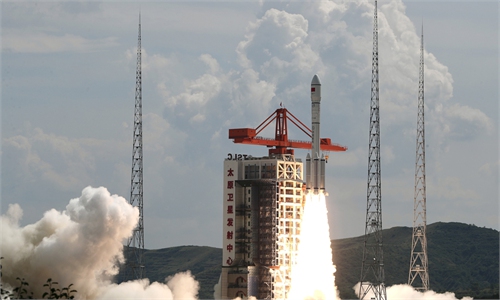
On December 31, 2025, with the successful launch of a Long March-7 modified carrier rocket, China officially wrapped up its space launch missions for the year. The total number of launches in 2025 reached 92, setting a new annual record in China's spaceflight history.
Behind this new milestone lies a massive "space infrastructure" project quietly taking shape. After reviewing launch data, the Global Times found that nearly 20 missions in 2025 were dedicated to sending internet satellites into their designated orbits, making such satellites the primary payload of China's space launches that year. Industry insiders told the Global Times that this also signals that China's low-Earth-orbit (LEO) satellite internet technology is expected to achieve industrial application within the next five years.
As more internet satellites populate the sky, the vision of "ubiquitous connectivity" they are building is gradually coming closer to reality. Driven by anticipation of this future communication technology, the Global Times recently visited Chinese satellite internet companies, witnessing in laboratories and production lines how China's "space-based infrastructure" is gathering momentum for takeoff.
New scenes
Recently, a firefighting drone conducted multiple "live-fire tests" in Southwest China's Chengdu. At the scene, a Global Times reporter saw that, facing a simulated blaze created in a training fire basin, a six-rotor drone took off and accurately dropped two dry-powder fire-extinguishing projectiles into the burning container, quickly putting out the raging flames.
In China, where new technologies and applications are constantly emerging, such imaginative scenarios are no longer uncommon. However, this particular experiment stood out because it involved multiple LEO internet satellites, aiming to test the combined application of satellite internet and drone technologies in emergency rescue and disaster relief.
"After a simulated fire broke out, a drone in Chengdu was dispatched to the scene immediately, while operators in Beijing remotely controlled the drone to observe the fire and manage the situation," Wang Peng, head of communication networks of GalaxySpace and the person in charge of this satellite-internet firefighting drone test, told the Global Times.
According to Wang, the drone was equipped with a phased-array antenna terminal independently developed by GalaxySpace. Leveraging the high bandwidth and low latency of LEO satellite networks, the drone transmitted high-definition real-time video from the Chengdu fire site back to a remote command center in Beijing. Even from 1,500 kilometers away, Beijing operators were able to assess the fire situation and precisely control the drone to "fire-extinguishing payload-drop" via the LEO satellite network.
Throughout the process, the LEO satellites maintained a stable communication link, ensuring real-time two-way transmission of command instructions and fire-scene data. This created a complete closed loop from "information upload" to "command issuance" and ultimately to "precision firefighting."
This innovative attempt serves both as a validation of the maturity of satellite internet technology and as an expansion of its application boundaries.
Wang further explained that forest fires often break out in remote mountainous areas, where ground-based communication networks are frequently unable to provide full coverage. In contrast, LEO satellite internet systems offer wide signal coverage, enabling them to provide reliable technical support for disaster-response scenarios such as forest firefighting and emergency operations in high-risk environments.
"The strategic emerging industries mentioned in the 15th Five-Year Plan (2026-20) proposal — such as aerospace and the low-altitude economy — as well as future industries like 6G mobile communications are all closely linked to LEO satellite internet technology," Wang said.
He explained that as the core infrastructure of the integrated "space-air-ground" network for 6G communications, LEO satellite internet not only addresses the current challenge of ground-based base stations struggling to cover remote areas, oceans, polar regions and high-altitude spaces, it can also bridge the "last mile" for global connectivity of all things. By integrating with the low-altitude economy, it can overcome communication bottlenecks faced by drones in areas without terrestrial network coverage, helping expand the operational scope of low-altitude activities so that logistics and transportation are no longer constrained by ground communication blind spots.
"Looking ahead, drones and unmanned vessels connected to LEO satellite internet will weave dense and busy autonomous routes across the globe, ushering in a new pattern of global logistics," Wang said.
Create new life
Every day, GalaxySpace's self-developed "mini spider" low-Earth-orbit satellite internet experimental constellation passes over Beijing. During these windows, Wang and his team often drive a vehicle equipped with their self-developed onboard satellite communication system through downtown Beijing and surrounding mountainous areas to conduct various application tests, including "communication-on-the-move" trials based on LEO satellite internet technology.
While accompanying GalaxySpace's research team during the tests, a Global Times reporter saw that after a passenger car equipped with a small phased-array antenna connected to the LEO satellite network, it didn't just upload real-time footage captured by the vehicle's onboard cameras, but also rapidly received large data files such as 4K movies transmitted via satellite. By connecting a smartphone to the WiFi network created by the vehicle's satellite communication system, users were even able to play mobile games.
"If you can play mobile games using LEO satellite signals, it means the network quality is very good, because mobile games require high bandwidth and low latency," Wang said, adding that "the current transmission rate using the 'Little Spider Web' can reach 200 megabits per second."
The vehicle-to-everything (V2X) tests are seen as paving new technical paths for future autonomous driving. Moreover, the same technological principles point to the feasibility of another satellite-internet application scenario: as long as there are enough satellites in orbit and ground terminals can be miniaturized to the point of being integrated into smartphones, it will become possible for mobile phones to connect directly to LEO satellites and enjoy globally accessible satellite internet services. This, in turn, will undoubtedly help existing mobile communication systems perform more effectively.
"Currently, global direct-to-satellite smartphone technologies all require that users' phones can connect not only to traditional cellular networks but also directly to satellite networks, ensuring stable and high-speed connectivity wherever they are," Lin Guangrong, constellation communication system architect at GalaxySpace, told the Global Times.
He noted that foreign companies, including SpaceX and AST SpaceMobile, have already rolled out "direct-to-phone" satellite services. Although they have adopted different technical approaches, all of them place very high demands on satellite development capabilities, such as overcoming challenges related to large-scale phased-array antennas, large deployable structures and power supply systems on satellites.
Lin added that GalaxySpace is also actively exploring an integrated "satellite solar wing-phased array" design to realize ultra-large phased-array antennas, laying the technical groundwork for China to provide direct-to-satellite smartphone services in the near future.
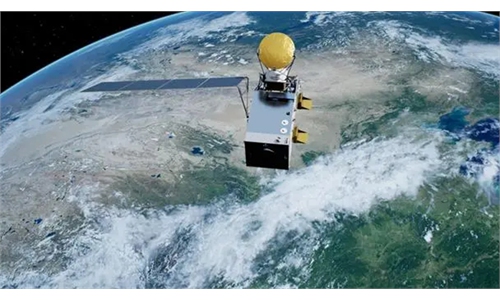
Inside GalaxySpace's Ark Laboratory, the Global Times saw the key components of the "wing-array integrated" satellite. The satellite combines a large-scale phased-array antenna for communications with solar wings that convert sunlight into energy, functioning as a "space-based base station" through this integrated design.
"In a context where smartphones are limited in size and power, achieving direct satellite connectivity requires the satellite's antenna to have sufficiently strong transmission and reception capabilities," Lin explained. In a direct-to-phone system, the satellite's large phased-array antenna typically needs to reach dozens of square meters to compensate for the limited transmitting power and receiver sensitivity of handsets.
GalaxySpace is leading technological innovation by "embedding" the antenna within the satellite's solar wings, effectively resolving the tension between large antenna area and constraints on satellite size and cost, thereby improving the efficiency of multi-satellite deployment and networking.
In addition, GalaxySpace has fostered a new commercial space ecosystem by partnering with market-oriented enterprises, significantly reducing the cost of millimeter-wave phased-array antennas. "Today, the price of spaceborne millimeter-wave phased-array antennas is only one-tenth of what it was a decade ago. GalaxySpace has completed the first domestic batch production of spaceborne millimeter-wave AiP (Antenna-in-Package) watt-level multi-beam phased-array antennas, laying the foundation for the mass production of larger phased-array antennas in the future," Lin said.
On April 1, 2025, a GalaxySpace-developed satellite with direct-to-smartphone capability was launched from the Jiuquan Satellite Launch Center aboard a Long March-2D carrier rocket. It has since carried out technical tests and verification related to direct satellite broadband connectivity for smartphones and space-ground network integration.
"Based on the current level of domestic technological maturity and the pace of low-Earth-orbit satellite deployment, I personally believe that around 2030 China will be able to build a relatively complete low-Earth-orbit satellite internet network for the general public. Before that, this technology is expected to see small-scale applications in certain industries and sectors," Wang said.
New engine
To build a LEO broadband satellite internet constellation capable of global coverage, a sufficient number of satellites is required, Lin explained. This is because LEO satellites travel around the Earth at a speed of more than seven kilometers per second. To ensure continuous, uninterrupted communication, each passing satellite must be seamlessly handed over to the next one in orbit, meaning that at least hundreds or even thousands of satellites are needed.
If higher-quality communication services are desired, increasing the number of satellites will further enhance the system's overall communication capacity and improve the user experience.
According to previously published reports, China currently has several large-scale LEO broadband satellite internet constellation projects under implementation, each planning to deploy tens of thousands of satellites.
Taking Shanghai-based SpaceSail's "Qianfan Constellation" as an example, the project plans to launch around 15,000 satellites in total. To date, it has completed six networking launches, with more than 100 satellites already in orbit.
Such an enormous scale of construction for China's LEO broadband satellite internet constellations is poised to become a powerful "engine," driving a comprehensive leap forward across the entire upstream and downstream industrial chain.
"At present, major assessment institutions all project that by 2030 the market size of China's satellite internet — including manufacturing, ground equipment and service segments — could reach tens of billions or even hundreds of billions of yuan," Wang said.
He believes that beyond generating enormous economic value in the service sector, China's commercial space companies are also continuously innovating production methods and expanding partnerships on the R&D and manufacturing fronts, giving LEO broadband satellite technology strong industrial pulling power across the entire value chain.
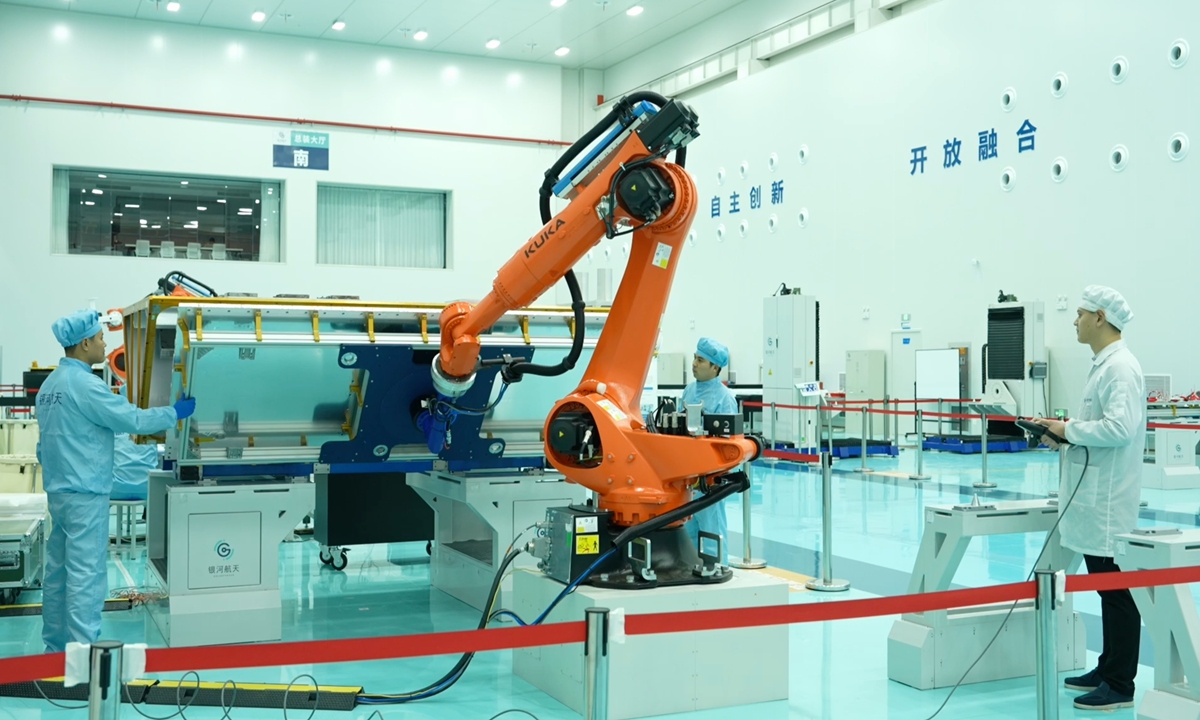
Inside GalaxySpace's production workshop, Wang described to a Global Times reporter how "down-to-earth" the current satellite manufacturing process has become.
During satellite development, GalaxySpace not only collaborates with traditional aerospace enterprises that possess strong technological advantages, but also works with commercial firms and private companies. For example, for the solar wings used on its satellites, GalaxySpace has partnered with domestic photovoltaic technology companies. Meanwhile, some manufacturing firms that previously supplied components to the automotive industry have also entered the commercial space supply chain.
"The automotive industry is a relatively mature sector with many outstanding component suppliers that possess strong mass-production capabilities. Introducing these open-supply-chain enterprises from the automotive industry into satellite manufacturing can help reduce satellite development costs. Moreover, the unique technical demands of the space environment also push these automotive parts suppliers to innovate technologically and expand their business boundaries," Wang said.
In GalaxySpace's laboratory, the Global Times also learned that some private enterprises engaged in traditional industrial manufacturing — such as those producing industrial bearings — have entered the satellite manufacturing supply chain. Their strengths in efficient design, flexible production and low costs have provided strong support for the development of the commercial space industry.
Since GalaxySpace was founded in 2018, the number of its supply-chain partners has grown from around 100 to more than 1,000. The participation of these companies has greatly promoted cost reduction and efficiency improvement across China's commercial space sector.
"Overall, China's satellite internet industry is currently on the eve of a major development," Wang said.
He believes that, at the technological level, China's commercial space companies have already conducted extensive technical verification and achieved a series of key breakthroughs. Meanwhile, in the process of industrialization, China's strong manufacturing capabilities have provided solid support for the development of the satellite internet sector. "In the next five years, we are certain to witness a very vibrant and flourishing range of satellite internet application scenarios," Wang noted.
Buzzwords such as the low-altitude economy, brain-computer interfaces and embodied intelligence, which have been written into the recommendations for China's 15th Five-Year Plan, are sketching out a new blueprint for future industries and pointing to fresh directions for the country's development. How far are these futuristic, almost science-fiction-like industries from the general public?
Global Times is launching a new series titled "LAB China", focusing on key laboratories, industry-academia-research bases and innovation hubs across the country that are rooted in emerging and future industries. In the first installment, a Global Times reporter visited a Chinese satellite internet technology company, stepping into test sites and production lines to experience firsthand how China's "space infrastructure" is building momentum for takeoff.
Laboratory of GalaxySpace Photo: Courtesy of GalaxySpace
On December 31, 2025, with the successful launch of a Long March-7 modified carrier rocket, China officially wrapped up its space launch missions for the year. The total number of launches in 2025 reached 92, setting a new annual record in China's spaceflight history.
Behind this new milestone lies a massive "space infrastructure" project quietly taking shape. After reviewing launch data, the Global Times found that nearly 20 missions in 2025 were dedicated to sending internet satellites into their designated orbits, making such satellites the primary payload of China's space launches that year. Industry insiders told the Global Times that this also signals that China's low-Earth-orbit (LEO) satellite internet technology is expected to achieve industrial application within the next five years.
As more internet satellites populate the sky, the vision of "ubiquitous connectivity" they are building is gradually coming closer to reality. Driven by anticipation of this future communication technology, the Global Times recently visited Chinese satellite internet companies, witnessing in laboratories and production lines how China's "space-based infrastructure" is gathering momentum for takeoff.
New scenes
Recently, a firefighting drone conducted multiple "live-fire tests" in Southwest China's Chengdu. At the scene, a Global Times reporter saw that, facing a simulated blaze created in a training fire basin, a six-rotor drone took off and accurately dropped two dry-powder fire-extinguishing projectiles into the burning container, quickly putting out the raging flames.
In China, where new technologies and applications are constantly emerging, such imaginative scenarios are no longer uncommon. However, this particular experiment stood out because it involved multiple LEO internet satellites, aiming to test the combined application of satellite internet and drone technologies in emergency rescue and disaster relief.
"After a simulated fire broke out, a drone in Chengdu was dispatched to the scene immediately, while operators in Beijing remotely controlled the drone to observe the fire and manage the situation," Wang Peng, head of communication networks of GalaxySpace and the person in charge of this satellite-internet firefighting drone test, told the Global Times.
According to Wang, the drone was equipped with a phased-array antenna terminal independently developed by GalaxySpace. Leveraging the high bandwidth and low latency of LEO satellite networks, the drone transmitted high-definition real-time video from the Chengdu fire site back to a remote command center in Beijing. Even from 1,500 kilometers away, Beijing operators were able to assess the fire situation and precisely control the drone to "fire-extinguishing payload-drop" via the LEO satellite network.
Throughout the process, the LEO satellites maintained a stable communication link, ensuring real-time two-way transmission of command instructions and fire-scene data. This created a complete closed loop from "information upload" to "command issuance" and ultimately to "precision firefighting."
This innovative attempt serves both as a validation of the maturity of satellite internet technology and as an expansion of its application boundaries.
Wang further explained that forest fires often break out in remote mountainous areas, where ground-based communication networks are frequently unable to provide full coverage. In contrast, LEO satellite internet systems offer wide signal coverage, enabling them to provide reliable technical support for disaster-response scenarios such as forest firefighting and emergency operations in high-risk environments.
"The strategic emerging industries mentioned in the 15th Five-Year Plan (2026-20) proposal — such as aerospace and the low-altitude economy — as well as future industries like 6G mobile communications are all closely linked to LEO satellite internet technology," Wang said.
He explained that as the core infrastructure of the integrated "space-air-ground" network for 6G communications, LEO satellite internet not only addresses the current challenge of ground-based base stations struggling to cover remote areas, oceans, polar regions and high-altitude spaces, it can also bridge the "last mile" for global connectivity of all things. By integrating with the low-altitude economy, it can overcome communication bottlenecks faced by drones in areas without terrestrial network coverage, helping expand the operational scope of low-altitude activities so that logistics and transportation are no longer constrained by ground communication blind spots.
"Looking ahead, drones and unmanned vessels connected to LEO satellite internet will weave dense and busy autonomous routes across the globe, ushering in a new pattern of global logistics," Wang said.
Create new life
Every day, GalaxySpace's self-developed "mini spider" low-Earth-orbit satellite internet experimental constellation passes over Beijing. During these windows, Wang and his team often drive a vehicle equipped with their self-developed onboard satellite communication system through downtown Beijing and surrounding mountainous areas to conduct various application tests, including "communication-on-the-move" trials based on LEO satellite internet technology.
While accompanying GalaxySpace's research team during the tests, a Global Times reporter saw that after a passenger car equipped with a small phased-array antenna connected to the LEO satellite network, it didn't just upload real-time footage captured by the vehicle's onboard cameras, but also rapidly received large data files such as 4K movies transmitted via satellite. By connecting a smartphone to the WiFi network created by the vehicle's satellite communication system, users were even able to play mobile games.
"If you can play mobile games using LEO satellite signals, it means the network quality is very good, because mobile games require high bandwidth and low latency," Wang said, adding that "the current transmission rate using the 'Little Spider Web' can reach 200 megabits per second."
The vehicle-to-everything (V2X) tests are seen as paving new technical paths for future autonomous driving. Moreover, the same technological principles point to the feasibility of another satellite-internet application scenario: as long as there are enough satellites in orbit and ground terminals can be miniaturized to the point of being integrated into smartphones, it will become possible for mobile phones to connect directly to LEO satellites and enjoy globally accessible satellite internet services. This, in turn, will undoubtedly help existing mobile communication systems perform more effectively.
"Currently, global direct-to-satellite smartphone technologies all require that users' phones can connect not only to traditional cellular networks but also directly to satellite networks, ensuring stable and high-speed connectivity wherever they are," Lin Guangrong, constellation communication system architect at GalaxySpace, told the Global Times.
He noted that foreign companies, including SpaceX and AST SpaceMobile, have already rolled out "direct-to-phone" satellite services. Although they have adopted different technical approaches, all of them place very high demands on satellite development capabilities, such as overcoming challenges related to large-scale phased-array antennas, large deployable structures and power supply systems on satellites.
Lin added that GalaxySpace is also actively exploring an integrated "satellite solar wing-phased array" design to realize ultra-large phased-array antennas, laying the technical groundwork for China to provide direct-to-satellite smartphone services in the near future.
Inside GalaxySpace's Ark Laboratory, the Global Times saw the key components of the "wing-array integrated" satellite. The satellite combines a large-scale phased-array antenna for communications with solar wings that convert sunlight into energy, functioning as a "space-based base station" through this integrated design.
"In a context where smartphones are limited in size and power, achieving direct satellite connectivity requires the satellite's antenna to have sufficiently strong transmission and reception capabilities," Lin explained. In a direct-to-phone system, the satellite's large phased-array antenna typically needs to reach dozens of square meters to compensate for the limited transmitting power and receiver sensitivity of handsets.
GalaxySpace is leading technological innovation by "embedding" the antenna within the satellite's solar wings, effectively resolving the tension between large antenna area and constraints on satellite size and cost, thereby improving the efficiency of multi-satellite deployment and networking.
In addition, GalaxySpace has fostered a new commercial space ecosystem by partnering with market-oriented enterprises, significantly reducing the cost of millimeter-wave phased-array antennas. "Today, the price of spaceborne millimeter-wave phased-array antennas is only one-tenth of what it was a decade ago. GalaxySpace has completed the first domestic batch production of spaceborne millimeter-wave AiP (Antenna-in-Package) watt-level multi-beam phased-array antennas, laying the foundation for the mass production of larger phased-array antennas in the future," Lin said.
On April 1, 2025, a GalaxySpace-developed satellite with direct-to-smartphone capability was launched from the Jiuquan Satellite Launch Center aboard a Long March-2D carrier rocket. It has since carried out technical tests and verification related to direct satellite broadband connectivity for smartphones and space-ground network integration.
"Based on the current level of domestic technological maturity and the pace of low-Earth-orbit satellite deployment, I personally believe that around 2030 China will be able to build a relatively complete low-Earth-orbit satellite internet network for the general public. Before that, this technology is expected to see small-scale applications in certain industries and sectors," Wang said.
New engine
To build a LEO broadband satellite internet constellation capable of global coverage, a sufficient number of satellites is required, Lin explained. This is because LEO satellites travel around the Earth at a speed of more than seven kilometers per second. To ensure continuous, uninterrupted communication, each passing satellite must be seamlessly handed over to the next one in orbit, meaning that at least hundreds or even thousands of satellites are needed.
If higher-quality communication services are desired, increasing the number of satellites will further enhance the system's overall communication capacity and improve the user experience.
According to previously published reports, China currently has several large-scale LEO broadband satellite internet constellation projects under implementation, each planning to deploy tens of thousands of satellites.
Taking Shanghai-based SpaceSail's "Qianfan Constellation" as an example, the project plans to launch around 15,000 satellites in total. To date, it has completed six networking launches, with more than 100 satellites already in orbit.
Such an enormous scale of construction for China's LEO broadband satellite internet constellations is poised to become a powerful "engine," driving a comprehensive leap forward across the entire upstream and downstream industrial chain.
"At present, major assessment institutions all project that by 2030 the market size of China's satellite internet — including manufacturing, ground equipment and service segments — could reach tens of billions or even hundreds of billions of yuan," Wang said.
He believes that beyond generating enormous economic value in the service sector, China's commercial space companies are also continuously innovating production methods and expanding partnerships on the R&D and manufacturing fronts, giving LEO broadband satellite technology strong industrial pulling power across the entire value chain.
Inside GalaxySpace's production workshop, Wang described to a Global Times reporter how "down-to-earth" the current satellite manufacturing process has become.
During satellite development, GalaxySpace not only collaborates with traditional aerospace enterprises that possess strong technological advantages, but also works with commercial firms and private companies. For example, for the solar wings used on its satellites, GalaxySpace has partnered with domestic photovoltaic technology companies. Meanwhile, some manufacturing firms that previously supplied components to the automotive industry have also entered the commercial space supply chain.
"The automotive industry is a relatively mature sector with many outstanding component suppliers that possess strong mass-production capabilities. Introducing these open-supply-chain enterprises from the automotive industry into satellite manufacturing can help reduce satellite development costs. Moreover, the unique technical demands of the space environment also push these automotive parts suppliers to innovate technologically and expand their business boundaries," Wang said.
In GalaxySpace's laboratory, the Global Times also learned that some private enterprises engaged in traditional industrial manufacturing — such as those producing industrial bearings — have entered the satellite manufacturing supply chain. Their strengths in efficient design, flexible production and low costs have provided strong support for the development of the commercial space industry.
Since GalaxySpace was founded in 2018, the number of its supply-chain partners has grown from around 100 to more than 1,000. The participation of these companies has greatly promoted cost reduction and efficiency improvement across China's commercial space sector.
"Overall, China's satellite internet industry is currently on the eve of a major development," Wang said.
He believes that, at the technological level, China's commercial space companies have already conducted extensive technical verification and achieved a series of key breakthroughs. Meanwhile, in the process of industrialization, China's strong manufacturing capabilities have provided solid support for the development of the satellite internet sector. "In the next five years, we are certain to witness a very vibrant and flourishing range of satellite internet application scenarios," Wang noted.
RELATED ARTICLES