China's NGS testing capacity sufficient to manage Nipah virus, says infectious disease expert
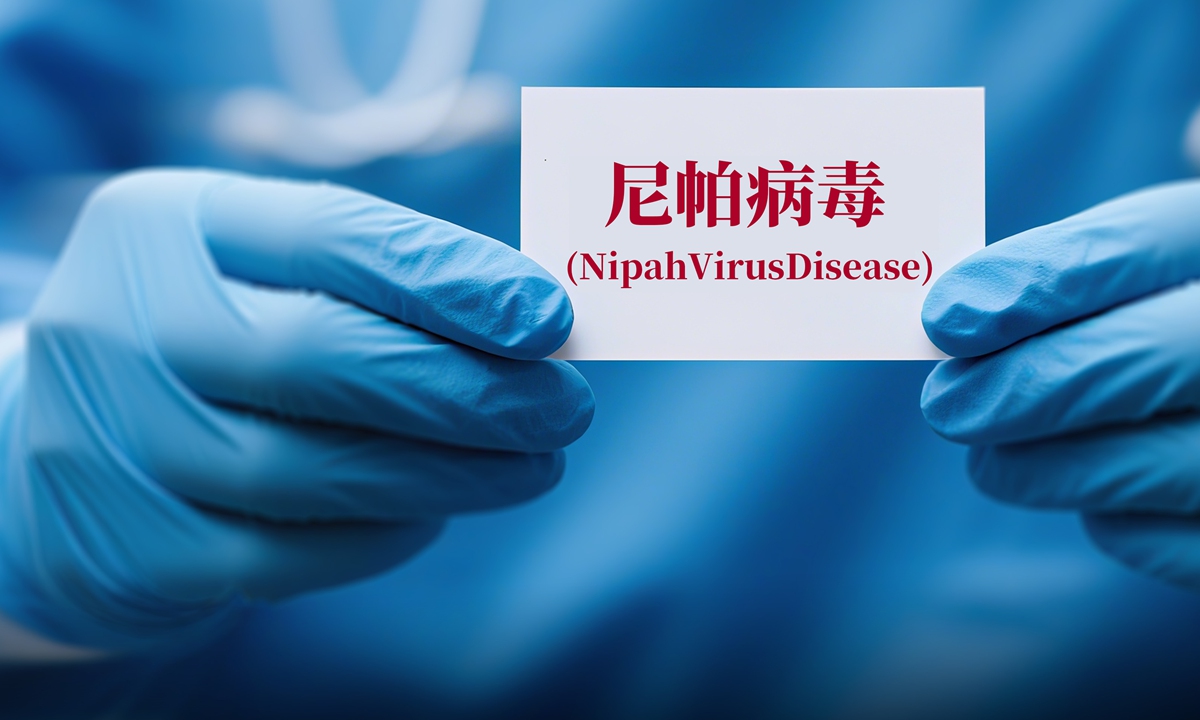
Photo: VCG
China possesses the capacity to monitor the Nipah virus through next-generation sequencing (NGS), said Chinese infectious disease expert Zhang Wenhong, financial news site Yicai reported on Monday. In addition to enabling rapid diagnosis and source tracing during outbreaks, NGS also facilitates long-term monitoring of viral evolution, assessment of public health risks, and guidance for medical countermeasures, the report added.
Several regional countries have stepped up health screening after India reported five cases of a deadly, incurable virus near one of the country's largest cities, prompting efforts to contain the outbreak, according to media reports.
As early as on December 30, 2024, Nipah virus was included in an updated list of infectious diseases under surveillance released by China's National Disease Control and Prevention Administration and the General Administration of Customs, alongside COVID-19, HIV/AIDS and other major infectious diseases, according to a release from the Chinese government website.
A Chinese expert in public health field was quoted as saying by Yicai that China has incorporated the Nipah virus into its key surveillance, prevention and control system, with a high level of emphasis placed on its containment.
Within China's surveillance system, tertiary hospitals, which boast the largest number of beds and provide comprehensive medical services, and port disease control centers serve as key sentinel sites. Equipped with nucleic acid detection capabilities, they enable timely viral monitoring, said the expert.
Dozens of institutions across China currently enable Nipah virus detection, ranging from provincial disease control centers to a handful of large tertiary hospitals, Yicai reported.
However, since no confirmed cases of Nipah virus have been reported domestically, China lacks hands-on clinical treatment experience, particularly in terms of respiratory support for critically ill patients and management of neurological complications, according to the report.
President of Shenzhen Third People's Hospital Lu Hongzhou noted the need for greater public and professional awareness of both the Nipah virus and the disease it causes, Yicai reported.
Lu said medical institutions and governments in regions with a history of outbreaks must be prepared to prevent and contain any potential future resurgence. Reducing fluid and close contact between Nipah virus-infected individuals and caregivers can prevent hospital transmissions similar to those seen in India, he added.
Global Times
RELATED ARTICLES