IN-DEPTH / IN-DEPTH
More Chinese youth embrace historical architecture visits, reviving cultural confidence and spiritual resonance
By and Liang Rui Published: Jan 27, 2026 07:02 PM

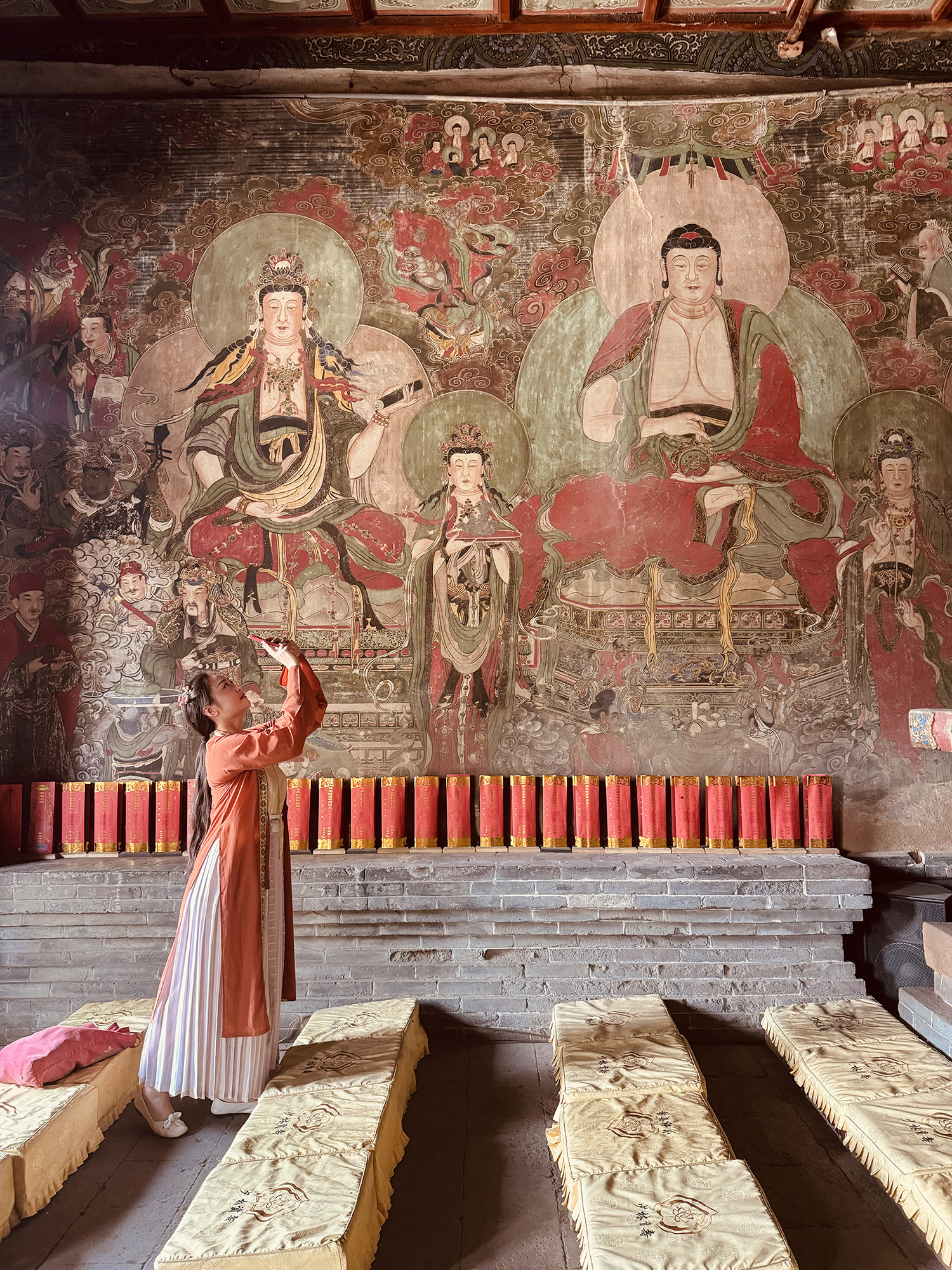
Xu Ye’er visits Zishou Temple in North China’s Shanxi Province, an architecture being originally built in Tang Dynasty (618-907), in July 2024. Photo: Courtesy of Xu
In the tender early-summer sunlight, Xu Ye'er stood in the main hall of a historic temple in North China's Shanxi Province. She looked up, and when her gaze met the Ming Dynasty (1368-1644) murals on the wall that have endured for centuries across the ceiling, an indescribable shiver hit her.
"The tears just fell on their own," Xu recalled. At that moment the traveler, in her 30s, felt she was being cleansed by a solemn, almost overwhelming beauty. "It was as if history was smiling at me," she told the Global Times.
When visiting temples and monasteries in Shanxi, ancient architecture enthusiast Lin Mu often finds herself moved by the stories behind the buildings, especially those of the architects and craftsmen introduced by tour guides. Their scholarly pursuits, intellectual outlooks, and often remarkable life trajectories, make the structures feel vividly human.
"Learning about their lives and ideas is deeply compelling," Lin told the Global Times. "It's hard not to be moved by the people behind the architecture."
Along with Xu and Lin, a growing number of young Chinese people are increasingly turning toward heritage architecture across China. Rather than chasing social media hotspots, they are directing their attention to centuries-old protected buildings, either visiting them in person or enthusiastically sharing and discussing them online, searching in these historic sites for cultural roots and spiritual resonance.
Meanwhile, bolstered by supportive national policies and local government initiatives, preservation and innovative utilization efforts are breathing new life into the architectural legacies. Across China, a dynamic two-way embrace is unfolding: young people reaching back to meet an ancient civilization, and those old stones and timber responding with renewed relevance.
Booming enthusiasm
Xu's fascination with traditional Chinese architecture began during a 15-day, in-depth trip through Shanxi in 2024. Xu and a friend followed in the footsteps of renowned architects Liang Sicheng and Lin Huiyin, who visited and researched many historical buildings across Shanxi in the 1930s. Xu and her friend wanted to see, in person, the buildings they had only ever encountered in textbooks and picture books.
The journey reshaped her understanding of ancient architecture. "Although I had previously learned about the components and construction of ancient buildings from books, it wasn't until I stood beneath them, that the experience became tangible and three-dimensional," Xu said.
After that trip, Xu continued to seek out ancient architecture in several southern Chinese provinces, and began sharing their beauty on social media. As a content creator named "JoywithGrace" who primarily shares Hanfu (traditional Chinese costume) with over 400,000 followers, Xu initially felt drawn to ancient buildings by her interest in traditional culture. But the more she explored, the more she realized that these structures are not just cultural artifacts: They embody as a whole the everyday life, aesthetic sensibilities, and spiritual beliefs of the people in those times. "That is the greatest allure of ancient architecture for me," she told the Global Times.
Lin's fascination with ancient architecture began earlier than many casual visitors.
While studying at a university in Lanzhou, Northwest China's Gansu Province, she and her classmates began spending holidays visiting nearby historical sites, including the Mogao Caves in Dunhuang, and the Maijishan Grottoes. What started as casual sightseeing gradually developed into a more sustained interest.
Later, Lin began to travel with specialized architectural tour groups alongside like-minded friends. These professional groups require a certain level of prior knowledge and commitment. "Participants tend to approach ancient architecture as a connected body of knowledge, often extending their interest beyond travel to exhibitions, documentaries, lectures, and academic publications - an ongoing process of learning that brings a strong sense of intellectual reward," Lin said.
A surge in demand for on-site visits to historic buildings has turned provinces with rich architectural legacies, such as Shanxi, into hot travel destinations. A January report from online travel platform Trip.com found that overall travel bookings to Shanxi on this New Year's Day (January 1) doubled year-on-year. During the whole New Year holiday (January 1-3), four of the province's five most popular attractions were historic architectural sites. The report also found that, travelers born after 2000 accounted for 39 percent of holidaymakers, following by those born in the 1990s - a clear sign that younger generations are leading the rediscovery of heritage.
Online conversation and sharing about historic architecture are booming as well. On social media platform Xiaohongshu, related posts have been steadily rising, and the topic "collecting ancient buildings" drew more than 250 million impressions in roughly a month. On Youtube-like video sharing platform Bilibili, some of the most viewed videos about historic sites have surpassed 10 million views.
Wang Zhixing, a content creator specializing in historical architecture with over 1.2 million followers across social media platforms, has felt this youth‑driven revival firsthand.
Wang's comment sections have become gathering places for historical building lovers with emotional responses. "Not only do many middle‑aged and older viewers express nostalgia, but also a lot of young viewers are drawn to some of the grand, ornate, visually striking structures, leaving remarks like 'So beautiful' and 'I really want to go,'" he told the Global Times.
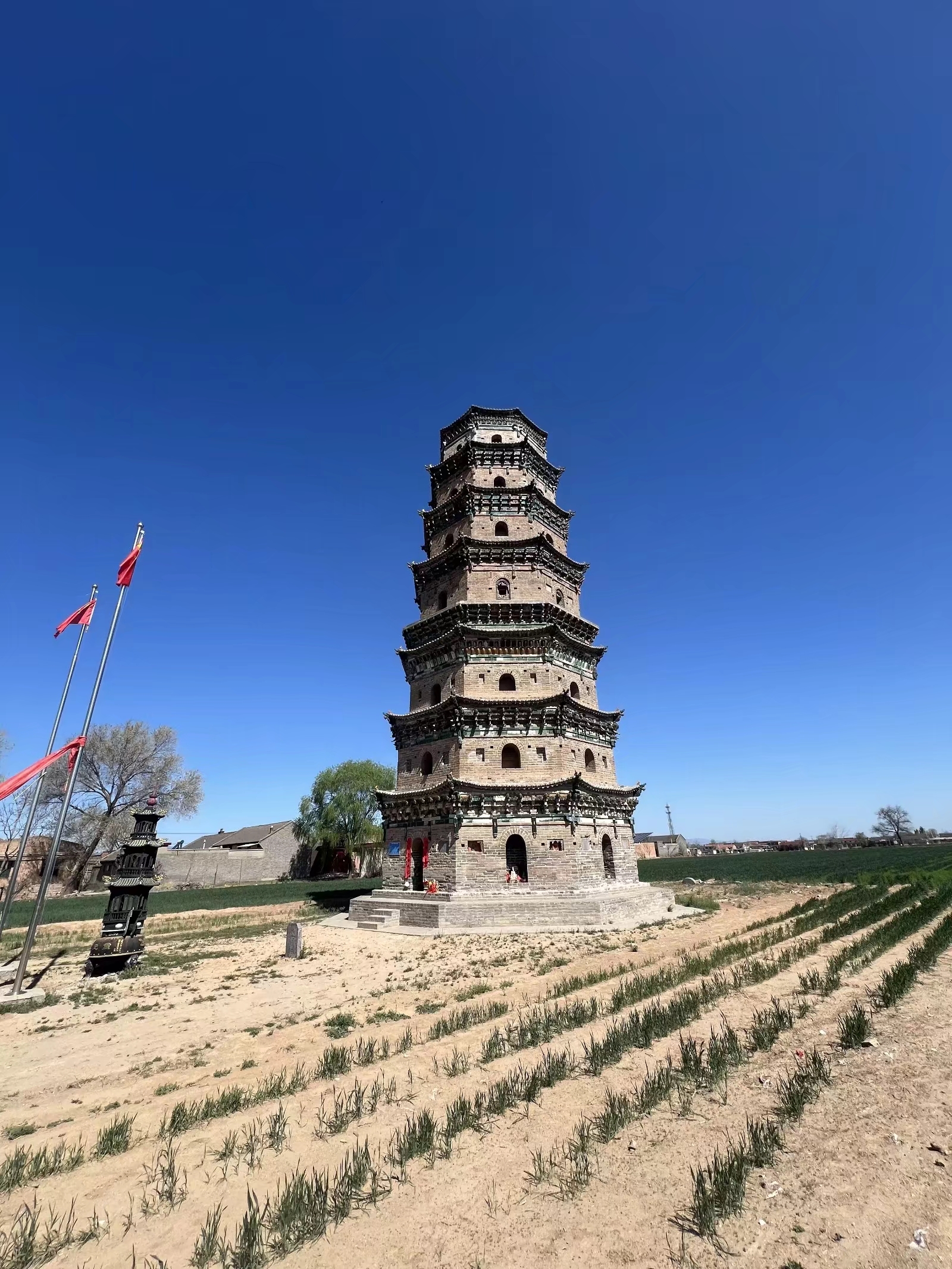
A Jin-Dynasty (1115-1234) tower in Shanxi that Wang Zhixing visits in May 2025. Photo: Courtesy of Wang
Aesthetical, spiritual attractiveness
Since 2022, Wang has been exploring and documenting vernacular historic buildings in his spare time, and in nearly four years has published more than 300 videos. Time and again, Wang has ridden his motorcycle deep into mountain villages to share the quiet beauty of centuries-old buildings scattered across the countryside, and has gradually attracted a large young audience.
Why are more and more young people drawn to these old structures? Wang believes China's historic buildings possess a timeless, almost archetypal aesthetic value, and embody the craftsmen's spirit passed down through traditional handwork. "Every brick and tile of those ancient buildings was hand-finished," he said. "They have souls."
Xu thinks that the appeal has moved beyond surface aesthetics to the spiritual level. For her and many of her peers, old architecture offers a reassuring sense of history, and a place of emotional anchoring in an age of rapid change. "Real life is full of upheaval, the future can feel uncertain, while the past is fixed," she told the Global Times. "We try to find resonance in those definite people, buildings, and artifacts from the past to sustain us as we head into the future."
There are also some young people who try to get closer, immersive experiences by engaging in voluntary jobs in historical architecture. A volunteer posted on Xiaohongshu that, what stayed with her most was not technical architectural knowledge, "but the slower rhythm of daily work at the site: early mornings, quiet patrols, and repeated encounters with visitors lingering in contemplation." Many volunteers like her have shared online that volunteering at a historic site provides them with a rare opportunity to step away from constant stimulation, eases mental restlessness, and helps them find a sense of calm through sustained attention to a single place and task.
A China Youth Daily survey in October 2024 found that the most attractive elements of trips to historical architecture were architectural aesthetics (64.2 percent), a sense of antiquity or historic character (62.1 percent), and a humanistic sensibility (55.6 percent). Apart from these, many people observe a shift from a surface-level fascination with ancient buildings to a deeper affection, which they believe is driven by a broader surge in cultural identity and pride.
Lin recalled attending historical architecture-themed exhibitions at Tsinghua University and observing a rise in guided interpretation tours, which are often framed as part of the "knowledge economy." In her view, this trend reflects broader structural changes. "As China's overall national strength and living standards have improved, more people have begun to prioritize cultural and intellectual pursuits. This shift is particularly pronounced among younger generations, whose sense of cultural confidence has grown in recent years."
Two-way efforts
What delights historic architecture enthusiasts is that their pilgrimage is never one-way. Increasingly, local governments and heritage agencies are answering youthful enthusiasm with openness and creativity, working to make ancient sites live again.
The Beijing Central Axis, for instance, a UNESCO World Cultural Heritage site, has been well applying technology with skill to restoration, maintenance, and visitor experience. At this site, the Zhengyang Gate arrow tower has used 3D laser scanning to reconstruct damaged components, and the Drum Tower has embraced immersive light-and-shadow shows and VR experience zones as part of innovative exhibition strategies to draw younger audiences and promote adaptive reuse of cultural heritage, reported the Beijing Daily in July 2025.
Wang also felt the sense of official attention. He recalled personnel from a provincial cultural relics bureau proactively reaching out to him, using his videos for information on heritage spots not yet under government protection. "The government's willingness to tap grassroots sources for leads is an unmistakably positive sign," he told the Global Times.
Meanwhile, the young generation's growing interest and on-the-ground engagement, are injecting fresh energy into historical architecture conservation, creating a healthy, reciprocal momentum between the public and government departments and institutions.
"This momentum has brought greater visibility to the preservation of traditional Chinese culture, and increased public attention can translate into more resources for protection," Lin said. She cited the example of Tiefo Temple in Shanxi, which previously received little attention, but has seen a surge in visitors following renewed public interest with the release of Black Myth: Wukong, a highly anticipated Chinese self-developed AAA game, leading local village collectives to develop cultural and creative products and generate new sources of income.
Earlier data showed how the flood of visitors boosted local tourism. Within three days of Black Myth: Wukong's release on August 23, 2024, 27 heritage-related sites in Shanxi received a total of 126,600 visitors, a month-on-month increase of 21.86 percent. Ticket revenue reached 5.528 million yuan, up 16.18 percent from the previous period, according to the People's Daily in September 2024.
Nowadays, apart from sharing Hanfu culture, Xu also intentionally highlights lesser-known heritage sites tucked away in Shanghai and other modern metropolises, hoping to show urbanites that these treasures often lie much closer than they think.
Xu believes the simplest yet most important way that young people can contribute to the protection of historic buildings, is to "vote with their feet" - travel to them, photograph them, and share what they find. "Broad visibility is the first step to attracting resources and effecting change," she said. "If we can just let more people know these buildings exist, we stand a much better chance of promoting their preservation and creative development."
RELATED ARTICLES